Wednesday, December 26, 2012

NJJazzList.com Calendar

12/28 Fri Betty Liste Duo w/Kevin Brown, bass at Palazzo Restaurant 7:00 pm to 1:00 am Style: Mixed, Cover:over $10, piano & bass duo perform a variety of music Learn more Hear samples , (862/973)

12/28 Fri Dorian Parreott and his Jazz All-Sars at Chico's House of Jazz (aka Urban Nest) 8:00 pm to 12:00 am Style: Jam Session, Cover: $10 or less, Please join us for the last date in our four show jam session series.Learn more Hear samples , (732/848)
12/28 Fri OPEN JAZZ JAM at Moore's Lounge aka Bill & Ruth's , Jersey City,NJ 8:30 pm to 11:30 pm Style: Jam Session, Cover: None, WINARD Harper & Rosalind Grant host this OPEN JAZZ JAM every FrIday 8:30pm--11:30pm@ MOORE'S LOUNGE aka BILL & RUTH'S 189 Monticello Ave.,Jersey City, NJ. Musicians, Vocalists, Spoken Word Artists, Dancers and Jazz Music Lovers are welcome. NO COVER! NO MINIMUM! , (201/551)
12/29 Sat Barbara Rose, Pianist & Vocalist at Molly Pitcher Inn, Red Bank 6:00 pm to 11:00 pm Style: Mixed,Cover: None, Celebrate the American Songbook with this gifted pianist and vocalist. Barbara's piano style is reminiscent of Thelonius Monk. Learn more Hear samples , (732/848)
12/29 Sat Betty Liste Duo w/Kevin Brown, bass at Palazzo Restaurant 7:00 pm to 1:00 am Style: Mixed,Cover: over $10, piano & bass duo perform a variety of music Learn more Hear samples , (862/973)
12/29 Sat Jullian Pressley at Candlelight Lounge 3:30 pm to 7:30 pm Style: Contemporary/Post Bop, Cover:None, He plays alto straight ahead and really burns Learn more , (609/ )
12/29 Sat Karen Rodriguez Latin Jazz Ensemble at The Mill at Spring Lake Heights 8:00 pm to 11:00 pmStyle: Latin Jazz, Cover: None, Join us every Saturday night for the areas most talented jazz & blues musicians. Never a cover. Stop in for dinner or just cocktails! Learn more Hear samples , (732/848)
12/29 Sat Kevin Hildebrandt Trio at Delta's - 19 Dennis St. New Brunswick, NJ 7:00 pm to 11:00 pm Style:Straight-ahead, Cover: None, Kevin Hildebrandt - guitar/vocals Radam Schwartz - organ G. Earl Grice - drums ,Hear samples , (732/848)
12/29 Sat Rob Paparozzi Solo at Nauvoo Grille 7:30 pm to 11:00 pm Style: Mixed, Cover: None, Rob Solo Piano and Vocals Learn more Hear samples , (732/848)
12/30 Sun Hudson Valley Jazz Festival Ensemble at Warwick Grove 12 Cropsey Ave. Warwick NY 4:00 pm to 6:00 pm Style: Straight-ahead, Cover: None, Warwick Grove presents The Hudson Valley Jazz Festival Ensemble for a free Holiday Jazz Performance. Call 845-988-5274 for reservations Learn more , (Unknown)
12/30 Sun The Real Deal Big Band at Trumpets 8:00 pm to 11:30 pm Style: Contemporary/Post Bop, Cover:$10 or less, The 18 piece Real Deal Big Band live at Trumpets Learn more Hear samples , (862/973)
12/30 Sun The Rio Clemente Trio at Rutherfurd Hall 3:00 pm to 5:00 pm Style: Smooth Jazz, Cover: None, $17.50 Advance, $22.50 Day of Concert -purchase online and in person at Mt. Villa School at Rutherfurd Hall and at Mama's in Hackettstown, NJ This master pianist mixes a strong classical background with a rich knowledge of jazz history, then adds an amazing sense of creativity and interpretation. The result is music that is different from others, and nearly always produces a standing ovation and cries for “more. Learn more , (908/ )
12/31 Mon Barbara Rose & Friends at Hotel Tides- 408 7th Ave, Asbury Park 6:00 pm to 1:00 am Style: Mixed,Cover: None, Wine, Dine and Dance with Cabaret Diva Sensation Barbara Rose & Friends. 6pm and 9:30pm Dinner Seatings. Reservations: (732) 897-7744. Rooms available. Learn more Hear samples , (732/848)

Tuesday, December 25, 2012

Saxophonist Russ Nolan To Perform At Buttonwood Tree

The Hartford Courant, December 27, 2012
Although tenor saxophonist Russ Nolan's new, high-stepping CD "Tell Me" (Rhinoceruss Music) is not a dance record, it is inspired, he says, by the seriously committed salsa dancing he's done over the last five years in New York's red-hot salsa scene.
Nolan, an energetic, agile saxophonist, onetime martial arts practitioner and a star basketball and baseball player in high school, has used the dance floor as his personal training ground to put an extra fine edge on his sense of time and rhythm. His well-honed skills pay off in "Tell Me" as he and his band dance through a wide variety of time signatures and Latin powered pieces.
Strutting in everything from a Brazilian baiao in 2/4 time to a bolero in 10/8 time, Nolan demonstrates his dance-enhanced jazz pieces as he leads his trio Jan. 5 at 8 p.m. at the Buttonwood Tree,Middletown. His faux pas-free disc will be one of the sources of the evening's repertoire.
When the Queens-based saxophonist started taking salsa lessons five years ago, at least part of his motivation, he acknowledges, was to meet women following the painful breakup of a relationship. Besides that romantic setback, he had recently given up martial arts after a 15-year run, and was looking for a new hobby. What he needed was a physical and mental outlet that he feels all jazz musicians can use to ease the many pressures and frustrations they face in their chosen profession.
As his official biography notes, Nolan, a onetime salsa novice, "now holds his own with seasoned break-steppers, no mean feat for a guy with his six-foot-four frame."
Most important for him as a jazz saxophonist, he's danced his way to a new sensibility, he says, even a sense of liberation when it comes to playing with time in his jazz improvisations.
"On the dance floor, you key off a rhythm," he says. "Getting it into my body helped my sense of time. I became a lot freer with rhythm."
As a salsa dancer, Nolan knew he had arrived when he got the ultimate compliment from Eddie Torres, the salsa scene's legendary innovator.
Read more: http://www.courant.com/entertainment/music/hc-riffs-1227-20121227,0,6646697.story?track=rss

Did the American songbook kill jazz?

BY SCOTT TIMBERG
At first, it sounds like a mistake: The opening notes are blurred, like something has gone a bit wrong in either the playing or the recording. But after a few bars, we realize that these bent tones from a horn — with just a stark bass and drum behind them — are outlining one of the most hallowed of American standards. Tenor saxophonist Sonny Rollins is at the Village Vanguard, bashing through “What Is This Thing Called Love?” as if he could anticipate the punk rock that would come to this same neighborhood 20 years later. It’s an elegant song by Cole Porter, reduced to its skeleton. And “All the Things You Are” and “Softly, as in a Morning Sunrise” get the same kind of rough, raw, harmonically daring treatment.
It’s the kind of thing jazz can do at its best — but something the music may be doing less and less of. Or too often and not well enough. The various factions that make up the jazz world — audiences, musician, writers, plus the teachers and students who seem to be the only groups growing in number — don’t have a consensus on the matter. But the jazz fraternity seems to know two things: Despite continued artistic quality, the audience around the music is dying. And the choice of what songs jazz musicians play — and what they don’t play — may be part of the problem.
Over the past few years, Rollins — perhaps the living jazz musician with the widest knowledge and deepest feeling for standards — has experienced a change of heart. “Jazz standards don’t have the same pull on the audience,” he says now. “I love the American songbook, but people don’t recognize them any more. So I feel we need more original music. Jazz has got to keep moving: It’s important to get new music, new melodies.” During the four weeks he spent in Europe this fall, Rollins played very few standards. “They’re still powerful to me, but to audiences, they’ve lost some of their power.”
*   *   *
The issue of song selection — as central to a repertory-driven art like jazz in a way that it’s not for, say, rock ‘n’ roll, which, since the Beatles, has been about original songwriting — has been talked about for years now. But it all became more pressing lately, with the emergence of several high-profile artists who reject or ignore the tradition of Porter, the Gershwins and Jerome Kern — or even the related lineage of songs by jazz musicians, such as Duke Ellington and Billy Strayhorn’s “Lush Life” or Thelonious Monk’s “Round Midnight.”
Read more: http://www.salon.com/2012/12/24/did_the_american_songbook_kill_jazz/

Jazz in a Changing World

By SAMMY STEINPublished: December 25, 2012

Jazz has influenced many other genres of music and, likewise, many other genres have influenced jazz from its very beginning. What is really exciting about the scene at the moment is just how much enrichment it is getting from the rest of the world. It works both ways, of course; jazz musicians from countries which have, until recently, had very small scenes are benefitting from warm receptions in established venues.
Audiences are benefitting from having an increasingly diverse range of artists and music styles to experience. In part due to improved accessibility along with the evolution of the Internet and other media, new music is finding appreciative and enthusiastic audiences.
What helps is multimedia and the way producers of documentaries, films and other productions have become more adventurous and tuned into the hunger for change from audiences. In 2005, two French documentary makers, Renaud Barrett and Florent de la Tullaye (aka Belle Kinoise) became fascinated by streetwise, disabled musicians busking for change near the public zoo in Kinshasa, in the Dominican Republic, playing rumba-based Latin jazz and using parts of old bikes and planks cobbled together for transport. The group looked after each other, even adopting a younger street boy as trainee vocalist.
Renaud and de la Tullaye filmed the band's progress from 2005, taking such an interest that even when all the group's instruments were lost in a fire, the two filmmakers helped them start again. Staff Benda Belilli was introduced to the world via the documentaries and the Internet. Belgian record producer Vincent Kenis offered the group a chance to record its first album, Tres Tres Fort (Crammed Discs, 2010).
From living on the street, eking out a meager living, leader/singer Ricky Likabu, guitarists/vocalists Coco Ngambali and Theo Nsituvuidi, singers Djunana Tanga-Suele and Kabamba Kabose Kasungo, bassist Paulin "Cavalier" Kiara-Maigi, drummer/vocalist Cubain Kabeya and satonge player/vocalist Roger Landu—the satonge being an instrument that, invented by Landu, resembles an electrified tin can and wire that adds eerie tones to many of the band's tunes—found themselves the unlikely purveyors of Latin rumba jazz roots to the wider world.
As global communication improves, new jazz scenes are emerging around the world—or, rather, existing scenes in lesser-known countries are gaining visibility and growing steadily. Influences from Africa, Asia, Eastern Europe and Scandinavia are intermingling to change, hopefully forever and for the better, the face of jazz.
Years ago, musicians from abroad like British saxophonist Joe Harriott had to travel to mainland Europe or America to play, but now countries far and wide are revealed to have their own scenes—in some cases, extant for many decades. Eastern Europe has contributed Polish trumpeter Tomasz Stańko and sadly deceased violinist Zbigniew Seifert, Lithuanian pianist/multi-instrumentalist Vladimir Chekasin and Hungarian pianist Daniel Szabo. From Japan come guitarist Masayuki Takayanagi and saxophonist Kaoru Abe.
Amongst the many South American artists to emerge over the decades are include, from Brazil, saxophonist Ivo Perelman, guitarist/pianist Egberto Gismonti and multi-instrumentalist Hermeto Pascoal, while Argentina has brought saxophonist Gato Barbieriand bandoneonist Dino Saluzzi.
Out of Africa, beyond legends like trumpeter/vocalist Hugh Masekela and singer Miriam Makeba, come saxophonist Moses Khumalo, harmonicistAdam Glasser and multi-instrumentalist Bhekumzi Hyacinth Mseleku. Clearly, the list of jazz artists from around the world is growing and nearly every musician now has a current favorite young rising jazz musician from outside the West.
Europe, too, is currently a melting pot of exciting players. Free form drummer Terry Dayhas traveled across Europe and Asia, recently returning from Japan. He commented that the Barcelona scene in Spain is buzzing right now with artists such as drummer Javier Carmona bringing new sounds to the rest of the continent.
Read more: http://www.allaboutjazz.com/php/article.php?id=43618#.UNlnEaUlYhQ

Fabrizio Sotti: The Key to Music

By FERNANDO RODRIGUEZPublished: December 25, 2012
Invited to perform at the 16th edition of the Dominican Republic Jazz Festival, this past November, guitarist Fabrizio Sotti was sitting on the beach in Cabarete, along the country's north coast, when this interview took place.
Sottis' most recent release, Inner Dance (E1, 2010), was almost his third release, following the guitarist's This World Upside Down (BCI-Eclipse, 1999), but a hard drive crash on his computer scuttled what was to be his sophomore release, originally to be titled Against All OddsInner Dance features slightly different personnel, with organist Sam Barsh replacing bassist James Genus, alongside a twin-percussion salvo of drummer Victor Jones and percussionist/drummer Mino CInelu. Moving between harder-edged, fusion-esque electric and more lyrical acoustic guitars, it may have been a tough slog getting there, but Inner Dance definitely delivers the goods.
Sotti was born in Padova, Italy. By age five, he was taking classical piano lessons, and at nine switched to the guitar as his interests in music went from Bach and Chopin to trumpeter Miles Davis, saxophonist John Coltrane, and guitarists Wes Montgomery andJimi Hendrix. After a stay in the USA in his mid-teens, he returned to New York City permanently and launched his jazz career after a brief stint in the mid-90s in the Italian Air Force. Since then, Sotti's career has included collaborations with some of jazz's best musicians to writing/producing for hip-hop and pop superstars.
In addition to his own recordings, Sotti has produced and performed on two Blue Note albums for Grammy Award-winning vocalist Cassandra Wilson—2003's Glamoured and 2009s Closer To You: The Pop Side. He has toured extensively in the U.S. and Europe and worked with an impressive group of A-listers including trumpeters Brian Lynch and Roy Hargrove, saxophonists George Coleman and George Garzone, bassists Steve La Spinaand Mark Egan, percussionists Sammy Figueroa and Mino Cinelu, drummers Al Foster andJeff "Tain" Watts, guitarist Mick Goodrick, and pianists Rachel Z and Andy LaVerne.
Expanding his musical palette into the world of hip-hop and R&B, Fabrizio has played with, written and produced tracks for everyone from Dead Prez, Q- Tip, Tupac (the posthumous "If I Fail") and Ghostface Killah to Jennifer Lopez, Whitney Houston, Foxy Brown and Half Pint.
Sotti says that: "I agree with Duke Ellington in his assessment that there are only two kinds of music, good and bad, and I choose not to discriminate by genre."
All About Jazz: In your own words, who is Fabrizio Sotti?
Fabrizio Sotti: I'm a jazz guitarist/musician who doesn't discriminate other genres of music.
AAJ: How did you get to New York?
FS: The first time I came to New York I was 16 years old. I came to New York City because I wanted to play and learn from the best jazz musicians in the world. I told my mother I was going to the US for a short vacation, but I knew I wasn't going to go back home.
Fabrizio Sotti—Inner DanceAAJ: How and when did you start playing?
FS: I started studying classical piano at the age of five, learning from my grandmother to write and read music. At age nine I picked up the guitar and also my musical preferences started to change.
AAJ: How did you get into jazz?
FS: In Padova, where I grew up, there weren't any jazz schools when I started, so I took some private lessons from local teachers, studied American books and listened to a lot of vinyl.
AAJ: What were your studies like? Where?
FS: The majority was in Padova, with locals teachers; occasionally, I attended seminars by American guitarists visiting Italy like Joe Diorio and Mick Goodrick.
AAJ: What have your experiences been in Italy, Europe, and now in the US?
FS: In Italy, when I was a teenager, I had the opportunity to play with great musicians like [bassist] Ares Tavolazzi, [drummer] Mauro Beggio, [drummer] Francesco Lomagistro, [bassist] Christian Lisi and [bassist] Nicola Sorato. With them, I played standards and some of my original tunes. With these musicians we played all over Italy. As well as playing with jazz groups, I was also working as a session musicians for Italian pop artists to make some more money.
Read more: http://musicians.allaboutjazz.com/musician.php?id=20849#.UNlqTaUlYhQ

Nat King Cole: Italy 1960

Reprinted from http://jazzwax.com

Singer+was+widow+of+Nat+King+Maria+Cole+dies+at+89
The other day I received a fabulous YouTube link from Dick LaPalm, Nat King Cole's record promoter and family friend. [Photo above: Nat King Cole with wife Maria]
Before you watch the clip, here are Dick's notes ...
"The song Non Dimenticar [Do Not Forget] was written in 1950 by Italy's Michele Gladieri and Paulo Redi. Originally titled T'ho Voluto Bene, the song first appeared in the 1951 classic Italian film Anna, starring Silvana Mangano. The new title and English lyric is the work of Shelly Dobbins. Nat Cole, with Nelson Riddle's arrangement and orchestra, recorded the song on August 18, 1958.
"Here, beautifully accompanied by just his trio, is a very rare video of Nathaniel performing this marvelous song on an Italian TV show in Rome in the spring of 1960, during a tour there. The musicians are John Collins on guitar, Charlie Harris on bass and Lee Young [Lester's brother] on drums..."
Used with permission by Marc Myers

Monday, December 24, 2012

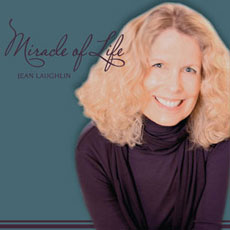
Singer/Songwriter Jean Laughlin Shares Her Music Catalogue and Latest Release “Miracle of Life”

Jean Laughlin is an originator, poised to slide into any musical setting. Complimented by the best Chicago jazz musicians in a full orchestra setting, Jean collaborates with tasteful, inventive nuances complimenting many of the songs enriched improvisational solos. Bringing her dynamic relationship with Jim Martin to its full expression once again creating an album of warmth and love with her latest CD project “Miracle of Life.”  Jim’s superb charts brings Jean’s music to life with the masterfully assembled string section and big band horns completing the orchestra.
Laughlin presents a full range of ballads from jazz, to Broadway, to cabaret. The story-lines of each tune exudes the challenges of our daily lives, bringing humor and whimsy to life’s absurdities throughout her big band arrangements. “I’ve always thought that music is a form of communicating with others, a way of connecting with each other. Through music we can share our thoughts and feelings and even heal broken hearts” says Laughlin.
Jean’s solid vocal and musical command underlie each composition’s appeal. She began singing at age five and studying classical piano at seven. At the age of eleven, she performed on the nationally televised ‘Bob Crosby’ Show.
After settling in Chicago, Jean became a fixture in recording studios, recording television commercials, voice-overs and radio spots for large advertising agencies like Leo Burnett, J. Walter Thompson and Foote, Cone & Belding. She worked with Chicago legend Shelley Long by performing in many corporate industrial shows.

Read more: http://www.prweb.com/releases/2012/12/prweb10264224.htm

Plymouth Meeting musician lends saxophone stylings to musical memoir

By M. English, Journal Register News Service


Local residents may know musician Frank Ewing from bands like Good for Nothing Jazz Trio, ‘Tis the Season and Downtown Harvest. More recently, the Plymouth Meeting native and fellow Plymouth Whitemarsh High School alums Mike Gordon and brothers John and Chris Wood have been headlining area music venues as Bravo Jazz Quartet.

This month, though, Ewing has also been lending his saxophone stylings to “Growing Up Italian-Buon Natale” — area writer Tony Leodora’s musical memoir about “what it was like growing up in the dual Italian and American cultures of the Baby Boomer era.”

The family friendly revue — with a performance lineup that includes Gordon, the Woods and vocalists Andy and Cheryl Petruzelli — is scheduled to move into Conshohocken’s Spamps restaurant Dec. 23 at 4:30 p.m. Tickets are $55 and cover a festive buffet of chicken, beef, pasta and Italian specialties from the culture’s traditional Seven Fishes dinner.

Like many area folks, Ewing learned to treasure his own Italian roots from a grandparent.


“My grandmother was from outside of Naples and was the head of my family,” he says.

“Every Sunday, everyone would gather at her house to eat a huge meal.”

When the 2000 PW grad traveled to Italy “the summer before my senior year, [I] was amazed at how I was welcomed as part of the family and fell in love with the country, culture, people and food.”

Read more: http://www.montgomerynews.com/articles/2012/12/24/colonial_news/news/doc50d0cb1b90715106494313.txt

Maggie and Miller strike a happy chord


By Will Morris, The Daily World

Spend any time at all around Maggie Ryan, and one thing becomes pretty obvious — she loves music. Big-band jazz, blues-guitar-driven classic rock and even the occasional song by the ubiquitous Lady Gaga — she loves it all. If you spend any more time around Ryan another thing becomes clear — she loves kids. So when Ryan graduated high school, it seemed almost preordained that she would become a music teacher.

“I think I always wanted to be a teacher,” Ryan said, noting that her passion for music started in junior high school. “And I first got into music at this age.”

Ryan, 25, is the newly minted band teacher at Miller Junior High School. Hired at the beginning of this academic year, she is one of the latest additions to both the school and Aberdeen District’s staff of musical educators. As part of this, she has taken over the highly regarded World Rhythms Percussion Ensemble at Miller.

Ryan is a long-term Washington resident. She grew up in Oak Harbor on Whidbey Island, raised in, what she described as, “a musical family.” As soon as she was old enough, she began picking around with instruments. She remembers spending many hours with her father and brother playing blues and jazz in a family garage band. Her father played the guitar, her brother, Mike was on drums and Ryan’s weapon of choice was the standing bass.

“Basically we jammed on blues all the time,” she said.


Booker T & the M.G.’s influence

One of the first things the family learned to play together and one of her favorite songs was “Green Onions,” a 1962 hit by the rhythm and blues band, Booker T. & the M.G.’s.

Ryan’s father, Larry, once a professional musician, remembers the jamming sessions fondly, “You don’t know how awesome it was for me as an aging guitar player, to have my own rhythm section at home with my son and daughter as developing musicians,” he said.

Ryan chose the song because Booker T. & the M.G.’s played as the rhythm section for Stax Records, an influential R&B label then in competition with Motown Records. Stax’s roster of artists included Otis Redding and Rufus Thomas.

“They were a very influential rhythm section,” her father said. “I thought it was a good song for Mike and Maggie and I. To me it was roots of rhythm and blues.”

Musically, Ryan seemed to gravitate toward bands with bass and rock guitar players that borrowed heavily from the blues like Jimmy Page of Led Zeppelin and Eric Clapton of Cream.

Read more: http://thedailyworld.com/sections/news/local/maggie-and-miller-strike-happy-chord.html