
Why do we love the late great Allen Toussaint? Because he makes everyday bright. Tune in 6-10AM https://t.co/0ZR8EO3xKu— JAZZFM91 (@JAZZFM91) May 17, 2016
Tuesday, May 17, 2016
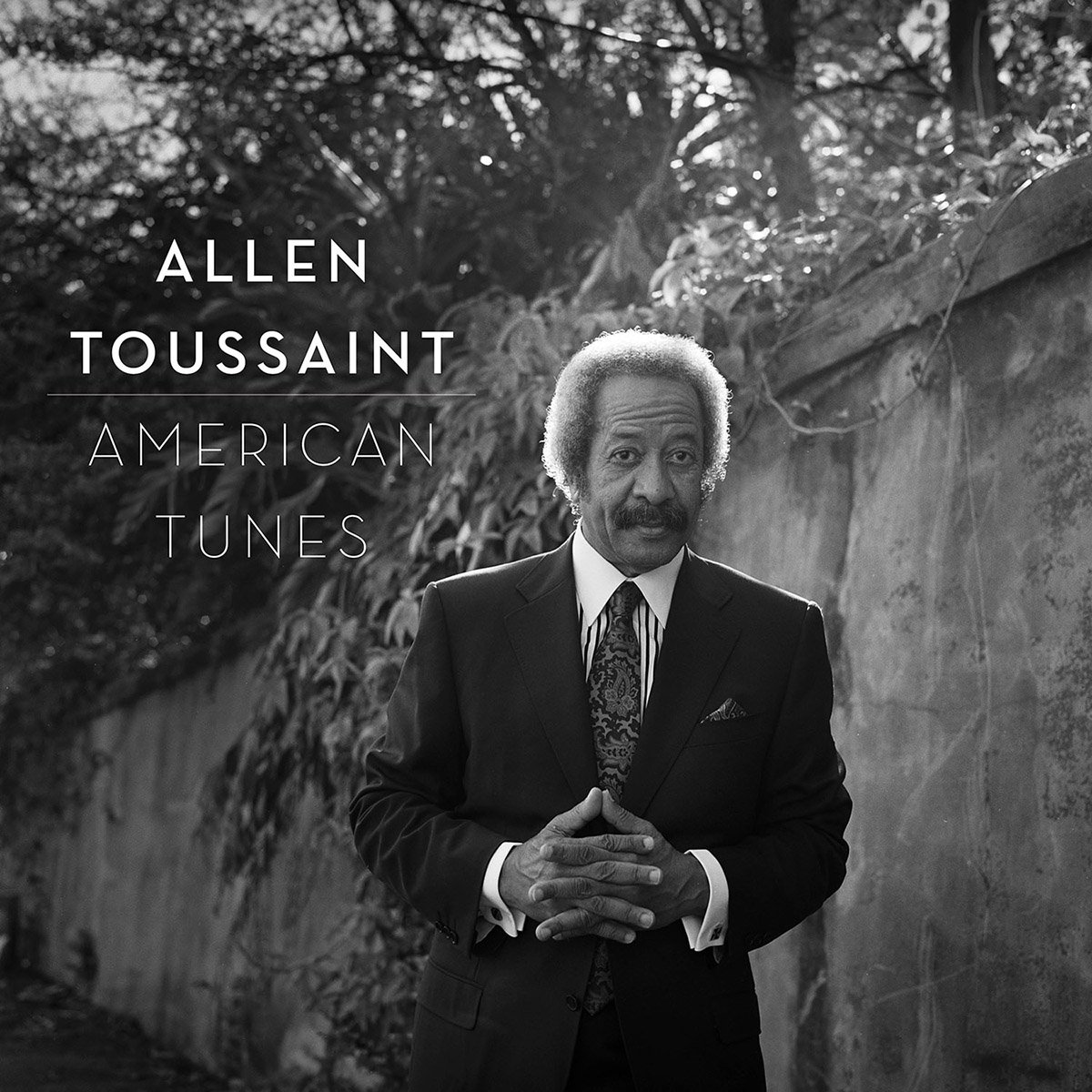
Allen Toussaint
Sunday, April 17, 2016
Allen Toussaint
It's @RecordStoreDay! Get @iamClintMansell #RequiemForADream #vinyl @ yr local music shop http://bit.ly/1VuENNt
Tuesday, April 5, 2016
Allen Toussaint band plans tributes at French Quarter Fest, Jazz Fest

Musicians Clarence Reginald Toussaint, Roland Guerin, Herman LeBeaux, Renard Poche in the late Allen Toussaint's studio in New Orleans on Friday, March 18, 2016. (Photo by Brett Duke, Nola.com | The Times-Picayune)
By John Wirt (Follow on Twitter)
on April 04, 2016 at 7:00 AM, updated April 04, 2016 at 10:33 AM
The core members of Allen Toussaint's band felt like they were part of his family. Two musicians in the late songwriter, pianist and producer's band really are family members -- his son, percussionist Clarence "Reginald" Toussaint, and son-in-law, drummer Herman LeBeaux Jr.
Clarence Toussaint, LeBeaux, guitarist Renard Poché and bassist Roland Guerin performed with Toussaint from 2008 until a heart attack felled him Nov. 10 after a concert in Spain.
The surviving musicians recently gathered at the beloved New Orleans music master's recording studio – still decorated with his art and music memorabilia -- to reminisce. The warmth and professional fulfillment they experienced with Toussaint, onstage and off, dominated the conversation.
Toussaint, Poché said, as he sat beside his band mates, had a vision for everything he did.
"Very particular about the music," the guitarist emphasized. "He also had amazing focus. So much so that he'd write music charts in the studio while the band rehearsed. I don't know how he could focus enough to write while other music was going on! And then he could comment on the conversation we had while he was writing! Man, he had some kind of brain."
And despite decades of success and acclaim, Toussaint stayed driven and enthusiastic.
"If you didn't know better, you would think he was a person still trying to make it," Poché said.
For Guerin, touring with Toussaint was like bringing home friends and a wonderful mentor along for the ride.
"It was home on the road," the bassist said. "In terms of Mr. Toussaint specifically, I learned stuff like I was learning from my dad. He had that kind of care. It was that kind of family, but a band as well."
Lessons learned from the maestro included the "details in everything," the bassist said. "Songs and life. He showed me, in a lot of ways, another world."
read more: http://news360.com/digestarticle/yWC8k_Nkn0Sz9J8TGjcOeQ
Thursday, November 12, 2015
Allen Toussaint (1938-2015)
Reprinted from http://jazzwax.com

Allen Toussaint, a highly influential pianist, songwriter and producer who wrote dozens of hit songs that many Americans know but are surprised to learn he wrote, died on Nov. 9 while on tour in Spain. He was 77.

Allen was probably best known in New Orleans, where his lyrical and eclectic piano style rich in Mardi Gras syncopation was impossible to duplicate, even among the city's R&B greats. Songwriting came early and naturally to Allen, as if the melodies were waiting their turn to pass through his fingers. His playing style had a tender, rolling aggression that both excited and pleased the ear. And as a producer, Allen was instrumental to the career of many artists, particularly the Meters. He remained a hero of many leading artists from New Orleans, including Dr. John and the Neville Brothers, who, like Allen, never lost contact with the city's inbred, complex musical language. As a songwriter, Allen often used "Naomi Neville" and other names as pseudonyms.

In listening back to my recorded interview with Allen in 2013 for the Wall Street Journal (go here), I was reminded of his gentle and courtly manner and ability to reach into himself for beauty. As he spoke, I decided to focus my "House Call" column on his family's shotgun shack and the Story & Clark upright piano that arrived at his home from his aunt when he was 6 1/2. As you'll read, even then there was a quiet, mystical quality about Allen. [Photo above of Allen Toussaint in 2013 in front of the home on College Court where he and his family lived in the Gert Town section of New Orleans. The house now bears a plaque recognizing its role in music history. Dig the license plate! Photo by Rush Jagoe for The Wall Street Journal]

The last paragraph of my piece based on our chat still chokes me up, particularly now:
"On my 14th birthday, I was playing piano and suddenly stopped. I turned my body to the left, straddled the seat and rested my elbows on my thighs. For whatever reason, I said to myself, 'I'm 14 and every 10 years I'm going to check back with this 14 year old and tell him how I'm doing.' I have no idea how I came up with that, but from then on I had those chats. They don't last long. I talk to myself as though that 14-year-old is still at the piano. I often say how surprised I am at how far I've come. The 14-year old at the piano just listens—but he always seems as surprised as I am."

When we finished, Allen said, "You know, that was a fascinating conversation. No one ever asked about that part of my life, and I don't believe I've ever told anyone that story about those talks with myself." A loving man. I miss Allen and his graceful touch.
Here are six hit songs by Allen Toussaint that you certainly know but probably weren't aware that he wrote:
Here's Ernie K. Doe singing Allen's Mother in Law...
Here's Allen's A Certain Girl recorded by the Yardbirds...
Here's Herb Alpert and the Tijuana Brass playing Allen's Whipped Cream (dig the New Orleans cakewalk feel in the rhythm)...
Here's Glen Campbell singing Allen's Southern Nights(again, dig the New Orleans bounce)...
Here's Allen's Workin' in a Coal Mine by Lee Dorsey...
Here's Boz Scaggs singing Allen's What Do You Want the Girl to Do?
And here's Allen singing and playing the same song. It's all you need to know about Allen to love him...
Used with permission by Marc Myers
Sunday, April 28, 2013
Allen Toussaint wows the crowd at New Orleans Jazz Fest

on April 27, 2013 at 6:43 PM, updated April 27, 2013 at 6:54 PM
Mr. Music. That's how New Orleans musician, singer, composer and songwriter Allen Toussaint was introduced when he arrived on the Acura Stage at the New Orleans Jazz Fest, and from the crowd's response, the moniker was apt. The throng jumped to its feet and began swaying, nodding and bouncing up and down as Toussaint exuberantly worked his way through a sampling of his long portfolio of compositions.
The band backing him offered the well-rehearsed, masterful sounds of seasoned musicians. Instruments included a bold horn section -- trumpet, flute, saxophone, and trombone -- accompanied by percussion and guitars. A trio of backup singers complemented Toussaint's vocals when he sang and took over the set when it came to "Lady Marmalade."
"Voulez vous couchez avec moi ce soir?" they teased, and the audience sang along.
Another break in the set came when vocalist and saxophonist Grace Darling joined the band on stage for two songs: One an instrumental on which she dueled with other brass players, the other a song on which she sang a solo. Toussaint signed Darling to his NYNO Records in the late 1990s and she then recorded "Imaginary Lover" on the label.
Read more: http://www.nola.com/jazzfest/index.ssf/2013/04/allen_toussaint_wows_the_crowd.html
Thursday, December 15, 2011
Allen Toussaint: Jazz Inspired

In an excerpt from her Jazz Inspired radio show, Judy Carmichael speaks with the legendary New Orleans pianist, composer, singer and producer about his life and influences
Pianist/singer/producer Allen Toussaint has worked in almost every area of the music business and brings his wide ranging tastes to every project he undertakes. Perhaps Allen’s biggest inspiration is his beloved New Orleans, and although this Big Easy native was temporarily living in NYC, when we had this 2007 conversation for my Judy Carmichael's Jazz Inspired radio show, he said that he feels New Orleans is always in his heart and influences all he does.
Judy Carmichael: What was your first exposure to jazz?
Allen Toussaint: My brother had introduced me to Dave Brubeck’s quartet at the time he and Desmond were playing together, and Desmond’s solos were just so melodic and so wonderful and it all seemed like it had been done before, even though a lot of it, I guess most of it, was improvisation. It was so pure and organized. I couldn’t help but just love that. It was so easy on a young ear.
Judy Carmichael: A nice entrée into jazz.
Yes, yes very easy.
Growing up in New Orleans I think most people would think you were listening to jazz from day one. That’s what people who don’t live in New Orleans are thinking. What were you listening to as a child?
Well early on I heard boogie-woogies like "Pinetop's Boogie Woogie" and also Ammons' various boogies. The early hillbilly music was very soulful as far as I was concerned. Early on I hadn’t distinguished – hadn’t gotten to know that there were specialists. I thought whoever played piano played everything that a piano played.
So anything I heard I thought everyone knew this except me. Whether it was blues, hillbilly, jazz. And I remember my mother buying an Emerson record player. And during those days they used to give you some lagniappe when you bought something. Like if it was a record player, they’d give you two albums. And these two albums, one of them was, as I get to know now, easy listening music and the other one was light classics. Well, not as light as light can be, but classical.
And I remember one of them had on it Grieg’s piano concerto. And I had this old upright of course, that they had sent to my house for my sister to play, which didn’t happen because they started her out with a teacher who smacked her hands when she made a mistake. And she immediately hated him and the piano. I loved it because I guess I didn’t have a teacher that early.
But this piano was an old upright that my aunt had given her. And of course, it was thus a half step out of tune and not totally in tune with itself. But I remember hearing Grieg’s piano concerto and I figured well I have to learn this because piano players are playing this – except me. To equalize A minor, because it hadn’t dawned on me that it was Grieg’s piano concerto in A minor. I just knew it was this classical music. So I had to play Bb minor to make it sound like A minor on the piano. And I figured “this is where this record is.” So I learned Grieg’s piano concerto off this record in Bb minor. Of course a most humbled version as I got to know later.
But I did the best I could with it. It’s quite an extensive piece. It’s not a verse and chorus and out. It’s a whole piece with movements and all. And I must say that I did learn the whole piece as playing by ear and in Bb minor. And I had a good time with it and I learned a few other things on that. There was Paul Weston’s orchestra playing stuff and I learned other pieces.
And then Benny Goodman—“Love Just Walked Right In.” So things like that. There was this trombone duet. This was two albums that my mother got with the Emerson record player that sent me off to another world of learning these pieces. I remember that. Then I began to hear other pieces in categories like that.
So it was no longer just boogie-woogies or just “Nola” and “The Doll Dance” because my mother liked things like “Nola” and “Doll Dance” and “Moonlight Serenade.” When company would come, she’d have me to come play and “Nola,” play “The Doll Dance.” Some sort of way she got to see to it that I heard those pieces some sort of way. So those are some of the things that I went through coming along. It was much later when I heard pianists like Art Tatum, which was a shocking situation.
I had met the sounds of Professor Longhair, which I consider the strongest influence in my whole life as far as people on record playing the piano. I had been playing the boogie-woogies and the shuffles as I heard them on radio and on some records, recordings. Then I heard Professor Longhair with this stuff that wasn't either one of those things or any of the things I had heard. Of course, I took off behind that and learned everything I could and waited for the next thing that would come out on record. One of the other kids would hear about it and he'd say "you know there's another Professor Longhair [record]” and we'd wait for it to come on the radio as many times as we could. Then, find it at a record shop. Because things weren't nearly as easy to get to as they are now, haven't even the money to go, you know. Many times, you'd wait until you hear it on the radio to learn another part. But when I heard Professor Longhair that really stomped on my life.
And the extra liberties he would take, even though the old blues players on guitars and things like that took those extra liberties rather than things have to be four bars, 8 bars, etc. it changed when it got ready, when they felt like it. Professor Longhair did that as a pianist so that was very good for me to hear that. It didn’t have to stop when it come down and make the dominant seven. It didn’t have to be just that bar to the four, he would play an extra one if he wanted to. I just thought that was absolutely wonderful
To have that kind of freedom.
He did that. I didn’t know that was freedom. I didn’t call it anything but Professor Longhair.
Oh interesting, yeah.
Yeah I didn’t know that was freedom. I did it very rigidly when I learned to do that and I didn’t apply to anywhere else but Professor Longhair because I figured his music was like that. I hadn’t developed any of my own philosophies about anything.
There was a gentleman named Ernest Penn who came through my life on or about age 12, maybe 12 and a half. He had come from the jitney days. He used to be a banjo player during the jitney days in New Orleans. He came from the era that if you played a string instrument you played everything that had a string on it.
So he played banjo, mandolin, violin, bass, piano. He came from a whole group of musicians that that’s how they felt about it. So he didn’t feel that was unique that he did that. Most of those guys who played a string instrument thought that if you didn’t play other ones, "well, you not ready to be here tonight."
But anyway, by the time I met him, his gigging days were over, he had no instrument and he had come from off the scene wherever he had been all that time to live out his other days with his old mother and aunt, or either his aunt and grandmother. I don’t think it was his mother.
They lived across the street in College Court where I lived. His name was Ernest Penn and he was a master pianist. However, he came to live over there. He was an outcast from wherever he had been. Something had gone dreadfully wrong. He heard the piano playing in my house one day as I was playing and when I came outside he told me, "you know I’m a string man and I play everything with a string on it and I was a master banjo player." He was a very spicy man and had no teeth in the top of his mouth and very few at the bottom. My parents hated him.
But anyway, when he told me that, I invited him in to play. He began to play butterfly piano. The piano suddenly got to be, this piano that had been sitting in the house all that time, suddenly got too big for the room as he sit and play this butterfly and just trilling with the right hand and was happy and vibrant and very definite. So I just of course fell in love with that.
Again, I say my parents, my mother especially, didn't want him around because he smelled of very strong alcohol all the time. He was a very spicy little man that talked fast and plenty. He was annoying to everyone but I would wait till he wake up every morning and bring him over to the house to play and show me some of this butterfly and these old songs. He would play things like High Society and when it comes time for the clarinet solo, he played that clarinet solo while he was going just happy and looking around.
He was very patient with me with this kind of music because there was so much going on. He would have to slow it down for me because I wanted as much of this as I could get. He would slow it down for me to see what it was. He would play this. Anyway, he added tenths into my left hand - he added tenths into my whole life.
I will always be grateful for that. However, when it's time to think of him, I think of him right in that form and nowhere before or after because he was so very, very complete. He came also from the philosophy: don’t show anybody your stuff because they'll take it and they won't let anyone know it was yours. - http://jazztimes.com/articles/29067-allen-toussaint-jazz-inspired
Sunday, June 20, 2010
Allen Toussaint, Elvis Costello On Piano Jazz

August 26, 2009 - As part of the celebration of 30 years of Piano Jazz, Marian McPartland has asked some of her favorite musicians to guest host. Singer-songwriter Elvis Costello sits down with music legend Allen Toussaint in this installment of Piano Jazz. Like Toussaint, Costello has crossed many genres in his career, working with the likes of producer/composer Nick Lowe, trumpet great Chet Baker, legendary songwriter Burt Bacharach and his own wife, jazz pianist and singer Diana Krall.
Photo: Douglas Mason/Getty Images Entertainment
Allen Toussaint (left) and Elvis Costello.
Toussaint is one of New Orleans' most revered musicians, working since the late 1950s as an arranger-producer while writing songs like "Working in a Coal Mine," "Southern Nights" and "Ride Your Pony." These days, he performs his music around the world, and even joined Costello to record the 2006 album The River in Reverse. In this session, Costello introduces Toussaint as "a living embodiment of the rich musical heritage of the Crescent City." Here, Toussaint performs "Mother-in-Law," "Fortune Teller" and a very personal version of "Southern Nights," a hit single for country/pop great Glen Campbell. Toussaint takes the song back to its roots, recalling the nights when his father took him to the country to visit "the old Creole people." Then he brings his New Orleans-born rhythmic and harmonic sensibilities to the standards "Singin' the Blues," a song closely associated with Marian McPartland and her late husband, cornetist Jimmy McPartland.
The lively conversation covers early influences on Toussaint's music: jazz, blues, boogie-woogie, church music and "hillbilly music." Talk changes to the great storm Toussaint calls "the booking agent Katrina." It actually helped him move into a rewarding new phase in his career.
In the final selection, the duo plays a medley of piano legend Professor Longhair's "Tipitina" and the Toussaint-Costello song "Ascension Day." Over Toussaint's rolling, bluesy piano, Costello's lyrics paint an anguished picture of the empty streets they found shortly after Katrina, when they came to New Orleans to finish The River in Reverse. There is hope in the song's ending, though: "But I know they will return / Like they've never gone away / Come Ascension Day."
Originally recorded April 17, 2009. Originally aired Aug. 26, 2009.
http://www.npr.org/templates/story/story.php?storyId=112183772
Tuesday, February 16, 2010
Allen Toussaint's Keys To New Orleans
New Orleans is not only the cradle of jazz. It's also the birthplace of great jazz piano, dating back to the early 1900s, when Jelly Roll Morton tickled the ivories. Hear three pianists who are upholding that great tradition — Jon Cleary, Henry Butler and Allen Toussaint — onstage at the Kennedy Center in Washington, D.C., with Keys to New Orleans.
Jon Cleary was born in England and came to New Orleans at age 17 to immerse himself in the city's music and culture. He arrived as a guitarist without his axe, moved into a house with a piano and changed instruments. Now, he's one of the most soulful R&B keyboard men in town. He's gigged with such Bayou blues luminaries as Earl King (1934-2003) and Walter "Wolfman" Washington, Taj Mahal, Bonnie Raitt and John Scofield. On JazzSet, Cleary leads off with Crescent City composers and originals.
The next man up is New Orleans native Henry Butler, a classically trained musician who studied jazz with master pianists Harold Mabern, George Duke and Sir Roland Hanna. In recent years, he's broadened his scope to work with bluesman Corey Harris and guitarist Leo Nocentelli of The Meters. Butler opens his segment with an original that captures the feeling of home: "Orleans Inspiration." When he moves on to "(Sittin' On) The Dock of the Bay" and Toussaint's "Workin' in a Coal Mine," your hair may go perpendicular.
Then Toussaint steps on the stage and says, "Henry left a few keys." The Recording Academy recently honored Toussaint with a lifetime-achievement Grammy for his contributions as a singer and songwriter, pianist, arranger and producer. From his 1950s work with Fats Domino and Lee Dorsey to his chart-topping 1970s hits (short list: "Lady Marmalade" by Patti LaBelle, The Pointer Sisters' "Yes We Can Can," Bonnie Raitt's "What Do You Want the Boy To Do?" and Glen Campbell covering "Southern Nights") to present-day collaborations with Elvis Costello, Toussaint has created a unique, rich legacy. Singing at the piano, he shares some of it here.
*(Originally recorded Nov. 7, 2008).
Credits: Dr. Billy Taylor is the Artistic Advisor for Jazz at the John F. Kennedy Center for the Performing Arts; Kevin Struthers directs jazz programming. Field producer and writer is Mark Schramm, with recording/remix engineer Duke Markos and Big Mo Recording.
http://www.npr.org/templates/story/story.php?storyId=103649294
Wednesday, December 9, 2009
Allen Toussaint - Album: Bright Mississippi
Album: Bright Mississippi / Song: Bright Mississippi
Let us return to a time when jazz was truly the music of the "streets," where the rhythms moved in time to the times, where emotion and a visceral feel were the benchmarks of appreciation, and where New Orleans was the center of this musical universe. If there was anyone who could appropriate this sound today through the combination of experience and local oral transmission, it would be Allen Toussaint, the longtime NOLA pianist, songwriter, arranger and record producer.
Producer Joe Henry says that Toussaint's musical approach was "reaching back to look forward." Sitting down for a few days in the studio with a stellar band -- featuring musicians like Don Byron, Nicholas Payton and Marc Ribot -- Toussaint channels the 21st century back into the early 20th, with inspiring takes on the works of Sidney Bechet, Louis Armstrong and Jelly Roll Morton and their heirs. It's a superb recording, with soulful performances all around. --Nick Francis, Jazz24
Sunday, June 21, 2009
Allen Toussaint - sweet touch of love
sweet touch of love - allen toussaint
Allen Toussaint (born January 14, 1938) is an American musician, songwriter and record producer.
One of the most influential figures in New Orleans R&B, many of Toussaint's songs have become familiar through their numerous cover versions, including "Working in the Coalmine", "Ride Your Pony", "Brickyard Blues", "Get Out My Life Woman", "Southern Nights" and "Everything I Do Gonna Be Funky".
Allen Toussaint

R&B legend Allen Toussaint has done with his music what America has been forced to do since Hurricane Katrina laid waste to his hometown -- take a new look at what is in danger of fading away.
His new album is a collection of New Orleans classics such as "St. James Infirmary" and songs from outside the Big Easy that Toussaint reworked into the style he grew up hearing, like Thelonious Monk's "Bright Mississippi," from which the album takes its name, "The Bright Missisippi."
The result is a departure from 1960s and '70s Rhythm & Blues and pop tunes for which the 71-year-old pianist and composer is famous, hits such as Lee Dorsey's "Working in a Coal Mine" and the Rolling Stones' "Fortune Teller."
But if the album differs from Toussaint's best-known work, it couldn't be closer to his roots in New Orleans, a city undergoing a slow recovery from the 2005 hurricane. There, the traditions of marching bands and jazz funerals have endured.
"There's been a resurgence of this kind of music," Toussaint said. "Also, I'm very glad about the New Orleans traditional jazz brass bands who help keep this genre alive, even though it's a little rougher than what we're doing on this particular album."
The soft-spoken Toussaint recently spoke with Reuters by phone before heading on tour to St. Paul, Minnesota, San Francisco, Washington, D.C., and Calgary, where on June 22 he headlines a jazz festival with Big Easy stalwarts, Dirty Dozen Brass Band.
http://www.postchronicle.com/news/entertainment/article_212238519.shtml?ref=rss
Subscribe to:
Posts (Atom)

