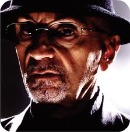
Tomasz Stanko was 20 and a graduate of the Cracow Music Academy when he formed his first band, the Jazz Darings, with pianist Adam Makowicz in 1962. Inspired by early Ornette Coleman and the innovations of Coltrane, Miles Davis and George Russell, the group is often cited by music historians as the first European group to play free jazz, but for the trumpeter its importance was eclipsed by the invitation to join Krzystof Komedaís quintet the following year.
Stanko has acknowledged that much of his subsequent musical direction and his own compositional style was influenced by Komeda. ìThe lyricism, the feeling of playing only the essential, the approach to structure, to asymmetry, many harmonic details ñ I was so lucky that I started out with him.î Stanko toured for five years with Komeda, appeared on eleven albums with him, and also made contributions to all of the films scores that Komeda realized in Poland.
In 1970, Stanko joined Alex Schlippenbachís Globe Unity Orchestra, which brought him into contact with all the key figures of the European jazz avant-garde, and also formed a quintet, with violinist Zbiegniew Seifert. The following year he collaborated with Krysztof Penderecki and Don Cherry. His most important work of the 1970s, however, may have been with Finnish drummer Edward Vesala. Their series of quartet albums, of which ìBalladynaî was the first, set some new directions with explorations of the free ballad, graced by soulful, grainy trumpet, and Stanko also made important contributions to Vesalaís ìTogetherî album, a massed gathering of Nordic/Baltic improvisers.
During the 1980s Tomasz Stanko explored many approaches to improvisation. He travelled with Vesala to India and recorded trumpet solos in the Taj Mahal; again with Vesala, he hooked up with Chico Freeman and Howard Johnson in New York. He worked extensively with Cecil Taylor in large ensemble contexts, and led a number of groups of his own, such as COCX, which deployed post-ìBitches Brewî rock-rhythms, and Freelectronic, an ahead-of-its-time exploration of electro-acoustic options. ìBluishî, a trio recording with Arild Andersen and Jon Christensen preceded a return to ECM.
Since resuming his association with ECM with "Matka Joanna" in 1994 (his first album as a leader for the label in 20 years), Tomasz Stanko has reached a new audience with his work. Two recordings with his international quartet with Bobo Stenson, Anders Jormin, and Tony Oxley, were followed by a highly successful tribute to film music composer and mentor Krzysztof Komeda in 1997.
Stanko's "Litania" project became a popular fixture on the international festival circuit. In 1998, producer Manfred Eicher assembled a trans-idiomatic band around the trumpeter for "From The Green Hill", a recording which pooled the talents of Dino Saluzzi, John Surman, Michelle Makarski, Anders Jormin and Jon Christensen. The "Green Hill" album won the coveted German Critics Prize (Deutscher Schallplattenpreis) as Album of the Year in 2000.
All of the above had been, as it were, events on the main stage. Concurrently, however, Tomasz Stanko maintained a Polish quartet, which now became a priority for him. Pianist Marcin Wasilewski, bassist Slawomir Kurkiewicz and drummer Michal Miskiewicz were already working together as a (very) young trio when Stanko first heard them at the beginning of the 1990s, and in 1994 they began to work together, initially on theatre music, some of which was recorded for the Polish Govi label. They quickly developed into his band of choice for all Polish engagements, working with him on theatre and film music initially. Pianist, bassist and drummer have also built up a reputation as a unit in their own right, working under the name Simple Acoustic Trio.” "Soul of Things" is the quartet's first record release.
"Soul of Things" is essential Stanko, the trumpeter playing with that dark, intense tone that is so immediately identifiable. The programme on this occasion is a balladesque suite, brimming over with Slavic lyricism, and simply titled "Soul of Things", Variation 1-13. The music makes allusion, in passing, to themes Stanko has contributed to Polish film, and other pieces of his, including the classic "Maldoror's War Song" are also quoted, but as Stanko says, tongue only partly in cheek, "I've been playing the same song my whole life." Titles, in other words, are after the fact; what matters is the emotional depth, and this has been a constant through the different phases and forms that Stanko's music has taken over the years.
There is a "timeless" feel to "Soul of Things" that relates to Stanko's roots as a player; this forward-looking trumpet player is also looking back here. His all-inclusive music on this occasion seems to connect with early influences. While sounding unmistakably like himself he also triggers memories of his first heroes.
"Stanko evokes the spirits of the finest trumpeters dead and living while creating a mood and a voice uniquely his own. Yes, you can hear the influences of Miles Davis and Chet Baker at their most introspective and profound, as well as hotter, more rasping traces of Lee Morgan and Clifford Brown… ‘Soul of Things’ stands shoulder to hiply-slumped shoulder with ‘Kind of Blue’, and has an even-better sound – ECM’s deep and finely-burnished finest.“ - Thomas Conrad, Stereophile, Record to Die For
15 v i d e o s f o r y o u