Wednesday, September 10, 2014

Trumpeter Davis’ vision right on schedule

Chicago Tribune
Howard Reich
More than a decade ago, Chicago trumpeter Orbert Davis and his longtime business partner, Mark Ingram, embraced a bold idea: Create an orchestra that could merge jazz and classical traditions, an idiom that musicians sometimes call Third Stream.

As Davis’ Chicago Jazz Philharmonic prepares to launch its 10th anniversary season this month, the two men and their colleagues appear to have accomplished what looked nearly impossible when they started.

“I’m amazed that we’re still in existence,” says Davis, looking back on a long list of performances. “Every concert featured world premieres. We had a chance to showcase a lot of the best talent that Chicago has to offer.
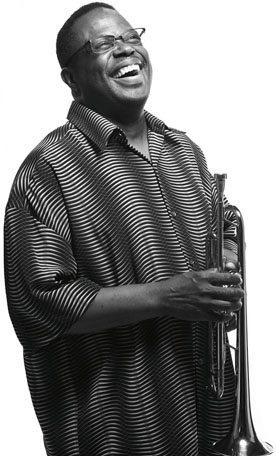
“And we’re right on schedule in terms of my vision.”

That vision involved not just performing Third Stream repertoire but also training classical musicians to get comfortable with improvised jazz, and jazz musicians to become conversant in symphonic practices. The task is more challenging than it sounds, for jazz and classical players are not always educated in each other’s disciplines, making it difficult for many to finesse jazz-classical orchestral scores by Miles Davis and Gil Evans, John Lewis, J.J. Johnson and other cross-genre adventurers.

Listen to the Chicago Jazz Philharmonic, especially after all these years of work, and you’re hearing an ensemble that sounds equally at home in both realms.

How fitting that its 10th anniversary season will be its most ambitious, with concerts in high-profile venues such as the Auditorium Theatre and Symphony Center, as well as a second trip to Cuba in December. In addition, the organization for the first time has commissioned a new work by someone other than Davis: composer Daniel Schnyder.

In many ways, then, Chicago Jazz Philharmonic has grown dramatically in the past decade. Its annual budget developed from almost nothing to $350,000 a few years ago, $550,000 during the past three years and $750,000 for the coming season. That figure includes its extensive education efforts, which bring Davis and his organization into 11 schools and include a summer jazz academy that recently served 110 kids.
read more: http://hydeparkjazzfestival.org

Friday, August 15, 2014

Orbert Davis’ Chicago Jazz Philharmonic Chamber Ensemble-Sketches of Spain (Revisited)

Trumpeter Orbert Davis has taken the bull by the horns in Spanish style, and re-orchestrated the two longest pieces from the classic Miles Davis/Gil Evans 1960 album, Sketches of Spain, for this superb 19-piece ensemble. He’s also replaced the three shorter pieces with his own compositions and arrangements. Orbert Davis is no relation to Miles- but he’s been playing the Miles role in this music with the Chicago Jazz Philharmonic since the 90s. This final version was premiered in 2011. ‘My thespian friends…advised me to simply act the part of Miles through my trumpet…’ he says, but this is no slavish imitation.

Sketches of Spain and Solea, the former by Spanish composer Joaquín Rodrigo and the latter by Gil Evans, were both arranged by Evans. Both draw on traditional Spanish scales (especially the Phrygian mode). Orbert Davis explains how he’s developed these, in fascinating liner notes. The number of musicians is about the same as the Miles/Evans version- but he’s kept the woodwinds, upped the percussion, dropped the bassoon and harp, and brought in a string quartet and piano. From the start of Sketches of Spain it’s clear that Orbert Davis has his own sound and feel. He seems to blend in more with the orchestra than Miles did: he aims to play the written parts with a ‘classical aesthetic’. But his solos are very distinctive and full-toned, more like Wynton Marsalis perhaps. There are wonderful dynamics in the writing, from a duet between Davis and Leandro Lopez Varady’s piano to huge brassy crescendos; from swing to almost military drumming; from tender cadenzas to lush harmonies.

Miles called Solea a ‘…song about loneliness, longing and lament. It’s close to the American black feeling in the blues.’ Orbert Davis’ version keeps the drama, with deep strings and melodramatic trilling on the piano. The groove builds, a little like Ravel’s Bolero (there are even what sound like tiny quotes from the melody in Orbert Davis’ solo), with African and Middle Eastern percussion as well as castanets. He plays passionately and chromatically over the backing harmonies, rather than just using Flamenco scales. There’s a delicious section where he improvises along with flute and piano, as the strong rhythmic strings riff on Flamenco phrases.
read more: http://news360.com/digestarticle/ENGYzRkOEEmAeJbvLY9M7w