
#KeithJarrett #CharlesLloyd #sax— Peter McConnell (@jazzstagenet) 10 de março de 2017
Keith Jarrett Plays Soprano Saxophone with Charles Lloyd Quartet (1968)
Keith... https://t.co/fQhnH6z3pf
Monday, March 13, 2017
#KeithJarrett Plays Soprano Saxophone
Tuesday, May 10, 2016
JazzTimes Magazine
Happy birthday to the game-changing pianist Keith Jarrett, who turns 71 today. Check out this JT profile from... https://t.co/HuRcgXQsV4— JazzTimes Magazine (@JazzTimes) May 8, 2016
Sunday, June 28, 2015
Keith Jarrett Trio - Bye Bye Blackbird
Published on Feb 9, 2013
Recorded live in Tokyo, July 25, 1993 at Open Theater East.
Keith Jarrett - piano
Gary Peacock - double-bass
Jack DeJohnette - drums
"Bye Bye Blackbird" (Ray Henderson/Mort Dixon)
Thursday, May 21, 2015
Keith Jarrett: Creation | Album Review
Cormac Larkin
Wed, May 20, 2015, 20:00
Seventy years after his birth, and 40 years after his Köln concert raised the art of solo piano to undreamt-of heights, Keith Jarrett remains the pre-eminent improviser on his instrument, capable of profoundly moving, spontaneous compositions.
These days – because of his artistic status, his long-standing relationship with ECM and, let’s be honest, an entire lack of personal modesty – his every note is recorded for posterity.
Even so, it’s four years since his last solo release, the joyously exuberant Rio.
This latest is more subdued, a selection of sometimes brooding but occasionally sublime ruminations, culled from live performances around the world in 2014, amounting to an unintended suite many Romantic-era classical composers would have been happy to have written.
read more: http://news360.com/digestarticle/FP-_wyMIS0-CpcghozJp_A
Monday, January 5, 2015
Keith Jarrett returns to Carnegie Hall’s
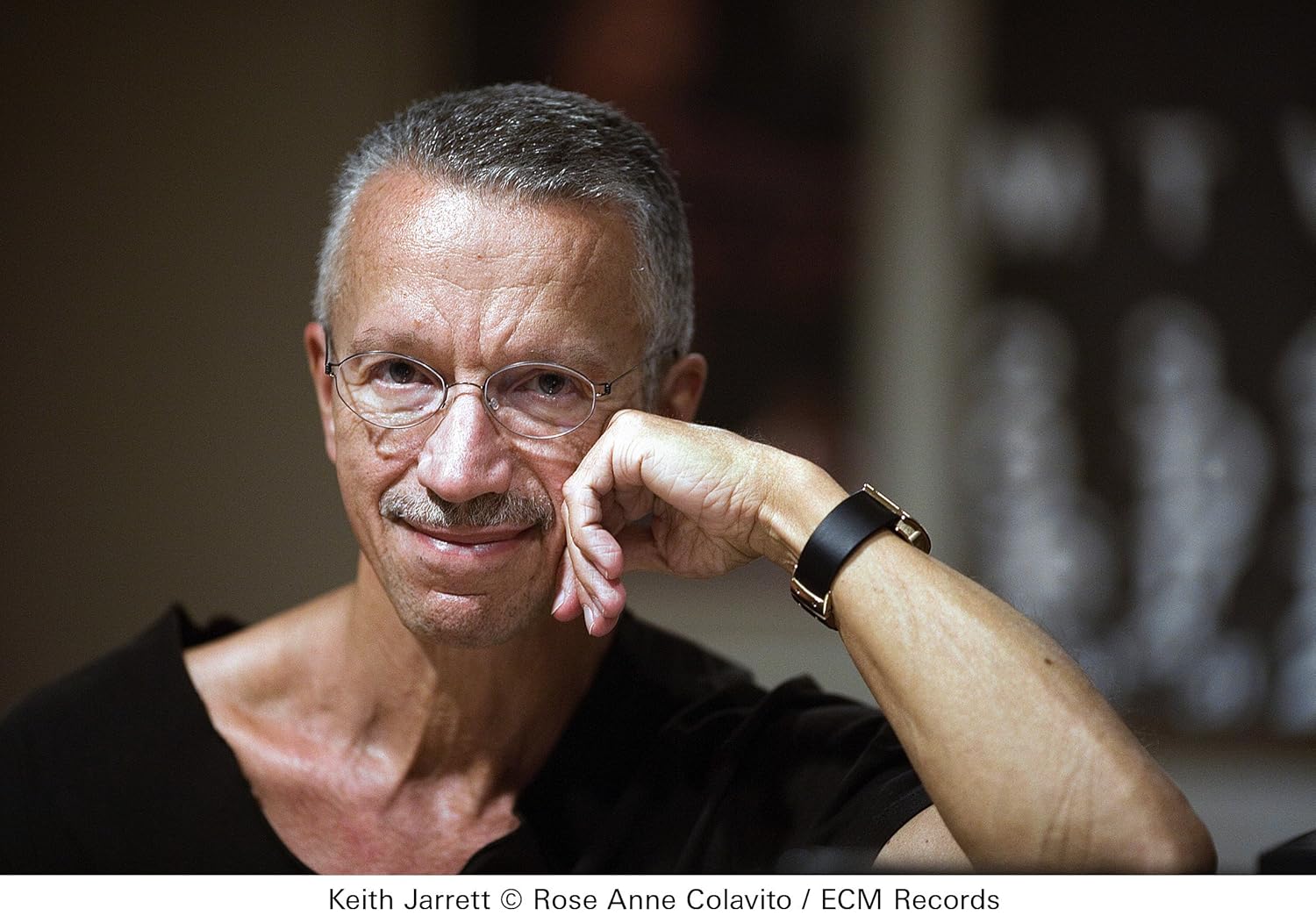
KEITH JARRETT
RETURNS TO CARNEGIE HALL
FOR RARE SOLO PIANO CONCERT
RETURNS TO CARNEGIE HALL
FOR RARE SOLO PIANO CONCERT
KEITH JARRETT - SOLO PIANO
An Evening of Piano Improvisations
Tuesday, March 3, 2015 - 8:00 PM
CARNEGIE HALL
Stern Auditorium/Perelman Stag
Keith Jarrett returns to Carnegie Hall’s Stern Auditorium/Perleman Stage on Tuesday, March 3, 2015 at 8:00 PM to perform one his rare solo piano concerts. The concert will feature an entire evening of solo piano improvisations and will be his only solo concert appearance worldwide in Winter 2015.
A recipient of a NEA (National Endowment of the Arts) Jazz Masters Awards in January 2014, Keith Jarrett has come to be recognized worldwide as one of the most creative and uncompromising musicians of our times - universally acclaimed as an improviser of unsurpassed genius. Over the past 40+ years, his landmark improvised solo piano concerts and recordings have incorporated a broad spectrum of musical languages evoking a dynamic creative process producing spontaneous music that is both deeply personal, yet universal.
The solo piano improvisations on his best selling ECM Records solo piano recordings such as Solo Concerts, The Koln Concert, Sun Bear Concerts, Paris Concert, Vienna Concert, La Scala, Radiance, The Carnegie Hall Concert, Testament: Paris/London and Rio have helped redefine the role of the piano in contemporary music. This singular body of improvised solo piano work is without precedent with ˇThe Koln Concert being the best selling solo piano recording in history.
- Excerpt from review of RIO - Keith Jarrett’s most recent 2011 ECM solo concert recording:
“RIO is confirmation of Keith Jarrett’s brilliance as a composer, improviser and musician. He has mastered the rare combination of innovation and pragmatism wherein simple and complex structures coexist and transcend the conventional. Rio is a work of unsurpassed energy, beauty and creativity, and is Keith Jarrett's best solo work to date.”
From: Jazz Promo Services
www.jazzpromoservices.com
Monday, December 22, 2014
CD REVIEW: Keith Jarrett / Charlie Haden / Paul Motian - Hamburg ‘72

After a hint of “When You Wish upon a Star” during a lyrical, unaccompanied opening, the piano coalesces with splashing cymbals and Rainbow (which is credited to Jarrett’s then-wife, Margot) becomes a lightly swinging and relatively mainstream affair. Haden is only briefly heard, and – until Jarrett’s luminous eruptions at the end of the piece – we only get a taste of the riches in store.
The next four selections are by Jarrett. Everything That Lives Laments is notable partly because – in addition to piano - Jarrett plays (frequently over-blown) flute, and Motian shakes bells and chimes. Haden is highlighted before retreating into a group improvisation that is clearly more than a random free-for-all; these men know each other well and really communicate. The tune ends tenderly, with Jarrett back on piano and Motian at the drums.
Piece for Ornette bursts with energy and evokes Coleman’s urgent, piano-less style. Jarrett uses soprano saxophone with a raw, vocalised timbre. Chattering, shrieking and stuttering with wayward abandon, his dialogue with a highly-charged Motian builds in intensity and becomes a thrilling, passionate exchange. Eventually, Haden steps between them, as if he’s engaging calmness and reason to break up a screaming row. After this, it’s hard to imagine that Jarrett – in little over a decade – would be leading a very different trio with a repertoire concentrating on old jazz standards.
read more: http://news360.com/digestarticle/zY-Z3JVmkk-ommq2Cl7fGg
Sunday, June 23, 2013
All The Things You Are : Keith Jarrett
All The Things You Are [ Jerome Kern ]
Time and again I've longed for adventure,
Something to make my heart beat the faster.
What did I long for? I never really knew.
Finding your love I've found my adventure,
Touching your hand, my heart beats the faster,
All that I want in all of this world is you.
You are the promised kiss of springtime
That makes the lonely winter seem long.
You are the breathless hush of evening
That trembles on the brink of a lovely song.
You are the angel glow that lights a star,
The dearest things I know are what you are.
Some day my happy arms will hold you,
And some day I'll know that moment divine,
When all the things you are, are mine!
all the things you are . it was api.
jazz piano trio All The Things You Are
Keith Jarrett
Gary Peacock
Jack DeJohnette
Yamaha320
Wednesday, June 5, 2013
Keith Jarrett: 'I Want The Imperfections To Remain'
by NPR STAFF, May 27, 2013 2:00 PM
Sometimes records have to steep. Four years after it was recorded live in Lucerne, Switzerland, an album of six standards called Somewhere is finally getting a proper release. Keith Jarrett and his trio, including bassist Gary Peacock and drummer Jack DeJohnette, just weren't happy with the sound of the room or the circumstances at the time. Listen to Somewhere, however, and none of that comes across.
"I tried not to manipulate anything," Jarrett tells NPR's Robert Siegel. "I like the raw tapes. I like it just as it's handed to me the night that it happens. I want the imperfections to remain because, to tell the truth, the way I play in a given space is because of the space. So if we start to change that and I listen to it, then I don't even like it at all."
Mostly, Jarrett says the hardest part was convincing Peacock that the recording was good. You wouldn't know it listening to Somewhere, but "he was in hell that night, as far as the sound was concerned.

Read more: http://www.npr.org/2013/05/27/186505248/keith-jarrett-i-want-the-imperfections-to-remain?ft=3&f=126134671&sc=nl&cc=jn-20130602
Keith Jarrett / Gary Peacock / Jack DeJohnette Somewhere

Tuesday, July 26, 2011
Earshot Jazz announces festival headliner Keith Jarrett
Paul de Barros, Seattle Times jazz critic
Seattle's
nonprofit Earshot Jazz has announced the dates and preliminary headliners for
its fall festival. The initial lineup is strong on pianists — Keith Jarrett
(with Gary Peacock and Jack DeJohnnette), Brad Mehldau and the jazz/rock piano
trio The Bad Plus.
The
roster also includes an all-star group, We Four, playing the music of John
Coltrane, with saxophonist Javon Jackson, pianist Mulgrew Miller, bassist Peter
Washington and drummer Jimmy Cobb; alto saxophone tyro Grace Kelly; and an
educational collaboration with Cornish College featuring pianist Myra Melford,
drummer Allison Miller, pianist Julian Waterfall Pollack, composer Jim Knapp,
vocalist Jay Clayton, drummer Jerry Granelli and the Mongolian jazz ensemble
Arga Belig.
Wednesday, January 19, 2011
How does Keith Jarrett come to Carnegie Hall? Alone.

In my latest column in City Arts - New York, I share a few thoughts about the solo piano improvisations of Keith Jarrett. The headline's not mine, I don't get it -- but the music he performs at Carnegie Hall Jan. 16 may be transcendent, as far beyond jazz as his last album of solo concerts, Paris/London (Testament) or as with jazz as his duets with Charlie Haden, Jasmine.
From: http://www.artsjournal.com/jazzbeyondjazz/2011/01/how_does_keith_jarrett_get_to.html
Monday, May 24, 2010
Charlie Haden And Keith Jarrett Channel The Standards
by NPR Staff
After three decades without a collaboration, jazz legends Keith Jarrett and Charlie Haden have teamed up for a new album called Jasmine. The piano-and-bass duo recorded Jasmine in Jarrett's studio in his New Jersey home — no bells, no whistles, just crystal-clear sound. Haden and Jarrett seamlessly trade melodies back and forth in a sort of musical conversation, but Jarrett says it's much deeper than that. "We're trying to find the dynamic — not exactly blend, but add the right color at the right moment based on what the other player is playing," he says.
On Jasmine, Jarrett plays an old, beat-up Steinway. He says that even though he has another piano to play, he always sits down at his practice instrument. "I have a connection with it," he says. "It has its problems as far as evenness across the keyboard. It has some strange noises and inequities, but it's close to me." During their recording sessions, Haden says, he heard the subtleties of the music in a way he'd never heard them before — the piano mallets striking the strings, and even his fingertips brushing upon his bass' strings.
"It's just incredible, the sounds that come out of the music, that are involved in the music," Haden says. "And it just shows you that it's really not about music. It's about the universe we're living in." Both Jarrett and Haden approach music similarly, with the same musical values, and that's why they say recording this album felt so natural. They channeled the standards in Jasmine, but also put a high premium on improvisation.
"That's the thing about musicians," Haden says. "The priority is to create something new that's never been before. And you put your life on the line every time that you play."
http://www.npr.org/templates/story/story.php?storyId=127038106
Saturday, September 5, 2009
Keith Jarrett Solo Concert
Keith Jarret playing. Footage from "Keith Jarrett: Last Solo". Tokyo '84 Encore.
Keith Jarrett On Piano Jazz
by Alfred Turner
Keith Jarrett is one of the most significant jazz pianists to emerge in the latter decades of the 20th century. A classically trained player and a composer, he was inducted into the prestigious Downbeat Hall of Fame in 2008. He has played with Miles Davis and Art Blakey, and has made several legendary recordings with a quartet that included bassist Charlie Haden, drummer Jack DeJohnette, and sax man Dewey Redman.
Marian McPartland tried for years to get Jarrett to appear on Piano Jazz. She says that in 2005 she "cornered Keith backstage at his Carnegie Hall concert. He could shy away from me no longer!" The Allentown, Pa., native graciously invited McPartland and a small crew to his home studio, a converted barn next to his 18th-century farmhouse. The intimate setting and the chemistry between the two made for an exhilarating session. Jarrett plays totally in the moment — he sits down at the piano with no musical pre-conceptions.
"Usually if I have an idea it locks me in its little room and keeps me there unless I get rid of it before I put my hands on a keyboard," Jarrett says.
Appropriately, he begins the session with a lyrical, improvised piece reminiscent of jazz great Bill Evans and classical composer Aaron Copland. It's a complete musical idea of which McPartland says, "Lovely chords!"
McPartland takes a solo turn on a favorite of Jarrett's, the Loonis McGlohon-Alec Wilder song "Blackberry Winter," and on her spontaneous, musical "Portrait of Keith." The portrait is both direct and sophisticated, with expansive voicings, and it ends with a single note. Jarrett laughs, "In the end I'm in B-flat! I didn't know that about myself."
There are two duets in the session. One is a totally improvised free piece where the pianists' musical ideas mesh seamlessly. The other, "Indian Summer," is the final number of the show. When it's over, McPartland exclaims, "Oh, I hate it to be over! I've had a wonderful time with you!"
Originally recorded Sept. 8, 2006.
http://www.npr.org/templates/story/story.php?storyId=15031508&ft=1&f=24
Monday, February 16, 2009
Free Suite and Six Encores....
by Jill McManus
In his Carnegie Hall solo concert on Thursday, January 29, pianist Keith Jarrett freely improvised pieces that showed his mastery of jazz, classical, contemporary, gospel and other styles, keeping the sold-out house silent and engrossed. At the 10-foot unamplified Steinway, dressed in black with a gold vest, he sometimes slouched, sometimes stood in a crouch stamping the beat, and occasionally chanted. His rapport with the audience seemed built-in, and it deepened as the night progressed.
His opening piece was atonal, almost pointillist, with pools of sound stirred by counterpoint. He created glistening icicles of sound in the piano’s highest register above pedaled bass chords, followed with a romantic piece full of contemporary yet also classical harmonies, then a brisk, rockish jaunt zig-zagging like free jazz and a sostenuto mood set by restful trills, chords peacefully rising and falling, and consonant ripples. The crowd, perhaps more partial to that than jazz, cheered loudly. Jarrett continued with a funky, mid-tempo bluesy thing and a lively two-minutes-long folk dance, ending impressionistically with sweet ideas in the upper register.
Jarrett kicked off the second half with a masterful rampage of furioso playing, one of the highlights of the night for this listener. He hovered and swayed over the keyboard, bouncing from one foot to the other as he laid down fleet flurries of notes, a rainstorm becoming a tidal wave of arpeggios that gradually slowed to delicious out-of-tempo dissonances. Each note rang with such clarity it was hard to believe he was creating it on the spot. In a more serene piece with a gospel feel, he seemed to like the ending, so he repeated it, commenting to an amused audience, “This studio has more people in it than any I╒ve ever recorded in.” Another of the evening’s highlights was a ballad in the Bill Evans style with long glowing ribbons of melody and a rich pattern of chord changes. More cheers. Jarrett was at the mic again, saying, “Never be in this situation in your life. You╒ve been playing for 60 years and you don’t know anything about the instrument. Well … maybe a little.” Revealing a bit more of his storehouse of sounds, he set off on a rhythmic dance that suggested raga and Middle-Eastern chants.
The crowd’s stomping got him to return for six encores: a plaintive “Somewhere Over the Rainbow” (aha, a melody we know!), “Miss Otis Regrets,” a dazzling “Carolina Shout” with a left hand pattern of his own devising, the ballad “Where Are You,” “Angel Eyes” (did we hear “Brother Can You Spare a Dime” in there?) and a bluesy march. Clearly delighted with the audience, Jarrett admitted between encores, “It’s possible to feel connected with a room full of people. When it happens, there’s nothing like it.” Someone in the departing crowd commented, “That was really the full ‘Keith Jarrett experience!’”
http://www.jazzhouse.org/diary/2009/02/jarrett-at-carnegie/
Subscribe to:
Posts (Atom)

