Monday, August 24, 2015

The James Taylor Quartet feat. Yvonne Yanney vocals

Wednesday 26th August 2015 - Saturday 29th August 2015


Jazz, soul, funk music (call it what you will) and incomparable musicianship just go inseparably hand in hand. The art of improvisation is based on collective instincts that skilled musicians hone after years of working together, suffice to say, there is no substitute or short cuts in gaining this vast experience, the likes of which JTQ have in droves.

So if you’re a jazz fan, you’ll have a difficult time not enjoying almost any concert these musicians play in. Tonight was no exception from the off James Taylor hit the ground running like a pumped up paratrooper ready to get into the thick of the action and do battle as quick as possible...

No siree, no polite jazz 12 bar to get the feel and sound of the room just a quick noodle on the organ and then bang straight into a swinging heavy groove entitled "paralello" - a glorious two chord swinger from his latest album "Closer To The Moon."

This latest offering is an affirmation of Taylor's long-recognised gifts and a glimpse of what road he is heading down, heartily demonstrated by blindingly searing stuff. My favourite, a jazz waltz called "Proctor Quod Et Deus" got a look in and was the standout track of the evening. Yes this and the other four new numbers had me enthralled, "Spencer Takes A Trip" my second fave, is a real moody Barryesque/Budd barnstormer and should be the new Bond theme it's that good! Let's just say Taylor's Hammond credentials are a given. He flashes and rips through the night like musical cheesewire with inexhaustible inventiveness.

Skeptics decry the limitations of the Hammond genre, but when it's played with this much brashness and polish, you're inclined to reply, "Limitations?!!" He has an innate capacity to swing just like Pierrepoint himself, direct and no messin! Sheer Quality.

The first set didn't go by without a stonking cover either. JTQ ripped through a speedy version of "Green Onions" to the delight of the crowd, who found themselves singing the legendary melody as magician James turned the tables on us! There is a hell of a showman in him and he uses his vast crowd control skills to deadly effect-putty in his hands we were!

A couple of times during the second set, JT cools his ebullient virtuosity long enough to perform his stock in trade repertoire, featuring vocalist Yvonne Yanney, who seemed reticent to take centre stage. But soon livened up when the vocal song fans showed their appreciation and had their quotient fill of jazz funk fodder.

Back on track with a blast of the "Starsky & Hutch" theme, saw the band coming into the home straight. As Ray Winstone says, "It's all in the interplay" and this band KNOW interplay! Bassist Andrew McKinney is the midfielder general not too busy, but making his presence felt and heard in a variety of tonal and rhythmic ways along with a propulsive drummer - damn fine guitarist. Plus the horn section pushing and pulling solo counterpoints between themselves, this really was to die for! It doesn't get much better.

The atmospheric was electric, transforming Ronnie's into some sort up market jazz joint on the chitlin circuit, as the smell of roast chicken dinners pervaded the room - for me it somewhat disappointingly, sullied the mood JTQ mustered. Nevertheless the diners were just as thrilled as I was to be witnessing such a powerhouse gig.


The feel good factor of cracking versions of "The Ghetto" merged with a touch of Santana and Carol king, in the shape of "Oye Como Va "and" I feel T he Earth Move" complete a satisfyingly good night. JT knows well chosen covers wins crowds and this, the first of four sell out nights, was a definite winner. A top night from a class act!

Saturday, August 22, 2015

Cal Tjader: "A Certain, Smooth Elegance"

Steven A. Cerra
“The vibraphone invites overplaying almost by its very nature. … Unlike a horn player, the vibraphonist is unable to sustain notes for very long, even with the help of vibrato and pedal. The vibes invite overplaying to compensate for such limitations. Added to these difficulties is the fact that … [they are played with] a hitting motion powered by the wrists. With the mastery of a steady drum roll, the aspiring vibraphonist is already capable of flinging out a flurry of notes and, given the repetitive motions used to build up drum technique, the vibes player is tempted to lock into a ‘steady stream’… [of notes].

Tjader’s playing, however, was nothing like this. Although he was a drummer and percussionist by background, he seemed to draw on the instincts of a horn player in shaping his improvised lines. They did breathe.”

“The disparate strains in his playing [influences ranging from Lionel Hampton to Milt Jackson; one a banger the other a bopper] came out most clearly in his Jazz work. Where Tjader melded them into a melodic, often introspective style that was very much his own. Even when playing more high-energy Latin numbers Tjader kept a low-key demeanor, building off the intensity of the rhythm section rather than trying to supplant it. For the most part, he came across as an introvert on an instrument meant for extroverts.” - Ted Gioia, West Coast Jazz: Modern Jazz in California, 1945-1960, pp.103-104].

"No matter how extensive the ear's training or experience," … "there is in Tjader's art a kind of hypnotic sophistication rare in any music. For those who can experience it, he is 'Tjader le Grand.' - Heuwell Tircuit, Music Critic, 1973

“Cal was a very sophisticated musician, a real jazz player. He had a lot of feeling. There are a lot of vibe players out there that aren't really playing on that level. There are very few of them that can play a ballad the way that Cal did. By the time I met Cal, there were certainly [lots] of guys who could do unheard of things with the instrument technically. But there were not very many people that were interested in just expressing themselves in an artistic fashion."
- Scott Hamilton, Jazz tenor saxophonist

"[Cal had] a wonderful sense of rhythm, harmony and time.... He was 100 percent into the music.... His musical ideas flowed so effortlessly.... [Following the early pioneers], Cal set the standard by which all vibe players would be measured.... He was a great teacher, but not of the classroom type. He taught by example and I think that's probably the greatest way to teach.... I believe I would have been much the greater musician if I had worked more with Cal." - Hank Jones, Jazz pianist

read more: http://jazzprofiles.blogspot.com.br/2015/08/cal-tjader-certain-smooth-elegance-la.html?utm_source=feedburner&utm_medium=email&utm_campaign=Feed:+JazzProfiles+(Jazz+Profiles)

Video History of the Phonograph

Reprinted from http://jazzwax.com

280024881_4d8f1b1fa8_b
It's video Friday! Today, one of the documentaries in the March of Time newsreel series that was shown in movie theaters from 1935 to 1951. This one is called In the Groove: The History of the Phonograph Industry (1949), which tracks the dramatic evolution of recording technology. The only error I caught is that the American Federation of Musicians didn't win a royalty from the recording industry in 1942, as the narrator states, but did so in 1944, when all record companies had signed its contract.
A-062
Also, the film doesn't fully explain why the recording industry went after the home market so aggressively in the late 1940s. The move was to avoid having to pay royalties to the AFM and to take advantage of the growing number of suburban homes being built following the passage of the G.I. bill and affordable home loans. More houses meant more phonographs and fewer middle-aged consumers willing to stand up every three minutes to turn over 78s.
Screen Shot 2015-08-20 at 8.07.37 PM
But perhaps the most egregious oversight is the film's failure to showcase or even mention black recording giants—a purposeful decision that was par for the course back then. Through this film, we see why black bebop musicians fought so hard for independent recognition in the mid-1940s and why they kept their newly invented musical language a secret for as long as possible. [Photo above of Dizzy Gillespie in the late 1940s by William P. Gottlieb] 
Yet despite its shortcomings,the film does offer surprises, including footage of Eddie Condon, AFM president James Petrillo, Fran Warren and, lastly, Ella Fitzgerald (accompanied by pianist Billy Taylor and bassist Ray Brown) singing How High the Moon.
Here's In the Groove...
A special JazzWax thanks to Bret Primack.
Used with permission by Marc Myers

The Jazz Ratz Big Band and ....

2015-2016 Concert Series
All Shows – 7:30pm

Concert Location:
Olympic Heights High School, 20101 Lyons Road Boca Raton, FL 33434

Tuesday, December 15, 2015
Directed by Tim Walters

The Jazz Ratz Big Band was formed in 1995 by FAU faculty members Jamie Roth and Tim Walters in order to have a professional group to read their compositions and arrangements. School concerts were given in the spring of 1996 and 1997, and during the summer of 1997 the group started to perform regularly in South Florida jazz clubs. To date, the list of venues the group has visited includes the Jazz Showcase, Pulse 2000, The Backroom, PG Doogies, O'Haras and Erny's. 

The group continues to play several concerts at FAU each year as well, including the most recent backing up jazz great Dick Hyman in November of 2004. The Jazz Rats play a wide variety of music, with compositions and arrangements of present and former band members being primary. Local writers include Richie Perri, Glen Rovinelli, Adrien Re, Dave Gibble, Tony Lavender, Jeff Samuels, and Xavier Lynch in addition to the aforementioned Roth and Walters. Also featured are classic arrangements in the big band idiom, from Duke Ellington and Jimmy Lunceford to Thad Jones and Tom Kubis.

read more: http://jazz-bluesflorida.blogspot.com.br/2015/08/swing-jazz-preservation-society-in-boca.html

Friday, August 21, 2015

Billy May: 1951-53

Reprinted from http://jazzwax.com

Screen Shot 2015-08-18 at 9.00.04 PM
Before Frank Sinatra signed with Capitol Records in 1953, the label already had on staff a growing team of arrangers and bandleaders that were pouring the foundation for a neo-swing era. With the rise of suburbia, thanks in part to the G.I. Bill, albums of 78s and 45s by vocalists and instrumental pop orchestras were in greater demand by young adults for whom R&B and classical music meant little. To meet the growing demand, Capitol turned to conductor-arrangers like Paul Weston, Nelson Riddle, Les Baxter, Frank De Vol and Skitch Henderson. But perhaps the label's most signature arranger between 1951 and 1953 was Billy May.
Screen Shot 2015-08-18 at 9.23.36 PM
May's instrumental recordings weren't quite soothing pop or cerebral jazz but a swaggering mix of swinging bombast and nattering orchestral sections. His fingerprint sound rested on saxophones bending notes almost in a wail. The dragged notes, particularly among the alto saxes, would become closely identified with Sinatra after he began recording May-arranged material.
One could argue that May invented the cocky updating of the big band sound that Sinatra, Nat King Cole and Peggy Lee slipped into comfortably later in the 1950s. This sound is certainly evident on a two-CD set—Billy May & His Orchestra: Studio Recordings 1951-1953. Over the course of these two years, May was orchestrated a new sound that seemed to be a mashing of Glenn Miller, Sy Oliver and Stan Kenton. Listening to these sides now provides a glimpse into May's approach and how it developed at Capitol. Instead of syrupy instrumentals, May's arrangements had a brashness, like someone stumbling around metal ash cans while trying to find the house keys after one too many. There also was a long-legged slyness about the charts, with one section (often the reeds) leading the melody while the trumpets and trombones exploded here and there with squawking commentary. 
Screen Shot 2015-08-18 at 9.29.02 PM
Ultimately, May's early instrumentals captured Hollywood's bright optimism of the early 1950s. Their slinky humor and punchy confidence make one think of Kodacolor home movies featuring hulking black and emerald cars with round lines, red-and-cream plaid shirts, sand-toned Los Angeles deco buildings, drive-in hamburger stands, new highways and desert suburbia. As this set shows, May doesn't get nearly enough credit for inventing a new '50s sound.
Billy May died in 2004.
51fLH8AVOYL
JazzWax tracks:
 
You'll find Billy May & His Orchestra: Studio Recordings, 1951-1953 (Jasmine) here.
JazzWax clips: Here's My Silent Love (1951). Dig the reed rundown at the end...
Here's My Last Affair (1952)...
Here's Easy Street (1952), with the bending saxes...
Here's Billy May's Hollywood in 1952, via a brief home movie of Walter Shields, a trombonist in Ray Anthony's band...
Here's Beany's Drive-In Restaurant in Long Beach in 1952...
And here's Los Angeles in 1954...
Used with permission by Marc Myers

Freddie Redd - The Thespian

by Steven Cerra

“Freddie Redd has an endless imagination for melody.” - Mabel Fraser, Jazz author

“Freddie Redd is a real master of melody. He has a lot more to say than many composers. He hears music in longer forms. All his compositions are long." - Don Sickler, Jazz musician

“Unlike most professional jazzmen, Freddie didn't take up an instrument until quite late in his teens. Around 1946, when he was in me Army, Freddie began to pick up me piano on his own. After being discharged, he ... heard Bud Powell [on 52nd Street in NYC]. ‘Bud really got me started. I'd never heard a pianist play quite like that—the remarkably fluent single lines and the pretty chords. In time, Thelonious Monk got to me too. Actually, however, I've been influenced by many things I've heard on a lot of instruments. What I do is try to piece together what stimulates me into my own way of feeling things musically.’" - Nat Hentoff
In his insert notes to Shades of Redd [Blue Note 21738], Nat Hentoff further explains that “... since his emergence as composer of the score for Jack Gelber's harrowingly exact play, The Connection (Blue Note 4027), Freddie Redd has finally been gaining some of the recognition that has eluded him for much of his playing career. Freddie also plays the taciturn pianist in the play with convincing effect.

Although he hopes to work again in the theatre, Freddie remains essentially a jazz player-writer, and this album underlines his growth as a composer of vigorously expressive jazz originals. … Freddie's long association with the play had led to his being dubbed "The Thespian" by Joe Termini, the owner of The Jazz Gallery and The Five Spot in New York, and Freddie chose the nickname for the title of the opening tune.”

Hence, too, the title of this piece.
Read more: http://jazzprofiles.blogspot.com.br/2015/08/freddie-redd-thespian.html?utm_source=feedburner&utm_medium=email&utm_campaign=Feed:+JazzProfiles+(Jazz+Profiles)

Celebrate With Mindi Abair ....

Celebrate With Mindi Abair - Nick Colionne - Euge Groove - Paul Taylor - Peter White
Mindi Abair              Nick Colionne                 Euge Groove              Paul Taylor                  Peter White

Crowne Plaza Melbourne Oceanfront Resort
January 22 - 24, 2016

From Our 2015 Patrons:

"Our 2015 experience was truly outstanding - someone said it was like a 'Smooth Jazz Cruise for close friends on dry land'. I wholeheartedly agree...it was even more intimate and relaxing. The artists were as always outstanding....All in all it was a wonderful experience, great location with excellent accommodation and food with the entertainment at the highest level. A true "Diamond in the Rough" - we will be back for 2016.

 John B., Lake St. Louis, Missouri

Roger Kellaway ....

ROGER KELLAWAY, “Back On The Scene Performing”

JAZZ AT KITANO, August 21 & 22


Featuring 
Roger Kellaway, Piano
Jay Leonhart, Bass
Joe Cohn, Guitar


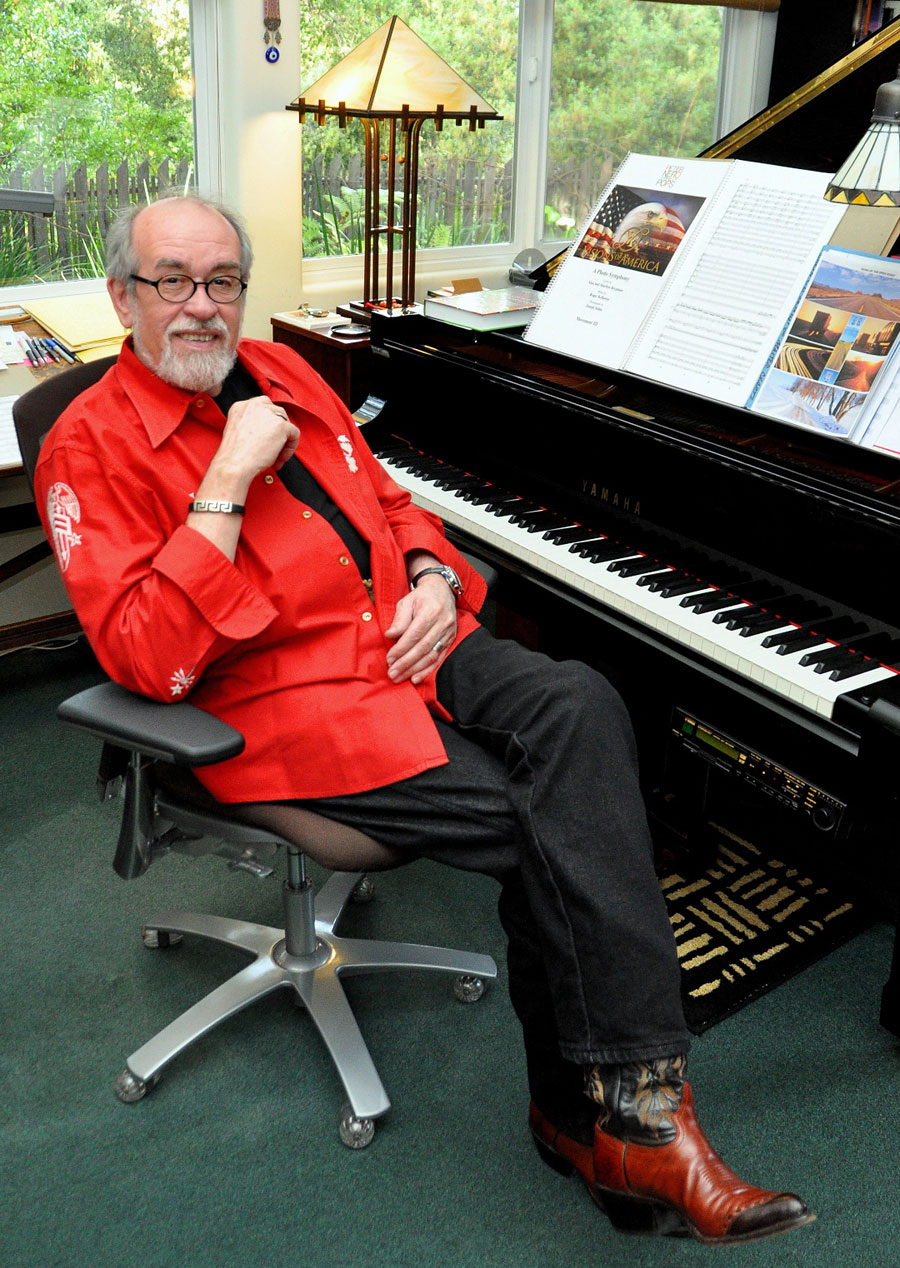
Roger Kellaway, Pianist, Composer & Arranger is eagerly getting back to the performing side of his illustrious career.

Oscar Peterson once said, “I love Roger Kellaway!”…and Roger loved Oscar who was one of his earliest influences. “His will to swing always inspired me”, says Kellaway who will be joined at KITANO’S by Jay Leonhart on bass and Joe Cohn on Guitar, harking back to his love of an early Peterson style trio.

The program will consist of music from his CD “Heroes”, that was awarded “Best Classic Jazz Recording Of The Year “ in France; some surprises and original songs written with the great Alan & Marilyn Bergman known for their many hits with Barbra Streisand.

Kellaway has scored 29 films, including “A Star Is Born” (for Streisand) which was nominated for an Oscar. His eclectic bio includes Musical Directing for Bobby Darin, Tony Bennett, Kevin Spacey & Van Morrison, touring with Joni Mitchell -­‐ commissioned compositions for George Balanchine’s NY City Ballet, The L.A. & New York Philharmonic, The Philadelphia, New York & Boston Pops as well as The New West Symphony and The National Symphony in Washington DC.

As Pianist, Roger Kellaway has performed all over the world – solo, duo, small ensemble, including performances with The Israel Philharmonic. Eddie Daniels and Kellaway continue their duo & trio concerts in the US and abroad with their latest CD “Duke At The Road House”, which won the Grand Prix du Jazz (2014 Record Of The Year). He also received a ‘Grammy’ for his writing on “Memos from Paradise”, another CD recorded with Daniels.


One of his commissioned works, “Visions Of America: A Photo-­‐Symphony” is an orchestral, multimedia portrait of Democracy. The 50 minute show for full orchestra, features Kellaway on “Jazz piano”, five songs with lyrics by the Bergmans, sung by Patti Austin & Steve Tyrell, plus chorus & narration by Clint Eastwood. The most recent commission, “Many Moods Of McCartney”, is a three-­‐movement piece for two pianos (Kellaway & the great Peter Beets), bass and drums.

The piece premiered to standing ovations at an Ashville Symphony concert in September 2014. Eager to put most of his energy these days into performing, Kellaway will be playing a solo piano concert in Milan on November 29th at Teatro Manzoni. He will also be a Special Guest with The Django Festival All-­‐Stars at the Lobero Theatre in Santa Barbara, this coming November 10th, during their major cross country tour. Join Roger Kellaway as he steps back into the NY scene!

JAZZ AT KITANO - 66 Park Ave (E.38 St) NYC
http://www.kitano.com/


This E Mail Is Being Sent by:
Jim Eigo Jazz Promo Services T: 845-986-1677 E-Mail:
 jim@jazzpromoservices.com
http://www.jazzpromoservices.com/

Thursday, August 20, 2015

Southeast Harmonica Championships

Inaugural Greater Southeast Harmonica Championships

All-genre competition for 
fun and showing off what you've got!

All players and listeners welcome!

Saturday, August 29, 2015

Competition 5-10pm.
Show & JAM 10pm with