The Life and Music of Dave Brubeck - Rose Theater April 12, 2014
The Jazz at Lincoln Center Orchestra with Wynton Marsalis explores Brubeck's extraordinary legacy with fresh arrangements that illuminate the breadth and scope of his work. Brubeck is credited with bringing jazz to the mainstream in the 1950s and 60s and releasing the first jazz album to sell over a million copies.
Yesterday, I came across a terrific video of All the Things You Are by the Dave Brubeck Trio, featuring baritone saxophonist Gerry Mulligan and alto saxophonist Paul Desmond. Despite the date on the clip, it was more likely recorded in October 1972 while the group was on a Newport Jazz Festival tour in Rotterdam and filmed by Dutch television. [Photo above, from left, of Gerry Mulligan, Dave Brubeck and Paul Desmond]
These guys knew each other well. Desmond, of course, had been a key member of the Dave Brubeck Quartet from the early 1950s up until 1967. Desmond and Mulligan recorded together frequently—in 1957 (Blues in Time), in 1962 (Two of a Mind) and in 1969 (Belleto). And prior to this European performance, Brubeck, Desmond and Mulligan had performed together plenty of times, including at the Newport Jazz Festival in1955 and in 1969 at a White House tribute to Duke Ellington. [Photo above of Paul Desmond, left, and Gerry Mulligan]
Here's the jaw-dropping performance of All the Things You Are by Dave Brubeck (p), Paul Desmond (as), Gerry Mulligan (bar), Jack Six (b) and Alan Dawson (d)...
By Brian Wise Dave Brubeck, who died Wednesday at age 91, is being remembered as a pioneering jazz pianist and bandleader but also as a composer whose large-scale symphonic and choral works expanded music's possibilities.
In the mid 1950s, Brubeck started working on parallel career tracks: while he achieved pop-star acclaim with jazz hits like “Take Five” and “Blue Rondo a la Turk,” he was also forging collaborations with symphony orchestras that prefigured today's "crossover" projects. One of the first efforts came in 1956, when the Dave Brubeck Quartet shared a "Jazz Jamboree" event with Leonard Bernstein and the New York Philharmonic at Lewisohn Stadium in Manhattan. The program drew 21,000 fans.
In 1959, Brubeck, Bernstein and the Philharmonic took the collaboration a step further. In a program at Carnegie Hall, the Brubeck Quartet joined the orchestra in Dialogue for Jazz Combo and Orchestra, a piece by Dave’s brother Howard Brubeck. The piece was recorded the next year for CBS; it presaged a steady stream of Dave Brubeck’s own symphonic and choral compositions.
In a 1984 interview on WQXR, Brubeck told host Bob Sherman that his early interest in classical music came from his mother, Elizabeth Ivey Brubeck, a piano teacher who studied with Dame Myra Hess. After service in World War II, Brubeck studied composition at Mills College with Darius Milhaud, a composer who shaped his penchant for classical structures (unusual time signatures, polytonality). Critics would later identify a classical elegance in Brubeck's tone and phrasing.
Among Brubeck's most successful "jazz-meets-symphony" projects was Elementals (1962), a kaleidoscopic suite that grew out of an arranger's workshop at the Eastman School of Music." He later recorded it with saxophonist Gerry Mulligan and the Cincinnati Symphony Orchestra.
Brubeck also wrote for chorus. His 1969 cantata, Gates of Justice contemplated the historic struggles of Jews and blacks. The texts include a mixture of traditional Hebrew and the words of Dr. Martin Luther King Jr., who was recently assassinated. In 2004, he told WNYC's Sara Fishko: "I think people are aware enough of how bad off the world is if we don't behave, and a piece like the 'Gates of Justice' is full of what they should be doing."
Brubeck continued to fuse classical music and jazz throughout his career, occasionally appearing as a soloist with orchestras. In 2002, the London Symphony Orchestra and London Voices released a double CD featuring several of his works.
"Composition is selective improvisation," Brubeck told WQXR's Sherman, paraphrasing Igor Stravinsky. He added his own provocative twist. "The true jazz musicians are the true [composers] – and the people who say they play classical usually don’t because they don’t improvise."
Below: Brubeck performed with the London Symphony and several of his musician sons in a 2000 birthday tribute.
To people growing up in 1950s America, Dave Brubeck defined jazz music. His songs were in the top 40, his face was on the cover of TIMEMagazine, and he performed on college campuses across the country. Ask your average 20-something today about Brubeck and many of them, jazz music lovers aside, won't have a firm sense of who he is.
With Wednesday's news of Brubeck's death I encourage my fellow millennials to take a few minutes and listen to some of Brubeck's music. Brubeck changed jazz. He worked around the normal restrictions placed on jazz music, and wrote and played in tricky meters that at the time just weren't considered jazz-y.
His most universally recognizable, song "Take Five" is demonstrative of that classic Brubeck timing. During a period when Americans were used to hearing songs in 4/4 time, Brubeck's "Take Five" transpired in 5/4.
In the 1950s, Brubeck first broke into the top 40 with a song called "Blue Rondo a la Turk" which he played as part of a quartet. Once again, timing was everything. This time, it was 9/8 time. The beauty of Burbeck's music speaks for itself. His death, at the age of 91, is a loss for the world of music, jazz music especially. Hopefully, our generation will keep playing Brubeck's songs and pass along the beauty of transformative work. From: http://www.policymic.com/articles/20228/dave-brubeck-take-five-remembering-a-jazz-music-legend
Following my post yesterday on Dave Brubeck's Dave Digs Disney(1957), I heard from Iola Brubeck, Dave's wife. The album has been newly remastered and reissued by Sony/Legacy in mono and stereo versions plus alternate takes. If you were ever a kid, you'll love the new release, which is brimming with childlike optimism and energy. [Pictured: Iola and Dave Brubeck]
Here's Iola's email to me:
"Dave Digs Disney has always been one of our favorites, too. As you noted in your post, the Dave Brubeck Quartet had played some of those Disney-related tunes for several years before the album was actually made.
"Dave was familiar with the melodies because our five kids loved to play them on their individual portable record players. The records were the vinyl Little Golden Records series that I believe were issued by Disney. Dave had heard those tunes repeatedly around the house until they sank into his subconscious, I guess, and the group began to play some of the tunes. Some Day My Prince Will Come became a favorite of ours, as well asAlice in Wonderland.
"Disneyland in California had been open a couple of years before we had an opportunity to take our family from Oakland to Anaheim for a visit. That was when Dave was struck with the idea of recording an album devoted to the Disney melodies. I believe he had the idea right in the park and called George Avakian immediately.
"From what I understand, the business heads at Disney were not too interested in a jazz recording of its songs, so a tie-in was not possible. The solution was to call the album Dave Digs Disney and to use the image you see on the cover, not the park.
"It is interesting that you mentioned in your post that Dave Digs Disney was the second best-selling album in Dave's Columbia catalog. Dave used to joke about that when he introducedSomeday My Prince Will Come at concerts. He would say that the reason the album sold so well was that Columbia addedDave Digs Disney to its Columbia House Record Club lineup.
"Columbia had a policy of automatically sending outrecordings to members of the club and if not returned within a certain number of days, it was considered a purchase. Dave said he could only imagine the surprise some grandparents experienced when they received the record and played it for little Johnny or Jane expecting a nice "Mickey Mouse" album of sweet Disney tunes.
"I found the new album's outtakes to be particularly interesting. It's fun to compare takes and try to guess why one was chosen over the other. I'm biased, of course, but they all sound good to me."
JazzWax tracks: The newly remastered mono and stereo versions of Dave Digs Disney (Sony/Legacy) are available in a single release at iTunes or here(download) and here (CD).
n the summer of 1957, Dave Brubeck and Paul Desmond decided to record an album of well-known tunes from Walt Disney's animated films. ThoughDave Digs Disneywas first issued digitally in 1994, the album for years mysteriously remained on the back burner whenever Columbia producers reached into the vaults to remaster Dave's albums using the latest technology. Now Sony/Legacy has finally reissued the storied Disney album, and it sounds splendid. Best of all, the lemon meringue release includes both mono and stereo versions as well as alternate takes.
Yesterday, I spoke to George Avakian, the album's original producer, about the recording. More with George in a moment.
Dave Digs Disney has been a personal favorite of mine for years. I've long loved its sophisticated bedtime story quality and whimsy. Listening to it always sounds like a visit to a childhood neighborhood as an adult. Having spent hours with Dave on the phone and at his Connecticut home last December, I can tell you that this album is dear to his heart and one of the closest representations of who he is as a sunny, optimistic artist.
According to Sony, Dave Digs Disney is the second most important album in Dave's catalogue after Time Out. The album was recorded over three different dates between June and August 1957—in New York, Los Angeles and again in New York. The original LP was issued only in mono, though stereo tapes were recorded at the time. Typically, mono versions were followed by a stereo release six months later. But back in 1957, at the dawn of the stereo era, there wasn't enough of a market. People simply didn't have the gear in large enough numbers, and Columbia decided to hold off.
So why did Dave bother recording an album of Disney songs anyway? According to George's original liner notes, Dave had called him from Disneyland in California after taking his five children on the rides. Excited by the experience, Dave thought an album of Disney movie songs would be a great idea.
The truth is Dave and alto saxophonist Paul Desmond had been playing a batch of Disney songs since the very early 1950s. Dave loved their lyrical, playful quality, probably from his first-hand experience of taking his kids to the movies before Disneyland opened. After all, The Duke was written in 1954 after dropping off one of his sons at school.
Today, a jazz version of a Disney song is hardly a surprise. But back in the '50s, no one in jazz took Disney movies or their soundtracks seriously. Disneyrepresented Squaresville, a largely white Utopian world in which bad moods, misfortune and unconventional lifestyles simply didn't exist. Even the term "Mickey Mouse" was musicians' code for rinky-dink, not the real deal, and lightweight.
The Dave Brubeck Quartet was the first modern jazz group to treat Disney songs seriously. This, of course, excludes the swing-era big bands that recorded quirky, "Mickey Mouse" adaptations. For instance, Dave's group first recorded Alice in Wonderlandand Give a Little Whistle in 1952 for Fantasy. In each case, the rendition was a robust, adventurous interpretation rather than a sticky embrace. Bill Evans and Miles Davis followed, and soon even John Coltrane was getting into the act with My Favorite Things and Chim Chim Cher-ee.
Here's what George Avakian told me yesterday:
"The Disney theme was Dave's idea, and I was amazed when he called and told me what he wanted to do. I think I said, 'Jesus, what a goofy idea.' But anything Dave wanted short of tearing down the building was fine with me. He was taken with the tunes, and the quintet had been playing them on the road quite a bit. As you know, Dave and Paul had a quirky sense of humor.
"I was little more than a traffic cop on those sessions. It was one of the easiest dates I ever produced. When the record came out, there were a few who said, 'What is Dave doing recording Disney?' The inference was that the album's theme was somehow trite or child-like, and not nearly as serious as Dave’s earlier efforts. None of which was the case then—or now. Dave was ahead of his time tapping into the Disney songbook. Look at how many artists have done the same since."
The new reissue taps into your inner child, is relentlessly upbeat and offers some terrific improvising by Dave and Desmond.
JazzWax tracks:Dave Digs Disney (Sony/Legacy) is available
Today is Dave Brubeck's 90th birthday. At 5 p.m. (EST), Turner Classic Movies will broadcastIn His Own Sweet Way, a new documentary on Dave's life and music directed by Bruce Ricker and produced by Clint Eastwood. It is a valentine to the pianist and composer whose music continues to wow listeners. [Photo of Dave Brubeck at home, courtesy of Beverley D. Thorne]
Following my Wall Street Journalinterview last month with Dave at his Connecticut home, many readers wrote in asking for more information about his unusual house. So I reached out to the home's architect, Beverley D. Thorne.
Bev [pictured] is one of the last surviving Case Study Houses architects. A friend of Dave and Iola Brubeck since 1949, he designed their home near Oakland in the early '50s—a post-modern residence perched atop a rock mass that was made famous in photos that accompanied a Time cover story on Dave in 1954.
When the Brubecks sold their home to move East in 1960, they again turned to Bev to build a residence in Connecticut. From the front (the facade that faces the road), the structure looks like an unassuming Japanese ranch house. But once inside, you see it's not a ranch house at all but a split-level abode built into a hill. You also notice that the back facade of the home is nearly all glass. These massive windows allow for a panoramic view of the trees, hills, rocks, a lily pond and a rushing stream that runs along side of the house. The sound of the waterway permeates the glass and creates enormous tranquility. Frankly, it's Christmas in Connecticut meets The Fountainhead. [Pictured: Interior of the Brubecks' home from the second-story catwalk, courtesy of Bev Thorne]
Dave told me that Bev often slept outdoors on the property in a sleeping bag while designing the house to chart where the sun emerged in the sky each day so he could best position the structure for maximum sun exposure during season changes. You don't realize how much Dave adores the sun until you see him bathed in it. Only then do you see that this piano wizard of dark clubs and college-campus stages is really a California raisin at heart. [Pictured: Exterior gardens of the Brubecks' home, courtesy of Bev Thorne]
Here's Bev's note to me on what he still fondly refers to as "Brubeck East":
"While I was designing the Brubecks' home in Connecticut, I worked in the basement of the farmhouse Dave and Iola were renting. Many times I would work very late or even all night. The large window above my desk would attract all manner of bugs from the local area, since my drafting-table light was the only one within miles. "It used to scare the hell out of me when the big bugs banged into the screen on the window. However, their clatter did tend to wake one if there was a tendency to doze off for a few minutes.
"The boulder you wrote in your Wall Street Journal article about is indeed granite, at least to the best of my geologic knowledge. This is one reason I spent so much time at the building site in Connecticut. The stream and the boulders were an integral part of my design composition. [Pictured: View from the Brubecks' house facing the boulders and stream, courtesy of Bev Thorne]
"As you most likely noticed, the entrance to the Brubecks' home sits on a large boulder outcrop that emanates from the natural ground. I wanted to continue this rock theme that was started on the Brubeck West house. [Pictured: Bev Thorne with Iola Brubeck]
"As you recall from our earlier conversation, at the very top of their West Coast home [pictured] was an outcropping of rock inside their home that rested about three feet above the floor. This is the rock that we notched and installed a 3/4" thick sheet of glass in order to make a table for Dave to use for writing music. To continue the theme out West, we used a large boulder as the counter balance for the cantilevered carport's wide flange beam.
"For the East Coast home, I also allowed an outcropping of granite to emerge into their living room, forming a garden.
"I do hope you found Dave and Iola as regular and unassuming as I had mentioned to you. They have always been very family focused and down to earth. Even with all of Dave's fame, I don't believe they have changed very much. [Pictured: View of the Brubecks' living room, courtesy of Bev Thorne]
"To emphasize this point I would like to relate a simple short tale to you:
"When Dave was just beginning to get some notoriety in California, he was playing at the Hungry I in San Francisco, I believe. We used to meet near the club on his breaks to talk about the house I was designing for him and Iola.
"One evening Dave and I were working on the plans during an intermission. Naturally, a long line had formed outside trying to get into the club to hear this new jazz pianist sensation.
"Well, when it became time for Dave and the group to return to the stage, Dave was nowhere to be found. Then one of the waiters saw Dave and me standing in line waiting to get into the club with everyone else.
"The comment from the waiter, who stepped outside, to Dave was priceless: 'Mr. Brubeck, you really don't need to stand in line to get back to the stage.' Three cheers for that!
"PS: Dave's story about the soup bones in your Wall Street Journal article is true. My wife and Dave's wife used to go shopping together for groceries at the "dented food-can center" down in Berkeley, where prices were reduced to an absolute minimum."
[Pictured: Dave playing on his favorite concert grand, accompanied by his son Matthew on cello in lower left-hand corner, courtesy of Bev Thorne]
By Peter Landsdowne, News Telegram.com correspondent
WORCESTER — Joined by alto saxophonist and flutist Bobby Militello, bassist Chris Smith and drummer Cody Cox, perennially popular pianist Dave Brubeck kicked off the 16th annual Mass Jazz Festival Friday night with a dynamic concert at Mechanics Hall that served as part of Music Worcester Inc.’s 151st Worcester Music Festival.
With his once jet-black mane of hair now completely white, a frail and stooped Brubeck, who turns 90 on Dec. 6, received a standing ovation from a crowd of more than 1,000 fans even as he was helped up the stairs to the stage. Once seated behind the keyboard of the hall’s grand piano, Brubeck told audience members that perhaps they shouldn’t expect too much, as Friday’s performance was his first since a three-month hiatus spent recovering from cardiac surgery, as well as his first gig with bassist Smith and drummer Cox, who were filling in for the pianist’s regular bassist and drummer.
Having said that, Brubeck lit into a Duke Ellington medley that revealed Brubeck has seemingly lost none of his prowess at the piano. He established a solid groove on “C Jam Blues,” which featured an impassioned alto saxophone solo from Militello before morphing into an atmospheric reading of Duke’s “Mood Indigo.” Brubeck kicked it up several notches, tempo-wise, for a rollicking version of “Take the A Train,” Ellington’s theme song, which had the pianist using big block chords to replicate Ellington’s original arrangement.
“Boy, it feels good to be back,” a relieved Brubeck said after the medley, a comment that drew a roar of approval from the crowd.
Brubeck went back to the 1920s for a jaunty romp on the old standard “Margie,” which he counted off at a medium tempo. Militello contributed another incendiary saxophone solo in the style of boppers Charlie Parker and Cannonball Adderley before giving way to Brubeck, who countered with a piano improvisation that began with some sketchy chords and evolved into a section of stride piano and several choruses of big block chords underpinned by Smith’s booming walking bass line and Cox’s drum accents. Incidentally, both Smith and Cox are students at the Brubeck Institute, the pianist’s music school at the University of the Pacific in California.
Brubeck toyed with the time on “Keep Travelin’,” a blues piece inspired by a poem his wife Iola wrote about a musician’s lonely life on the road. Brubeck superimposed a triplet figure over each beat in the 12-bar blues form, a device used by many rhythm and blues musicians, while Militello preached, honked and screamed on his alto saxophone. With bassist Smith and drummer Cox in tow, Brubeck worked up to several choruses of rolling chords that highlighted some skilled re-harmonizations of the three basic blues changes.
Kennedy Center Dec. 6.2009
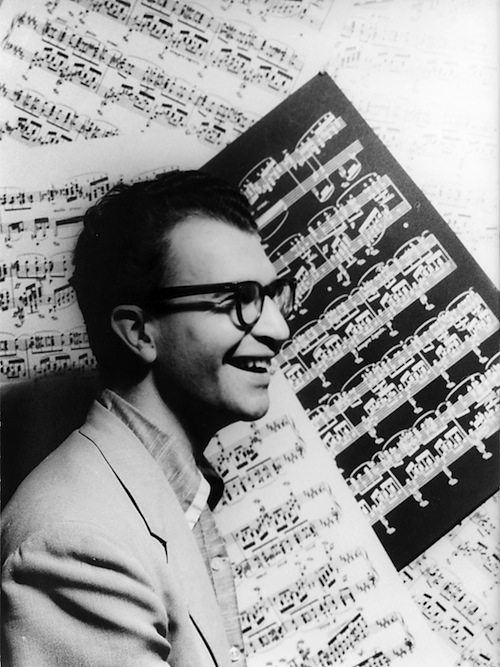
David Warren "Dave" Brubeck (born December 6, 1920)[1] is an American jazz pianist. He has written a number of jazz standards, including "In Your Own Sweet Way" and "The Duke". Brubeck's style ranges from refined to bombastic, reflecting his mother's attempts at classical training and his improvisational skills. His music is known for employing unusual time signatures, and superimposing contrasting rhythms, meters, and tonalities.
His long-time musical partner, alto saxophonist Paul Desmond, wrote the Dave Brubeck Quartet's best remembered piece, "Take Five",[1] which is in 5/4 time and has endured as a jazz classic. Brubeck experimented with time signatures throughout his career, recording "Pick Up Sticks" in 6/4, "Unsquare Dance" in 7/4, and "Blue Rondo à la Turk" in 9/8. He is also a respected composer of orchestral and sacred music, and wrote soundtracks for television such as Mr. Broadway and the animated miniseries This Is America, Charlie Brown. See JAZZofilo's post on oct 25, 2009
Scott Gargan, Correspondent
Dave Brubeck is a master at multi-tasking. Just take a look at his exercise room, where you'll find an electric keyboard mounted on his treadmill. "I'm so busy, I'm just trying to keep up with the mail," Brubeck joked during an interview from his Wilton home last week. "The only way I (have the time to) practice and exercise is to have an electric piano at shoulder level. Otherwise, I wouldn't get any exercise."
Indeed, the act of multi-tasking is a necessity for the jazz legend who, at the age of 89, is still touring and composing. Despite his busy schedule, Brubeck was gracious enough to make time for an interview regarding his upcoming performance with The Dave Brubeck Quartet at the Palace Theater. He also will be honored with the Stamford Center for the Arts' first-ever Arts Legacy Award for his contributions to music education.
Take 5: Five questions for Dave Brubeck
You have received many awards, but the Stamford Center for the Arts Legacy Award is one of the few given by a local arts institution. What does this award mean to you?
It's important to me to receive this award. I'm always going to Washington, D.C. A lot of times I'll be in Europe. To have it at home is really nice.
Speaking of Europe, what was it like travelling there as part of President Dwight Eisenhower's cultural exchange program during the 1950s? What kind of impact do you think it had? http://www.ctpost.com/entertainment/article/At-89-jazz-legend-Dave-Brubeck-keeps-his-chops-464988.php
The Dave Brubeck Quartet join syndicated Jazz columnist Ralph J Gleason on 'Jazz Casual'; a half hour live music and discussion show.
Perhaps the most fascinating aspect of this episode is the technical explanations Dave Brubeck gives as he discusses his developments in writing and playing music in non-standard experimental time signatures and polyrhythms.
Songs played are: Take Five, It's A Raggy Waltz, Castilian Blues, Waltz Limp and Blue Rondo a la Turk (Partial).
Matthias Kirsch's JazzRiff 15. 09. 09
The legendary pianist turns 89 on December 6th and will be honored at the 32nd Kennedy Center Honors Gala. Brubeck said in a statement that his mother would have been delighted since Elizabeth Ivey Brubeck, a classical pianist, was at first disappointed by her son playing Jazz. He recalled that when he graduated High School back in 1938, his mother wrote in her diary: "I think there is some hope for David after all." In a recent phone interview from Seattle, he told the Associated Press:"She finally came around to what I was doing. She lived long enough to see good results, and she enjoyed going to the concerts."
President Obama and his wife Michelle will host the honorees at the White House before attending the gala. In his memoirs, Obama wrote of going to a Brubeck concert as a child. The Kennedy Center Honors series recognize performing artists for their contributions to American Culture. Brubeck's landmark 1959 album Time Out with the classic Take Five turned 50 this year. Among the hundreds of recordings are pieces where he set the music to the words of the Old Testament and of Martin Luther King Jr. http://www.jazzradio.net/jazzradio/index.php/station/jazzriff/325-matthias-kirschs-jazzriff-15-09-09-.html
The Sunday evening portion of the Monterey Jazz Festival could be termed Night of the Piano with all the keyboards and keyboardists being showcased.
Truth be told, if you took the weekend as a whole, you could have easily called it the Monterey Jazz Piano Festival because you couldn't throw a fried chicken wing ($13 a bucket) without hitting one all weekend. There were young pianists, old pianists, pianists who pounded the keys with abandon, pianists who gently stroked the keys, pianists who used all sorts of effects, even pianists who also played the melodica, which looks like a child's toy.
But Sunday night was the height of piano artistry, with Jason Moran & Bandwagon debuting the festival's commissioned piece (titled "Feedback"), octogenarian Dave Brubeck celebrating the 50th anniversary of the seminal jazz album "Time Out," and Chick Corea reuniting with two of his Return to Forever mates, bassist Stanley Clarke and drummer Lenny White, all three pianists performing in the main arena.
But there was also some piano artistry on the grounds stages Sunday night, with Toshiko Akiyoshi, Vijay Iyer, Buffalo Collision's Ethan Iverson, James Weidman with Joe Lovano's Us Five and Dan Nimmer with the Lincoln Center Jazz Orchestra. More on:http://www.montereyherald.com/local/ci_13385422?nclick_check=1
On September 20, during the third and final night of the 52nd Annual Monterey Jazz Festival, legendary pianist Dave Brubeck will have something in common with Bonnie Raitt, Sting, Loretta Lynn and Gloria and Emilio Estefan: an honorary Ph.D. in music from Berklee College of Music. Berklee President Roger Brown will present Brubeck, already an NEA Jazz Master and a Library of Congress “Living Legend,” with the honorary doctorate at about 8 p.m., just prior to the pianist and his quartet’s performance celebrating the 50th anniversary of the groundbreaking album Time Out. “It feels fitting to make this presentation to Dave for his many contributions to jazz, orchestral and sacred music, and to education, with the Brubeck Institute at the University of the Pacific, and at the Monterey Jazz Festival, where he has so many strong connections and associations,” said Brown in a press release. “The 50-year anniversary of the release of Time Out also seems like a perfect moment to thank Dave for all he’s done for the world and the world of music.”
The Berklee Honorary Doctorate of Music was first presented in 1971, to Duke Ellington. Since then, other jazz recipients have included Dizzy Gillespie, Nancy Wilson, Tito Puente, Toshiko Akiyoshi, Chick Corea, Quincy Jones, and Elvin and Hank Jones. Actor and producer Clint Eastwood is scheduled to take part in honoring Brubeck. In 2007, Eastwood became an honorary doctor of music at Monterey for his efforts to popularize jazz through his films and film music. For more information on the 52nd Annual Monterey Jazz Festival, go to www.montereyjazzfestival.org. To learn more about Dave Brubeck, go to www.davebrubeck.com.
Ken Franckling http://www.jazziz.com/news/2009/08/27/berklee-honoring-brubeck-at-monterey/
CHARLES J. GANS Associated Press Writer 4:52 PM EDT, August 11, 2009
NEWPORT, R.I. (AP) — Tony Bennett and Dave Brubeck spun some of their old magic when they performed together for only the second time in their 60-plus-year careers.Brubeck closed his set at the George Wein's CareFusion Jazz Festival 55 at Newport, R.I., on Sunday with his quartet's classic "Take Five," which he recorded 50 years ago. A few songs into Bennett's set, Brubeck returned to the stage at Fort Adams State Park to perform with the singer for the first time in 47 years."We decided to do a Harold Arlen and Johnny Mercer song called 'That Old Black Magic,'" said Bennett in an interview Sunday. "Harold Arlen is my favorite composer through the years ... It's one of the great jazz songs of all time."That was also the same tune that Bennett sang with Brubeck's quartet outside the White House on Aug. 28, 1962 — a recording included on compilation albums by both artists. Although they were friends and labelmates at Columbia Records that was their only performance together until Newport.The inspiration for their second performance came from documentary filmmaker Bruce Ricker. Ricker learned that the two music legends were performing back-to-back sets Sunday at the close of George Wein's CareFusion Jazz Festival 55 at Newport, R.I.Ricker had already done a film on Bennett, and was working on separate documentaries about Brubeck and Johnny Mercer (marking the centennial of the lyricist's birth). Clint Eastwood, an avid jazz fan, has been involved both off and on screen as a producer and presenter."Clint Eastwood was pushing for this ... and Bruce finally got everybody together. ... You don't want to mess with Clint," laughed the 88-year-old Brubeck, in a telephone interview Monday from his home in western Connecticut.Brubeck said he thought the performance turned out well, especially since there was no rehearsal and little talk before the pair went on stage."You're taking a lot of chances when you do something in front of such a critical public without time to run down with everybody. ... You feel very elated that it all came off."Brubeck rarely plays behind singers now, but earlier in his career he recorded with Carmen McRae and Louis Armstrong, among others,Bennett got a thrill from playing with Brubeck."What I loved about it was he's such an inspiration to me," the 83-year-old Bennett said. "He shows me that I'm still learning, that we are not finished yet and he is such a great teacher."
All Things Considered, June 12, 2009 - In 1959, jazz pianist Dave Brubeck topped the pop charts and shook up the notion of rhythm in jazz with an odd-metered song called "Take Five." Only trained musicians might understand exactly what gave the Paul Desmond-penned song its flow. It was all in the time signature: five beats to the measure, a departure from more traditional four-four time in jazz. It was cutting-edge and cool — a song millions would scoop up and savor. In an interview with Michele Norris, Brubeck explains what made the time signature so difficult.
"You were brought up playing in four-four," Brubeck says. "Everybody could walk to it and dance to it. Put an extra beat on it — everybody's tripping." Fifty years ago, "Take Five" appeared on Time Out, a title that served as a double-entendre. Those in the know knew it referenced the mood and the music's meter. At age 89, Brubeck has slowed down, but he's still playing and writing music. "The more you get to play, the better it is — just play as you can while you can," Brubeck says. "I can't wait for the next job so we can play." http://www.npr.org/templates/story/story.php?storyId=105322899
JAZZofilo is a cultural Blog. Our intention is not to commercialize music, but to share with friends the pleasure of listening jazz music and the world of jazz.
The site does not keep music files, but through widgets. You're welcome to submit posts, photos, etc. of jazz related topics.
If for some reason you feel offended by the content of a particular post here that was not our intention. Please let us know and we'll remove it.
Any questions and suggestions, send me to the link: cavalcanticlaudio@yahoo.com