
A foundational influence on the uniqueness of jazz, Louis Armstrong was one of the first truly popular African-American entertainers to achieve cross-racial appeal. Read more: https://t.co/p9JZWXUWMn pic.twitter.com/4imoiwwqUN— JAZZ.FM91 (@JAZZFM91) April 17, 2019
Wednesday, April 17, 2019
Louis Armstrong
Monday, February 25, 2019
"Louis Armstrong Legacy Series"
The Dot Time Records "Louis Armstrong Legacy Series". Previously unreleased recordings from his personal collection.
Sunday, November 26, 2017
Happy #LouisArmstrong Release ....
Happy Louis Armstrong Release Day No. 2. The Night Clubs is now available on Digital. Many thanks to the great people over at FineTunes for the listing of "New Orleans Function" from the release added to a playlist at Apple Music Germany. pic.twitter.com/ugx1hZFJzV— Dot Time Records (@DotTimeRecords) 17 de novembro de 2017
Thursday, August 24, 2017
Louis Armstrong / Louis Jordan
Louis Armstrong/Louis Jordan 🎵 Life Is So Peculiar ’51 https://t.co/ejEhYgaDUL via @YouTube #NowPlaying HT @JazzWax pic.twitter.com/MPbcaedekt— Biff LaTourette (@BiffLaTourette) August 14, 2017
Tuesday, July 11, 2017
#SueRaney , Louis Armstrong, Bunny Berigan ....
This weekend at JazzWax, Sue Raney, Louis Armstrong, Bunny Berigan, Richard Barone, Mike Tyson and more... https://t.co/wnPzDG5k58 pic.twitter.com/YeL1wYNxkW— Marc Myers (@JazzWax) 1 de julho de 2017
Tuesday, June 27, 2017
Friday, August 19, 2016
#DukeEllington and #LouisArmstrong
For #TBT an archival photo of Duke Ellington and Louis Armstrong at the Hotel de la Tremoille in Paris in 1961. https://t.co/EXtS4LBK7Z— JazzTimes Magazine (@JazzTimes) August 19, 2016
Friday, August 5, 2016
Louis Armstrong
#jazz #trumpet "Man, if you gotta ask you'll never know" Louis Armstrong • https://t.co/XHueEAkyBQ • pic.twitter.com/bqLNfvZ3ED— A Passion for Jazz!® (@APassion4Jazz) August 4, 2016
Thursday, August 4, 2016
Louis Armstrong
Happy birthday to Mr. Louis Armstrong, the first genius of jazz and one of the most important musicians of all time. pic.twitter.com/kuYxzmB4C2— Amoeba Music (@amoebamusic) August 4, 2016
Tuesday, August 2, 2016
Louis Armstrong
"Hot can be cool & cool can be hot & each can be both. But hot or cool man, Jazz is #Jazz" Louis Armstrong— A Passion for Jazz!® (@APassion4Jazz) August 1, 2016
Wednesday, June 22, 2016
Albert "Tootie" Heath at the Louis ‘Satchmo’ Armstrong
Albert "Tootie" Heath at the Louis ‘Satchmo’ Armstrong Summer Jazz Camp on Monday, June 27— Peter McConnell (@jazzstagenet) June 21, 2016
“The history is... https://t.co/VkhnCn4ter
Friday, June 27, 2014
Louis Armstrong: All-Stars, Live
Reprinted from http://jazzwax.com

The word "supergroup" first emerged in 1969 to describe rock bands comprised of at least three powerhouse musicians with reputations that were established in other groups. Top supergroups of the time included Cream; Crosby, Stills, Nash & Young; Blind Faith; Bad Company; Emerson, Lake & Palmer; Derek and the Dominos and Asia. Supergroups were formed to create a stir, since three great musical minds were more likely to create better music than one. But supergroups also had commercial value—commanding larger gates and record sales than if the the same musicians had toured on their own (with Neil Young and Eric Clapton the lone exceptions).

But the supergroup concept wasn't new. It actually dates back to November 1925, when Louis Armstrong teamed with Kid Ory, Johnny Dodds, Lil Armstrong and Johnny St. Cyr to form his Hot Five. In the 1930s, the Benny Goodman Quartet was probably the most successful supergroup—with Goodman, Teddy Wilson, Lionel Hampton and Gene Krupa. Breakout supergroup ensembles like Artie Shaw's Gramercy Five and Duke Ellington's Duke's Men also were popular as bandleaders created small groups as a way to retain star musicians eager for a chance to shine.

In 1947, Louis Armstrong created another supergroup. His manager, Joe Glaser, insisted Armstrong establish a compact supergroup that would be less expensive and more nimble than his large orchestra. So Armstrong formed the first of his "All Stars"—a term that had its roots in baseball. Each year since 1933, the American and National leagues had squared off against each other in an All Star Game as a way to generate interest and drive up ad and ballpark revenue. In December 1941, Metronome magazine was first to pick up on the All Stars concept when winners of its annual poll gathered as the Metronome All Stars to record two sides of a 78 rpm. [Photo above of Louis Armstrong and the All Stars at Town Hall in 1947 by William P. Gottlieb]

Armstrong's touring All Stars septet featured the trumpet, trombone, clarinet, piano, bass, drums and vocals—a sufficient mix to satisfy and entertain audiences. There were no real sidemen, just consummate soloists who had already made their names in other bands. What also made Louis Armstrong and the All Stars special at the time was its nostalgic quality. By the late 1940s, bebop's popularity was on the rise, appealing largely to younger jazz fans fed up with the rigidity and predictability of older jazz styles. But there were plenty of older jazz fans who still remembered the 1930s and sought out groups that played familiar songs with a steady, syncopated beat. For them, Louis Armstrong and the All Stars were a welcome relief, featuring artists who reached out to audiences rather than artists who compelled audiences to figure out what they were doing. [Above, Dizzy Gillespie in 1947]

The All Stars gave Armstrong a new opportunity to champion his brand of jazz and take fans back to the music they knew and loved. In many respects, Armstrong's jazz was more rural than the newer, more urban sound. It centered on New Orleans, steamboats, banjos ringing, singin' folks and red robbins bobbin' along. Simpler music reminiscent of a pre-war era—before unspeakable war crimes, the destruction of entire cities and the spectre of atomic war. The All Stars were masters of a fading jazz form at its finest.

Now Mosaic Records has released this supergroup's performance output for two labels over 11 years onColumbia and RCA Victor Live Recordings of Louis Armstrong and the All Stars. This nine-CD box set is warmly remastered by Andreas Meyer and includes a 38-page booklet with marvelous liners notes by Ricky Riccardi, research archivist for the Louis Armstrong House Museum at Queens College in New York. Like classic rock bands that still tour today hoping to attract older audiences eager to relive their youth, the All Stars showcased jazz from a time when its role was to lift Depression-era spirits.

What's startling about this box is how effortlessly the All Stars slid in and out of varied material with clock-like precision. Songs ranged from It's Sleepy Time Down Southand The Gypsy to Stompin' at the Savoy, West End Bluesand Body and Soul. In each case, songs were given a New Orleans flavor—with instruments coming and going but working together in support of Armstrong and other soloists. There are occasional breaks from this formula, including an oddly Latin How High the Moon and Mop Mop. But for the most part, what you hear is a group of artists from another time recapturing a bygone era and reminding audiences of the miracle known as jazz.

The Mosaic box features music from about a dozen concerts by the All Stars—including appearances at New York's Town Hall (1947), Carnegie Hall (1947), the Netherlands (1955), Milan (1955), Los Angeles (1956), Carnegie Hall (1956), London (1956), Ghana (1956), Chicago (1956), Newport, R.I. (1956), New York (1956) and Newport, R.I. (1958). There also are two conversations, one between Armstrong and Edward R. Murrow in Paris (1956) and the other with producer George Avakian in Los Angeles (1956). The Carnegie Hall concert from 1947 is heard here for the first time after mislabeled tapes were recovered. There are other previously unheard tracks as well. [Pictured above: Louis Armstrong in Ghana in 1956]

Among the most interesting tracks are two from Armstrong's 1956 concert in Ghana, where he seems just a bit uneasy thanks to the throngs gathered, and the relaxed Lewisohn Stadium studio rehearsals of July 1956 (Lewisohn Stadium was on the campus of New York's City College and was demolished in 1973.) But it's tough to place any single performance above the rest. The beauty of Armstrong is that he knew only excellence, which makes this set of 164 tracks a joyous journey back in time to moments when audiences yearned for an even earlier time. What we learn yet again is that Armstrong was and remains timeless. Jazz artists fall in and out of vogue and many wind up forgotten over time, but Armstrong is forever. [Photo above: Lewisohn Stadium in New York]

Leonard Bernstein, at the Lewisohn concert, said it best during his introduction included in the box: "What [Armstrong] does is real and true and honest and simple and even noble. Every time this man puts his trumpet to his lips, even to practice three notes, he does it with his whole soul. This is a dedicated man and we are honored." [Photo of Leonard Bernstein above by Ruth Orkin]

In this box set, we hear Armstrong in all his splendor—as a trumpeter, as a small-group leader and as an entertainer who, night after night, made audiences fall in love with him and the music he invented.
JazzWax tracks: You'll find the Columbia and RCA Victor Live Recordings of Louis Armstrong and the All Stars (Mosaic ) here, along with sample tracks and information about the set.
Live Recordings of Louis Armstrong and the All Stars (Mosaic ) here, along with sample tracks and information about the set.
Used with permission by Marc Myers
Saturday, May 11, 2013
Louis Armstrong House Museum
New Exhibit through August 31, 2013 - Swingin' with the All Stars: Louis Armstrong & Baseball
Baseball was Louis Armstrong’s favorite sport and he followed it passionately. A longtime Brooklyn Dodgers fan, Louis switched to the New York Mets in the late 60s, even attending the deciding game 5 of the 1969 World Series. Our new exhibit includes photos and artifacts exploring Louis's relationship with the game. Remember, we are just seven blocks away from Citi Field, home of the 2013 All Star Game!
Summer with Satchmo 2013
Now that the weather is nice and Louis's Garden is in bloom be sure to join us for this fab season!
Just Announced: 2013 Hot Jazz / Cool Garden Concert Series
It’s that time of year again! Join us as we welcome 3 hot jazz bands to Louis’s Garden. Enjoy the lowest ticket prices of the season! For the first time, we are offering a select group of advance tickets to the entire series for these exceptional bands. Be the first …
In the News!
Enjoy some great links about Louis Armstrong House Museum. Check out The New York Times, The Daily News, Bio.com, Untapped New York, Time Out New York, ESPN, Queens Mamas & Kate Spade to name drop a few!
Sunday, April 29, 2012
Armstrong's last recording with trumpet now on CD
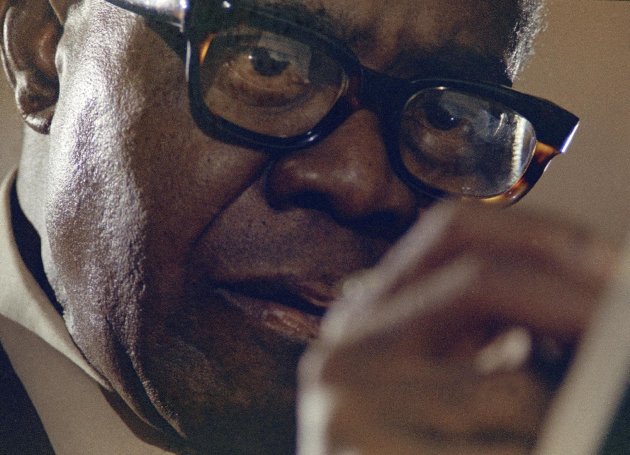
Photo By Eddie Adams, file
By | Associated Press
WASHINGTON (AP) — A live recording of Louis "Satchmo" Armstrong playing his trumpet for one of the last times is being released to the public for the first time.
On Jan., 29, 1971, Armstrong was a featured performer at theNational Press Club in Washington, celebrating the inauguration of fellow Louisiana native Vernon Louviere as the club's president. On Friday, Armstrong's performance was played back in the same place for musicians, historians and some who were there for the original performance.
The new album is called "Red Beans and Rice-ly Yours: Satchmo at the National Press Club."
Amy Louviere, who was 11 when Armstrong played for her father's inauguration at the club, recalled the audience's delight when he pulled out his horn 41 years ago. Later Armstrong made her say "spaghetti" to get her to smile for a picture, she said.
"He just captured the audience," she said. "They were thrilled."
Looking back, the performance was Armstrong's goodbye in many ways. It was the last recording made of him performing live that was meant to be played back some day. His only later performances on trumpet were quick TV snippets with Dick Cavett and Johnny Carson.
His health had been suffering for years after a heart attack and trouble with his kidneys. Armstrong stayed home resting for much of 1969 and 1970, according to Ricky Riccardi, the archivist for the Louis Armstrong House Museum in New York and author of "What a Wonderful World: The Magic of Louis Armstrong's Later Years."
He felt strong enough, though, to make a comeback with a few short performances in Las Vegas and then in Washington. That's when he surprised the crowd — which included such politicians as Hale Boggs and George Romney — by pulling out his trumpet for tunes like "Hello Dolly" and signing his autobiography with "Boy From New Orleans."
Armstrong died less than six months later on July 6, 1971.
"He had such a love of performing," Riccardi said. "He had been off the scene for so long that I think he cherished any opportunity to get in front of an audience if he was feeling up to it."
His doctors tried to pace him. Riccardi found a letter from Armstrong to his physicians not long before the press club concert where he complained of having shortness of breath. It was becoming too much for him.
Armstrong told fellow musicians that the best way to die would be to die on stage. By 1971, he was thin and ashen — still telling great stories, but a little of his spark is gone, Riccardi said.
His performance in Washington, though, sounded as good as ever and better than some of his material from the year before, Riccardi said. And the audience knew this was a special moment.
"To me it's just one last little testament of Armstrong and his audiences connecting. ... This is really our last glimpse of Louis on stage, doing what he did best," Riccardi said.
"The solo he plays on Hello Dolly is a knockout. It's one of my favorites," he said. "But it's with the knowledge that this was basically a dying man playing this beautiful song."
A limited release of 300 LPs on vinyl were copied from the press club for those in attendance. Over 40 years, they were largely forgotten.
"Most of them vanished into attics, garages and basements," said press club President Theresa Werner.
Chris Royal, the music department chairman at Howard University and a fellow trumpet player, heard the recording for the first time this week after it was released on CD, iTunes and Amazon.com.
"It pops," he said. "Just the way he played up until the end."
Armstrong is often credited with being the inventor of the jazz solos, Royal said. Before then, there had been more focus on group improvisation. He broke racial barriers with his broad appeal and was an ambassador from the U.S. to the world through jazz, Royal said.
The nonprofit Smithsonian Folkway Recordings released Armstrong's recording this week after collaborating for years with the press club and the Louis Armstrong Foundation to sort out rights to the tunes. The new album comes with 30 of Armstrong's favorite Louisiana recipes, which were served at the press club when he performed.
William McCarren, the press club's director, found one of the old records in the club's archive still wrapped in plastic. When he and others at the club bought a record player and heard how good it sounded, they started thinking about how to release it to a wider audience.
"There was just something kind of wrong about the idea that 300 people ... heard this record and heard the concert and then nobody heard it for 40 years," he said.
On Friday, the album was among the five highest-selling jazz albums on iTunes and Amazon.
Armstrong played trumpet in only two songs. But he also offered up some spirited singing, scat and stories for the audience. One special moment is his "Boy from New Orleans," which he only really sang toward the end of his life.
"I wanted the neighborhood to be proud of their Louis," he sang. "Now all through the years, folks I've had a ball. Oh, thank you Lord. And I want to thank you all. You were very kind to old Satchmo... Just a boy from New Orleans."
In retrospect, knowing that it was the end of his life, Riccardi said it does sound like a goodbye "and one final thank you to the fans who made him what he was."
Smithsonian Folkway Recordings: http://www.folkways.si.edu/albumdetails.aspx?itemid=3370
http://news.yahoo.com/louis-armstrongs-last-trumpet-recording-now-cd-185038833.html
Friday, December 16, 2011
On Queens Block, Losing a Link to Louis Armstrong


Selma Heraldo lived the entirety of her 88 years in a white, two-story house on 107th Street in Corona, Queens, and her life may have been very different had she not gained new next-door neighbors in 1943 — Louis Armstrong and his wife, Lucille.
Ms. Heraldo quickly became known as Louis Armstrong’s next-door neighbor, a good friend to the jazz great. After Armstrong died in 1971 and Lucille Armstrong died in 1983, and their house was transformed into theLouis Armstrong House Museum, Ms. Heraldo became the main local living link to the couple.
But now that link is gone. Ms. Heraldo died on Dec. 2 in her house, where she had lived alone for many years.
“It’s a hole in our hearts, and also a real loss programmatically,’’ said Michael Cogswell, the director of the museum. “As a museum director, having Selma here was something like being able to go to Mount Vernon, George Washington’s home, and meeting a next-door neighbor who remembers George and Martha.”
In fact, the Armstrongs learned about the house’s being for sale from Ms. Heraldo’s mother, Adele, whom Armstrong called Moms.
Ms. Heraldo was a fixture at every museum concert and event and was at the museum nearly every day, telling visitors first-hand stories about the Armstrongs. She never spoke on a formal schedule, and she never accepted payment. She also spoke at Armstrong conventions and colloquia, and at the Smithsonian Institution.
“We have 12,000 visitors a year, and thousands of them every year met Selma and remember her,” Mr. Cogswell said, adding that many visitors routinely sent her letters and gifts. They often forgot her name and would address the mail to “Next door neighbor, Louis Armstrong House.”
“Selma was the Queen of Corona,” said the saxophonist Jimmy Heath, 85, who lives in an apartment in Corona. “For her to be next door when Louis and Lucille lived there, she had some stories nobody else had. A lot of scholars study about this and that, but she would let the scholars know that, ‘I know something about Louis personally that you don’t.’ ’’
Ms. Heraldo’s role as a family friend, and not a star-struck admirer, made her invaluable to the museum, Mr. Cogswell said, noting that “She used to say about Louis that, ‘I never knew how famous he was until he died.’ ”
Ms. Heraldo’s funeral service was held Friday at the Corona Congregational Church, where Armstrong’s funeral was held. A recording of Armstrong’s joyful hit song “What a Wonderful World’’ was played, and Ms. Heraldo was buried in Flushing Cemetery, not far from Armstrong’s grave.
Ms. Heraldo worked for more than 30 years as a telephone operator and was active in neighborhood issues. She never married or had children, and she kept an eye on the Armstrong house when it was vacant during the 1980s and 1990s. She was appointed to the advisory board of the museum, which opened in 2003, and she served as a liaison for the community. Mr. Cogswell said that when a blackout in the summer of 2003 disabled the house’s alarm system and cameras, he and Ms. Heraldo slept in the house to keep an eye on things.
Armstrong gave Ms. Heraldo the nickname Little Dynamite. “She was short but had a real explosive personality,” Mr. Cogswell said.
One story Ms. Heraldo liked to tell, Mr. Cogswell recounted, was the time Armstrong came to her house and said, “Give me a glass of ice tea and an egg sandwich. I’m tired of this filet mignon and fancy food on the road.” - Read more on http://cityroom.blogs.nytimes.com/2011/12/14/feeling-the-loss-of-a-connection-to-louis/
Saturday, January 1, 2011
Online Catalog of Museum Collections Launched!

QUEENS, N.Y., December 16, 2010 - The Louis Armstrong House Museum announced last night that cataloging for its three largest collections is now accessible through its website, http://www.louisarmstronghouse.org/. By the end of 2011, the Museum's entire catalog will be online. The direct link to the catalog can be accessed at: http://www.louisarmstronghouse.org/collections/online_catalog.htm
The Louis Armstrong House Museum holds the world's largest archives devoted to a single jazz musician. Its collections encompass more than 5,000 sound recordings, 15,000 photographs, 30 films, 100 scrapbooks, 20 linear feet of letters and papers, and six trumpets. Researchers, record companies, publishers, film producers, public school students, and many others routinely use these materials. Since 1994, more than a dozen books and recordings have been published based on research from the collections, including Terry Teachout's Pops, a notable book of 2010.
"The world is more interested than ever in Louis Armstrong," said Michael Cogswell, director of the Museum. "That's evident not only from the ever-increasing number of people from around the world who visit our Museum, but also from the number of researchers using our archives and the great popularity of recent Armstrong films and books."
The research core of the archives is the Louis Armstrong Collection, comprising Satchmo's vast personal trove of home-recorded tapes, photographs, scrapbooks, manuscript band parts, and other materials discovered inside his modest house in Corona, Queens, after his wife, Lucille, passed away in 1983. A grant from the Louis Armstrong Educational Foundation made possible the Museum's acquisition of the world's largest private collection of Armstrong material from Jack Bradley, Armstrong's friend and a noted jazz photographer. As might be expected, a strength of this collection lies in the hundreds of candid, previously unpublished photographs taken or collected by Bradley over five decades. The collections are currently housed in the Benjamin S. Rosenthal Library at Queens College.
Read complete on >> http://www.louisarmstronghouse.org/news/article.php?Online-Catalog-of-Museum-Collections-Launched-64
Wednesday, September 1, 2010
Louis Armstrong, Benny Goodman & Danny Kaye
(1948). All the greats of Jazz are here:
Lionel Hampton, Louis Armstrong, Benny Goodman,Golden Gate Quartet, Tommy Dorsey, Mel Powell, Louis Bellson, Charlie Barnett...
Tuesday, August 31, 2010
Louis: The Movie
Silent film debuts at screenings around the country
By Jamie Cosnowsky
I wasn’t sure what to expect from the highly anticipated debut of Louis – a silent film with live musical accompaniment that debuted in Chicago’s Symphony Center on the evening of August 25th. Given the exquisite artistry I saw in the trailers, I thought it would be a biographical movie about the early years of trumpeter Louis Armstrong, with a sort of fantasy touch to it. I was partly right and very much surprised at the ride I was in for.
The film’s Director, Dan Pritzker, founding member of the band, Sonia Dada, was inspired back in 2001 to create a silent film, after seeing the Chaplin movie, City Lights, with live musical accompaniment by the Chicago Symphony Orchestra. He went about creating Louis, which is part Chaplin; part Keystone Kops, about a boy named Louis, “the story of a young boy born into poverty who dreams of playing the trumpet.”

The backdrop was the bawdy and lust-filled Storyville, New Orleans in 1907, where children born to prostitutes had to work to help feed the family. A time where prostitution, black magic, political corruption and jazz music ruled the day. A young Louis (Anthony Coleman), who sells coal by day, falls in love with two things: a flugel horn and a gorgeous, willowy prostitute named name Grace Lamennais (Shanti Lowry).
The dilemma: How can he earn enough money to buy the horn when there’s mouths to feed, and how to warn Grace that there’s been a hex put on her by the Madame of a rival bordello. Jackie Earle Haley stole the show as the corrupt and evil Judge Leander Perry. His determination to keep a “secret” hidden and whose lust for power and beauty (Grace), were brilliantly acted out by his facial expressions and slap-stick movements. Hidden puns and unexpected humor were freely sprinkled about, and there was an incredible fantasy dream sequence that was brought alive by the musical accompaniment.
Which bring me to the other stars of the show: the musicians. Scored by trumpeter, Wynton Marsalis, the film also incorporated the music of Frederic Chopin, Louis Moreau Gottschalk, and Jelly Roll Morton, among others. Trombonist Wycliffe Gordon created the bawdy sounds of New Orleans and pianist Dan Nimmer never let his fingers leave the keyboard – keeping the stride going throughout.
Pianist Cecile Licad’s classical artistry was brilliant and often times breathtaking. Gordon and Marsalis often provided the words we needed through their instruments and sometimes it was hard to take my eyes off them – so expressive were their notes. Also notable was Victor Goines on clarinet and the rest of the musicians. Big kudos to Andy Farber, who as conductor, had the music impeccably aligned with the story on the screen.
Complete on >> http://jazztimes.com/sections/news/articles/26475-louis-the-movie
Friday, May 28, 2010
Silent Louis

Shot by Academy Award-winning cinematographer Vilmos Zsigmond as a modern re-imagining of early silent film, Louis is an homage to Louis Armstrong, Charlie Chaplin, beautiful women and the birth of American music. The grand Storyville bordellos, alleys and cemeteries of 1907 New Orleans provide a backdrop of lust, blood and magic for 6-year-old Louis (Anthony Coleman, pictured above) as he navigates the colorful intricacies of life in the city. Young Louis’ dreams of playing the trumpet are interrupted by a chance meeting with a beautiful and vulnerable girl named Grace and her baby, Jasmine. Haley, in a performance reminiscent of the great comic stars of the silent screen, plays the evil Judge Perry who is determined not to let Jasmine’s true heritage derail his candidacy for governor.
“The idea of accompanying a silent film telling a mythical tale of a young Louis Armstrong was appealing to me,” says Marsalis. “Of course, calling it a silent film is a misnomer. There will be plenty of music, and jazz is like a conversation between the players so there’ll be no shortage of dialogue. I look forward to playing with Cecile. The contrast between Gottschalk’s music and jazz can be a revelation to those unfamiliar with Gottschalk’s music and jazz.”
“The combination of Cecile playing Gottschalk and Wynton and his ensemble playing jazz reflects the wide-ranging nature of the American musical landscape,” notes Pritzker. “Louis came about when I was writing a screenplay about Buddy Bolden, the first jazz trumpeter of New Orleans, and I took my mom to see Chaplin’s City Lights with the Chicago Symphony performing the score. It was without a doubt the best movie experience I ever had. The challenge of trying to tell a story visually, without dialogue, was compelling. I thought that if I was going to shoot one film, I might as well try to shoot two, the second being a silent film that picked up where Bolden ended.”
Tour dates for Louis:
Wednesday, August 25: Symphony Center, Chicago, Illinois
Thursday, August 26: Max M. Fisher Music Center, Detroit, Michigan
Saturday, August 28: Strathmore Center, Bethesda, Maryland
Monday, August 30: Apollo Theatre, New York, New York
Tuesday, August 31: Keswick Theatre, Glenside (Philadelphia), Pennsylvania
For additional information, please go to http://www.louisthemovie.com/
http://www.jazziz.com/news/2010/05/28/silent-louis/
Sunday, February 21, 2010
New Louis Armstrong, By Way Of Preservation Hall
Thanks to some nimble engineering, Louis Armstrong has a new song coming out, complete with a whole new band. So what if he's been dead for nearly 40 years? On Preservation, the Preservation Hall Jazz Band backs up a number of singers, including Andrew Bird, Tom Waits, Brandi Carlile and Pete Seeger. Armstrong recorded "Rockin' Chair" a number of times, but he gets the Preservation Hall treatment courtesy of Earl Scioneaux III, the engineer responsible for this trick of time.
The vocals from this new version were taken from a 1962 live recording with trombonist Jack Teagarden. As Scioneaux tells Gwen Thompkins in an interview, you can even hear audience laughter in the background. It was quite a feat to tease out Armstrong's vocal and sneak in Preservation Hall Jazz Band's musicians. It happened in phases. First, Scioneaux isolated snippets of Armstrong's voice. Then the musicians got a "tempo reference" from the original recordings to make a backing track. The burden of replicating Armstrong's signature trumpet sound went to Mark Braud.
"He was pretty diligent about it," Scioneaux says. "He spent a lot of time listening to the original recording and the solo that Louis played on that — not wanting to copy it verbatim, but really capture the same spirit. I think he did a good job with it." Scioneaux says he can tell a Louis Armstrong horn just by hearing it.
"It's like someone having an accent when he's speaking — there are just slight little differences that you pick up on," Scioneaux says.
http://www.npr.org/templates/story/story.php?storyId=123653650&sc=nl&cc=jn-20100221
Subscribe to:
Posts (Atom)

