Wednesday, September 5, 2012

U.S. uses jazz music to improve Pakistan relations


ISLAMABAD (AP) – Carrots haven't worked with Pakistan. Neither have sticks. Now the U.S. has enlisted the power of jazz music to improve relations with Pakistanis at a time when the important alliance has hit rock bottom.

The Ari Roland Jazz Quartet certainly faced a daunting task. The U.S. has spent billions of dollars over the past 10 years to win Pakistan's support in fighting al-Qaida and Taliban militants and turn around rampant anti-American sentiment in the country. Now, Congress is threatening to cut off funding given the lack of results.

The performances are part of a recent stepped-up effort by the U.S. Embassy to sponsor cultural events in Pakistan. Already this year, an American director has staged Neil Simon's play The Odd Couple. The embassy also plans to bring over a country rock band and a hip hop group as well as American documentary filmmakers who will give workshops to Pakistanis.

The jazz quartet from New York City arrived in Pakistan about two weeks ago for a series of concerts and music classes with local musicians. The trip culminated with a live recording of a "friendship song" with a Pakistani rock band during a concert Tuesday night.

But relations between the two countries have been anything but friendly during their trip.
Only two days before the musicians got here, militants fired rocket-propelled grenades and assault rifles at the U.S. Embassy and NATO headquarters in Afghanistan, killing seven Afghans in an attack that the top U.S. military officer said was carried out by fighters supported by Pakistan's main spy agency.

Adm. Mike Mullen, chairman of the Joint Chiefs of Staff, also blamed the Inter-Services Intelligence agency for helping militants from the Pakistan-based Haqqani network who carried out a recent truck bombing in Afghanistan that wounded 77 American soldiers.
Pakistan's leaders have lashed out in response, warning the U.S. that the allegations in Washington could destroy the alliance between the two countries. The accusations have also sparked a fresh wave of anti-American anger in the local media and among ordinary Pakistanis.

Talk about a tough audience for a music group.

But Ari Roland, an energetic double bass player, and his band members, two saxophonists and a drummer, didn't show any hesitation when they took the stage in front of several hundred people seated in a small outdoor auditorium in Pakistan's capital, Islamabad.

Mostly dressed in suits and ties, the band played several jazz standards, such as Louis Armstrong's What a Wonderful World and George Gershwin's Summertime. They also invited a Pakistani musician onstage who played tabla, traditional percussion instruments that look like bongo drums.

The crowd cheered as the tabla player accompanied them on several Pakistani songs, his fingers flying up and down like pistons over the drums. The energy hit its peak as the crowd sang along to Jazba-e-Junoon, or Spirit of Passion, a patriotic song by the Pakistani rock band Junoon.

There was plenty of bilateral good cheer, but the group's performances, which also took place in the cities of Karachi and Lahore, will likely do little to win over Pakistanis. The crowds have been small and largely made up of elite Pakistanis who are more likely to have positive attitudes toward the U.S.

Across the country, only 12 percent of Pakistanis have a favorable view of the U.S., and 69 percent see the country as an enemy, according to a poll this year by the U.S.-based Pew Research Center. The poll had a margin of error of plus or minus 4 percentage points.

Attitudes haven't improved even though the U.S. has given Pakistan roughly $20 billion in military over the past 10 years and has pledged $7.5 billion in economic aid to help build things like schools, hospitals and power plants.

Tuesday, September 4, 2012

World Cup 2014


Monday, September 3, 2012

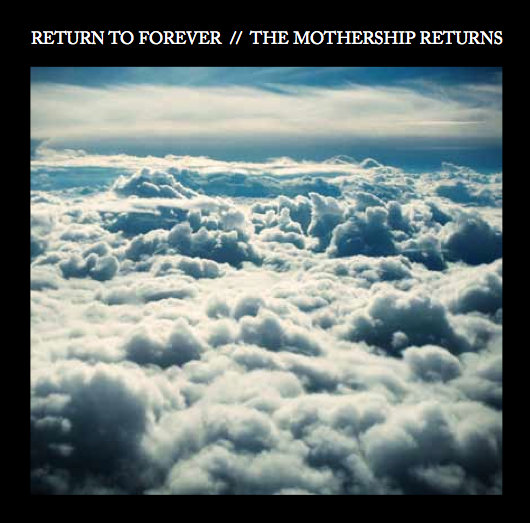
Jazz-rock supergroup Return to Forever....


Jazz-rock supergroup Return to Forever unveils a special new 3-disc CD/DVD set,The Mothership Returns: two audio CDs filled with over 100 minutes of carefully-selected live music, culled from over 200 performances of RTF’s 2011 planetary tour.
Plus, you’ll get a bonus DVD featuring nearly two hours of unique footage, including 2 full length live song performances and a brand new documentary — Return to Forever: Inside the Music.
Chick, Stanley and Lenny tell the inside stories behind the music as only they can. RTF’s classic rhythm section — Chick Corea, Stanley Clarke and Lenny White — add Jean-Luc Ponty and Frank Gambale to the powerhouse quintet lineup.
The song selection is an RTF fan’s dream: band classics like “After the Cosmic Rain,” “Medieval Overture” and “Spain,” plus Ponty’s classic “Renaissance” and Clarke’s house-rocking “School Days.” The set is beautifully packaged in an 8-panel digipack with exclusive tour photos and essays by the band members.
“Dazzling virtuosity … nothing short of staggering.” – BlogCritics
“A vital and thoroughly commanding document.” – AllAboutJazz
From: http://return2forever.com/mothership-returns/

Teri Roiger has been making music....

Teri Roiger has been making music all her life (since age 5!) and over the years her music has taken many exciting twists and turns. Teri is a jazz vocalist, but also plays piano, composes music and writes lyrics. She has been sharing her knowledge and inspiration with her many students at SUNY New Paltz for several years. The depth of her experiences and love of jazz is apparent when she brings all of her talents to a live performance, the recording studio, and in her compositions.
 In Spring 2011 Teri recorded her third CD DEAR ABBEY: THE MUSIC OF ABBEY LINCOLN, a collection of songs written by Abbey Lincoln, and is anticipating a May 1, 2012 release. The music is heartfelt, exciting, swingin’, nourishing, traditional, yet modern, and John’s arrangements fit the timbre and feeling of Teri’s voice perfectly. Frank Kimbrough is on piano, John Menegon on bass, and Steve Williams on drums (of Shirley Horn fame)! Brian Bacchus is producing this CD and John Menegon did the arrangements.
Several years ago John and Teri recorded, arranged, and produced their first CD with jazz legends Kenny Burrell and Jack DeJohnette entitled MISTERIOSO, which includes jazz standards and original compositions. The Monk family approved Teri’s lyrics for MISTERIOSO, now titled Listen To Your Soul with Teri’s lyrics.
Teri’s acclaimed composition STILL LIFE is the title track of her second recording. This composition won third prize in the jazz category in the prestigious, world-renowned International Songwriting Competition, a competition recognized by the New York Times as one of the best in the world. The musicians on this CD include Frank Kimbrough on piano, Gil Goldstein on accordion, John Menegon on bass, and Matt Wilson on drums.
Over a seven-year period, Teri developed and presented four courses at Williams College (Williamstown, MA) on the music of Billy Strayhorn, Thelonious Monk, Brazilian Music, and Vocal Jazz Ensemble Performance.
 In 2011 Teri, along with her husband John Menegon, composed and scored the music for the documentary film BEYOND ICONIC about the renowned photographer Dennis Stock. Directed by Hanna Sawka, this film was premiered this fall at the prestigious Hot Springs Documentary Film Festival, Denver Film Festival, and also in New York City at the doc film festival. It was one of the top ten finalists at the Sao Paulo Film Festival.
Teri has been an integral member of the SUNY New Paltz Jazz Program (New Paltz, NY) for over ten years. She teaches Jazz Voice, the History of Jazz, and Vocal Jazz Ensembles.
Roiger has been active on the jazz scene for many years, performing all over the U.S., Canada, Mexico, and Europe. In January of 2012 Teri and John both performed and taught at the 8th Annual Panama Jazz Festival in Panama City. In the summer of 2011, Teri and John created an ongoing jazz festival in Woodstock called JAZZSTOCK, bringing great jazz artists to the Hudson Valley. www.jazzstock.com
Schedule:
Sep 03  - DIZZY'S CLUB COCA-COLA, New York
Sep 15  - GALLAGHER'S BANQUET HALL, Cairo
Oct 09  - Studley Theater, New Paltz
Oct 23  - Samuel Dorsky Museum of Art, New Paltz

    Louis Armstrong Center for Music & Medicine....


    August 2, 2012 -- Four individuals of distinction –Jon Hendricks, Louis Harrison, MD, Ilene Harrison, RN, and Deena Harburg – are the recipients of the 2012 What A Wonderful World Award, announced Joanne Loewy, DA, MT-BC, LCAT, Director, The Louis Armstrong Center for Music & Medicine, Beth Israel Medical Center.

    The honorees will be feted at a special cocktail reception to be held on Monday, September 24 at Beth Israel’s Phillips Ambulatory Care Center’s Nerken Family Atrium, 10 Union Square East in Manhattan.

    Dancer/choreographer Mercedes Ellington will preside over a program that will open with the Broadway cast of Evita, performing selections from the Andrew Lloyd Webber musical, and will also feature a performance by honoree Jon Hendricks with perennial favorites -- renowned trumpeter Jon Faddis and pianist David Hazeltine. A silent auction of musical, sport, entertainment, travel treasures, antiques, art and clothing will benefit the Louis Armstrong Center’s clinical services.

    “Our honorees are emulating the legacy of Louis Armstrong, a great musician and humanitarian,” said Dr. Loewy. “Each one of them is making a difference in the lives of many people and we are pleased to recognize and celebrate their contributions and achievements.”

    A critically acclaimed singer, lyricist and drummer, Jon Hendricks is among America’s living legends. He is an originator of vocalese, the art of crafting lyrics for instrumental music, which changed jazz singing around the world and elevated scat-singing to extraordinary heights. He has taught jazz studies at the University of Toledo (Ohio), his alma mater, California State University at Sonoma, Stanford University and UC Berkeley, and abroad.

    He has performed with some of the brightest luminaries in the entertainment industry. A much-honored musician, he has received the National Endowment for the Arts’ Jazz Masters Fellowship, the highest honor bestowed by the nation to jazz artists who have made exceptional contributions to the advancement of jazz. He also is the recipient of France’s Legion D’honneur. Several of his projects have won Emmy, Peabody and Grammy awards.

    Dr. Louis Harrison is an internationally renowned radiation oncologist with expertise in head and neck cancer, sarcomas, and intraoperative brachytherapy, and a co-inventor of the instrument used in the therapy. As Physician-in-Chief of Continuum Cancer Centers of New York and Gerald J. Friedman Chair of Radiation Oncology at Beth Israel Medical Center and St. Luke’s and Roosevelt Hospitals, he has been a leader in the development of multidisciplinary management strategies that prioritize cancer cure with organ and function preservation.

    He has published extensively and is the lead editor of the award-winning textbook, Head and Neck Cancer, A Multidisciplinary Approach. Dr. Harrison is Past President and Chairman of the Board of The American Society of Radiation Oncology, as well as Past President of the American Brachytherapy Society. He is a recipient of the Louise and Allston Boyer Award for Biomedical Research, the Ulrich Henschke Lecture Award for Brachytherapy, and the Distinguished Alumni Award from SUNY Downstate College of Medicine.

    Ilene Harrison, RN, who worked as a nurse and nurse educator for many years, is being honored for her contributions as a Louis Armstrong Center volunteer research assistant -- interviewing patients in the Chemotherapy Suite at Roosevelt Hospital and collecting data for a study on the impact of music therapy on resiliency for patients receiving first-time chemotherapy. She previously worked for the American Red Cross and Children’s Aid and Family Services in New Jersey, and actively oversees “Marilyn’s Place,” a program established by her family in her mother’s honor that offers a variety of amenities and resources to hospitalized patients and their families at Continuum hospitals.

    Author and musical theater educator Deena Rosenberg Harburg is Executive Vice President and Artistic Director of the Yip Harburg Foundation, named for her husband’s father – the lyricist of Brother Can You Spare a Dime and all the songs in the movie, The Wizard of Oz, among several memorable songs.

    She is author of Fascinating Rhythm: The Collaboration of George and Ira Gershwin and Founding Chair, Graduate Musical Theatre Writing Program, NYU Tisch School of the Arts. Her current focus, Literacy through Musical Theatre, is a unique program that endeavors to improve the way young students learn by bringing musical theater into inner-city elementary classrooms in New York’s East Village. She has benefited from music therapy during the course of her hospitalization and recovery at Beth Israel.

    The Louis and Lucille Armstrong Music Therapy Program at Beth Israel, established nearly two decades ago, is a legacy of the beloved jazz trumpeter that became the foundation for The Louis Armstrong Center for Music and Medicine, located in the Phillips Ambulatory Care Center, 10 Union Square East in Manhattan. It is made possible by a generous gift from the David B. Kriser Foundation and through the estate of John H. Slade, directed to Beth Israel from hospital trustee Richard Netter, and with additional support provided by Phoebe Jacobs and the Louis Armstrong Educational Foundation.

    For more information about the 2012 What a Wonderful World Awards cocktail reception and silent auction, as well as the programs and services offered by the Louis Armstrong Center for Music & Medicine, please call 212-420-2704 or check out its website at www.musicandmedicine.org

    From: Jazz Promo Services
    www.jazzpromoservices.com

    Sunday, September 2, 2012

    Zoot Fest....

    Zoot Fest is a major annual fundraising event to benefit the Al Cohn Memorial Jazz Collection and its important outreach initiatives, particularly the ESU Jazz Synergy Series and Library Alive Concerts. A portion of the ticket proceeds will also benefit COTA CampJazz via a donation to the Delaware Water Gap Celebration of the Arts Fund for Young Musicians.

    For more information about the lineup and schedule for Zoot Fest, click here.

    To become a Zoot Fest sponsor, go to www.esufoundation.org/zootfestsponsor

    A letter from Barbara Dennerlein....

    What's Jazz?

    That's Jazz! The story of jazz is a story of metamorphosis. A journey through all continents and a conflation of cultures. Each artist has his own definition of what jazz means to him. This is a collection of quotations, found on the Swiss website Jazzorama.ch:

    Mutt Carey / 1891-1948 / New Orleans, Louisiana: "If you couldn't blow a man down with your horn, at least you could use it to hit him alongside the head"

    Fred Böhler / Swing: "Jazz is an elemental force"

    Mary Lou Williams / 1910 - 1981 / Atlanta, Georgia: "Jazz came out of suffering of the early Black slaves, of what they experienced here in America and what happened to them. It's the music that was created out of suffering"

    Edward Duke Ellington / 1899 - 1974 / Washington D.C.: "It's becoming difficult to decide where jazz starts and where it stops - where the Tin Pan Alley or classic music begin. I feel there is no boundary line."

    Dizzy Gillespie / 1917 - 1993 / Cheraw, South Carolina: "Jazz is way this century sounds different than others

    Miles Davis / 1926 - 1991 / Alton, Illinois: "The history of jazz can be told in four words; Louis Armstrong, Charlie Parker"

    Barbara Dennerlein / 1964 -  / Munich: "Jazz is an open range and everything is possible. It means freedom, inspiration, creativity and innovation without stereotyped thinking - music with quality and not to be codified..."

    George Gruntz / 1932 - / Basel: "Who knows something only about jazz knows nothing about jazz"

    http://www.jazzorama.ch/thats-jazz.html

    Luciana Souza: From Bossa Nova To Chet Baker

    Brazilian singer Luciana Souza has worked in many genres, from jazz and bossa nova to classical music and even, as a small child, commercial jingles. A graduate of Berklee and the New England Conservatory of Music, Souza has been nominated for four Grammys and worked at a prolific pace. In fact, she's just released two albums of covers, Duos III and The Book of Chet; the latter finds her covering the works of Chet Baker. Souza discussed her career, her vocal techniques and the language of music with All Things Considered host Melissa Block. Hear the radio version at the audio link and read more of their conversation below.
    NPR: What do you hear as the links between bossa nova from Brazil and the West Coast cool jazz of Chet Baker?
    I think there are very obvious connections. Both records are records of covers. I'm just singing songs that have already been recorded. They're very simple; they're very direct live recordings done with very few instruments. Those are the obvious things, and then for me, stylistically, I'm not changing anything when I'm singing in English and in Portuguese. I'm really looking for the common language between these two records as if they are Side A and Side B.
    Obviously, Portuguese comes very naturally to me — I was born and raised in Brazil — so this is the music that's my native music. English is sort of my adopted language, and America's my adopted country. I've been here for over 25 years now, so more than half of my life at this point. So singing in English for me right now is almost as natural as Portuguese, but looking for repertoire that suits me is still challenging.
    NPR: Do you think there's something in the sound that links these two albums together — that you're hearing something in both bossa nova and in songs that Chet Baker made famous that really are of a piece for you?
    Yes, absolutely. There's a deep connection between Chet Baker and bossa nova. It's known and it's well-documented that musicians in the bossa nova era, so mid- to late '50s and early '60s, were listening to Chet Baker, who had the height of his popularity in the mid-'50s as a singer and trumpet player.
    So this music was coming to Brazil — these players were listening to that music, and with the advent of microphones, people were getting closer to the mic and able to sing more subtly and not belting out with a lot of bravado. It's the same sound you find in the music coming out of the U.S. at the time, especially coming out of L.A. — the sort of the West Coast jazz, and especially in the voice of Chet Baker. So there's that connection, and then the music I grew up listening to is primarily bossa nova, which is quiet, straight-toned, very still and subtle. There is definitely an obvious connection there.
    NPR: It's interesting to me that you're calling bossa nova subtle, because there's so much spirit and joy in the faster songs that you do on the album — like "Doralice," for example.
    Yeah, but it's still for us Brazilians samba — "Doralice" could be considered the samba, as well. When it's done with a large band and a lot of percussion, then that's what we call loud. So if it's done with just guitar and bass and drums and a little percussion, then it can be considered bossa nova or treated like a bossa, which is what I do whenever I sing anything, basically.
    NPR: Talk me through this conversation you're having [in "Doralice"], with your sort of scatting vocals and guitar.
    "Doralice," like many of the songs I sing, is about a love affair. In this case, it's a guy who feels quite pressured because this woman, his fiancee at this point, really wants him to get married and is really pushing him. He says, 'No, no. Doralice, listen. I'm fine.' It's sort of like a man at a corner being forced into a situation he knows is not going to turn out very well. So we try to infuse it with humor, obviously, because it's in the lyric. The dialogue between the voice and guitar is the dialogue between the woman and the man.
    NPR: It's a lot of words to fit in there.
    It certainly is, and it's always a challenge with Portuguese, but I like to force myself into these places ... I think that's sort of my jazz spirit coming through, also. I want to be able to do something different with this song, so it's been sung slowly; it's been done differently. What can I do to it to create some interest and challenge for myself, so I can make something new with it?
    NPR: And what are you singing there?
    I'm saying, "Well, one day you showed up to me and I tried to run away, but you insisted. Something was telling me. Something was telling me very deeply that I should run away, but I stayed." And at the end of the song, they actually end up getting married. He throws his hands in the air and says, "OK, I've done it."
    Full on: http://www.npr.org/2012/08/31/160310203/luciana-souza-from-bossa-nova-to-chet-baker

    Could Thelonious Monk Win The Jazz Competition Named After Him?

    Brendan Hoffman/WireImage
    Last week, the Thelonious Monk Institute of Jazz announced the 12 semi-finalists for its annual competition for young musicians, often seen as the most prestigious in jazz today. That sparked a rally of Internet responses, notably from pianist Ethan Iverson, who expressed reservations about the "dark side to getting judged for your art." Indeed, Iverson suggested that Monk wouldn't have played "correctly" enough to even qualify for his own competition.
    The very nature of artistic competitions makes this claim plausible. Because judges of such competitions must seek some criteria for decision-making, and because standard-practice technical skill is an obvious choice for a criterion, "chops" are likely to be emphasized strongly — perhaps at the expense of overall artistic merit. This potentially works against musicians like Thelonious Monk; even though we now consider the a pianist a jazz legend, his remarkably distinct style was not well-received early in his career.
    But how does this claim hold up to what actually transpires at competitions? Several winners of competitions were quick to declare that they did not betray their artistic visions.

    Dan Tepfer, who won the American Pianists Association Cole Porter Fellowship in a 2007 competition, relayed his experience that jazz competition judges could be remarkably holistic, over the course of several Twitter updates:
    Monk wouldn't have won, true, but do you really think judges who are great musicians (Blade?) want to hear "correct"? // it's something I realized early in my competition phase: judges, like most people, just wanna hear good music. // I've seen very talented musicians try to calculate their way into winning (showing prowess in different styles, eg) & fail. // yes, there's a premium on craft in a comp, but the person who's going to win has craft & a strong sense of self.#myExperience // At any rate, I definitely never compromised when I was doing comps back in the day, & I did pretty well (won 3, bought piano) // a comp isn't going to reward a true left-field radical, like Monk, true. But Downbeat didn't dig him either at 1st. Think of // ...comps as just another slightly boring gatekeeper. Radicals have always had to find their own way, comps or no comps.
    The New York Times' Ben Ratliff described pianist Joshua White as using "provocative, chord-related clutter" and having "a sound worth returning to." White took second place last year at the Monk Competition and had this to say on Twitter:
    @ethan_iverson yo man, i digg what you're saying - but for the '11 piano MONK, i did pretty well just being myself and playing what i heard.
    And here's 2007 Monk winner Ambrose Akinmusire on Twitter:
    @ethan_iverson Nice article - but I Must say that I played ME and won. Perhaps I'm an exception?! Also I entered to get money so I wouldn't
    @ethan_iverson Have to continue taking horrible gigs where I was forced to play in ways that felt dishonest as opposed to career gains.
    Akinmusire, a trumpet player, is certainly no automaton. Hisbrilliant second album was among the critics' consensus best of 2011. Here's the remaining list of winners since 2000:
    • 2011: Kris Bowers, a pianist who has toured and recorded with major hip-hop performers
    • 2010: Cecile McLorin Salvant, a singer who largely developed her craft in French bands specializing in Swing Era repertoire
    • 2009: Ben Williams, a popular bass sideman whose own compositions often feature R&B and go-go ideas from his native Washington, D.C.
    • 2008: Jon Irabagon, a saxophonist who is as comfortable playing straight-ahead jazz as he is in free improvising contexts
    • 2006: Tigran Hamasyan, a pianist strongly influenced by folk music from his native Armenia
    • 2005: Lage Lund, a guitarist from Norway who has released several albums and is a first-call sideman in New York
    • 2004: Gretchen Parlato, a singer whose soft voice runs counter to the standard model of jazz singing
    • 2003: Andre Hayward, a busy trombonist who served for years on the Jazz at Lincoln Center Orchestra
    • 2002: Seamus Blake, a top-tier freelance saxophonist with several albums to his credit
    • 2000: Pedrito Martinez, a conguero who has become the charismatic bandleader of a genre-mashing ensemble
    Full article on: http://www.npr.org/blogs/ablogsupreme/2012/08/28/160183155/could-thelonious-monk-win-the-jazz-competition-named-after-him