Wednesday, January 4, 2012

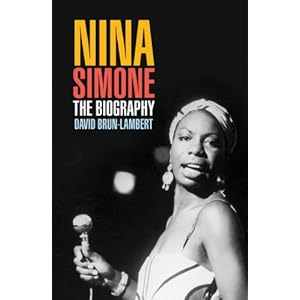
Nina Simone: The Biography

Born Eunice Kathleen Waymon in North Carolina at the tail-end of the Great Depression, Nina Simone was a precocious child with dreams of becoming the world’s first black classical soloist. After a rejection from an elite New York conservatoire—a rejection she always believed stemmed from the color of her skin—she began performing jazz, blues, and classical songs in a bar to fund her music studies.
In 1958 her rendition of the Gershwin standard “I Loves You Porgy” became a Top 40 hit, and her subsequent debut album Little Girl Blue launched what would become an extensive singing and songwriting career.
Drawing on a wealth of original interviews with Simone’s closest associates, this extraordinary biography follows her sparkling career as well as her passionate belief in racial equality that eventually led her to undergo self-imposed exile from America in 1970. Featuring rare photographs and a review of Simone’s more than 40 albums and numerous hits, this is an extensive look at the complex and extremely talented diva. - http://www.amazon.com/Nina-Simone-Biography-David-Brun-Lambert/dp/1845134303

2nd Annual Valentine's Jazz NYC


MIDTOWN GROOVE PRESENTS: 
2nd Annual Valentine's Jazz @The Houndstooth

PAULA ATHERTON & MARCUS ANDERSON
SATURDAY FEBRUARY 11, 2012

Doors@ 7PM/Show Starts @8PM

The Houndstooth Pub
520 8th Ave (W.37th St)
New York NY
www.midtowngroove.com

Doors Open- 7 PM/ Show Starts 8 PM
$23 Advance Tickets
$27 At Door (If Available-Previous 2 Shows Have Sold Out)

Sponsored by
Car Care Online 
Birch Tax Service
NO REFUNDS/NO EXCHANGES

Tuesday, January 3, 2012

Jazz Musician of the Day: Arthur Prysock


All About Jazz is celebrating Arthur Prysock's birthday today!
During his prolific 43-year recording career, romantic crooner Arthur Prysock was heard primarily in the company of big bands or string sections. On his nearly 60 albums, mostly for the Old Town label, Prysock found his deep, velvety tones cushioned with violins or brass. His tender music has been a staple of jazz radio in the wee hours of the morning, and of cheek-to-cheek dancing in smoke-filled cocktail lounges. 
Arthur Prysock, Jr...During his prolific 43-year recording career, romantic crooner Arthur Prysock was heard primarily in the company of big bands or string sections. On his nearly 60 albums, mostly for the Old Town label, Prysock found his deep, velvety tones cushioned with violins or brass. His tender music has been a staple of jazz radio in the wee hours of the morning, and of cheek-to-cheek dancing in smoke-filled cocktail lounges. Arthur Prysock, Jr... more
http://www.allaboutjazz.com/php/news.php?id=91647

Aretha Franklin is engaged to longtime friend


By MESFIN FEKADU | AP
Photo By Charles Rex Arbogast, File
NEW YORK (AP) — Aretha Franklin is engaged to longtime friend William "Willie" Wilkerson.
The Grammy-winning singer told The Associated Press in a statement Monday that she and Wilkerson are considering asummer wedding, perhaps in Miami Beach, Fla. The Queen of Soul wants to follow the ceremony with a reception on a private yacht.
The 69-year-old jokes: "No, I'm not pregnant."
Franklin and Wilkerson became engaged over the holidays.
She is considering Vera Wang, Valentino and Donna Karan to design her dress.
Franklin has been married twice before.
Mesfin Fekadu covers entertainment for The Associated Press. Follow him on Twitter at http://twitter.com/musicmesfin

Monday, January 2, 2012

New job gives concert pro a year-round 'palette'

Stewart Oksenhorn / The Aspen Times
Stewart Oksenhorn
The Aspen Times
Aspen, CO Colorado

ASPEN — In his 16 years at Jazz Aspen Snowmass, concluding with a six-year stretch as the nonprofit organization's chief operating officer, Marc Breslin was hamstrung by the 10 or so nights each year that Jazz Aspen staged its festivals. Now, in his new position as general manager of the Belly Up music club, Breslin will be looking at a far bigger calendar to fill.

“I get more latitude to throw in a bunch of different things,” said Breslin, whose hiring by Belly Up was announced last week. “I've never had that palette in front of me of 365 days. The horizons are unbelievable.”

Breslin was laid off by Jazz Aspen in October as the organization engaged in cost-cutting measures. Two weeks ago, he was having a typical music-focused conversation with Belly Up owner Michael Goldberg. Breslin wasn't seeking a job; for years, he and Goldberg have spoken every few days about music-related topics. But the talk turned unexpectedly to the idea of Breslin replacing Kim Kuliga, general manager since the club's opening. Breslin saw it as a solid fit: Not only had he been a key executive at Jazz Aspen, but he had worked in the hospitality industry, helping run the Italian restaurant Abetone's in Aspen for five years and having a family history with New York City nightclubs.

“People have been saying they've never seen me so excited,” Breslin said. “And I see it that way. I think change is very healthy. And everything I've done at Jazz Aspen fits right in here.”

Breslin will have a hand in all of the club's day-to-day operations, including marketing and staff management. But Breslin's primary focus seems to be expanding Belly Up's prominence — a high bar to clear, considering that the 450-seat venue regularly plays host to acts that have graduated beyond the small-club level. (On Friday, Belly Up opened a two-night stand by alternative-rock icons Jane's Addiction and followed Sunday and Monday with a two-night stand by Lyle Lovett, plus a late-night show Sunday by dubstep star Flux Pavilion.)

“The brand is doing great as it is; it's an asset to the community. But like any business, you can always make it better,” Breslin said of Belly Up. “We want to try to continue building Aspen as a music town along with being a skiing town and having the fantastic summer activities. And I think it's going in that direction.”

Breslin thinks that Goldberg is the ideal ally in making music an even bigger part of Aspen's social makeup. 

“To be with someone who's trying to expand the business, trying to bring the best talent available to Aspen and doing that 24/7 — that's the kind of person I want to have my wagon hooked up to,” said Breslin, who had worked with Belly Up on ticketing and co-presenting concerts.

At Jazz Aspen, Breslin often led the push to bring in younger and edgier acts. He said it was too early to tell what impact he would have on the kinds of acts booked at Belly Up. But he was eager to give his input and to help fill a full year's worth of calendar slots.

“Belly Up's been great. But you can always do better,” he said.

stewart@aspentimes.com

Weekend Wax Bits

Reprinted from http://jazzwax.com
Childers-kenton-wpg

Attention living jazz legends: make friends fast. Or at least treat your relatives respectfully. Because if you don't, your legacy is likely to take a beating. A few weeks ago, David Hajdu, a superb jazz writer at the New Republic, re-evaluated Stan Kenton, and his assessment was fairly blunt: "The bulk of [Kenton's] output was blighted by ostentation, gimmickry, and bloat. Stan Kenton gave pretentiousness a bad name." David went on to "recommend the music highly to any contemporary artist inclined to monstrosity." [Photo at top of Buddy Childers and Stan Kenton c. 1948 by William P. Gottlieb]
David certainly has a point. I have my own Kenton issues. I think the bandleader's rigidity, sappiness and frigid way Stan-Kenton-Innovations-In-Mo-491226in which he tried to Wagnerize jazz now seems silly, claustrophobic and contrived. Kenton always seems like a bank president trapped inside an orchestra leader. Even Kenton's own band musicians chafed under his anti-swing vision, and the leader came across as a musical martinet who sought high-culture legitimacy at all costs.
But I'm not sure that writing off Kenton's contribution to jazz Wagner-Kenton-coverbased completely on these charges is appropriate. In all fairness, Kenton was no more or less pretentious or classical-obsessed than Duke Ellington, Dave Brubeck, Gil Evans and many other jazz greats under the sway of modernists. And Kenton's outsized, elitist ego surely didn't exceed Artie Shaw's, Bing Crosby's, Mel Torme's or half a dozen other musical personalities from the period.
So why is Kenton such a plump target for East Coast scribes?
I think Kenton's sound has been somewhat misunderstood. Kenton was from California. And California in the 1940s and Images-7'50s was a special place. It was big and growing bigger, fast during this period. California was first to embrace post-war modernity with its highway system, cars and tract housing. It had more of everything and was the cradle of the post-war American Dream.
And thanks to racist real estate covenants and segregationist police departments, Southern California's expansion was Images-8largely white. In the post-war years, more white musicians moved to the West Coast to take advantage of the weather, the recording opportunities and the new suburban lifestyle. Of course, there were plenty of black musicians who did well there, too—Nat Cole, Lee Young, Ray Brown, Buddy Collette, Red Callender [pictured] and others. But for the most part, Southern California was a white environment that greatly assisted white jazz—due to no fault of the white jazz musicians who benefited from the system.
Kenton was able to assemble a band of extraordinary players, readers and arrangers. The best bands ever? Hardly. The one band that will remain relevant for years Images-9to come? Obviously not. But in its time (from roughly 1945 to 1960) Kenton's bands were repeatedly extraordinary. Solo for Buddy, The Opener, Artistry Jumps, Malibu Moonlight, Beyond the Blue Horizon, Eager Beaver, Intermission Riff—all these and more encapsulate the drama of Southern California's brooding intensity, its coastline, its sunsets, its ambition and its aggression. The music of lotus land in transit.
In fact, I'm not sure how one writes off Kenton's contribution given B0001BKANA.01.LZZZZZZZ-2the strength of Back to Balboa (1958) alone. Just as we size up Louis Armstrong, Charlie Parker and Miles Davis in context with their times and ambitions, Kenton, for better or worse, needs to be valued the same way.
Kenton put the brassy kick in orchestral jazz. His band was made of up power Images-6punchers, and all were exceptional players and readers. His personality may not have allowed for the swing of Count Basie, the poetic textures of Duke Ellington or the wooliness of Woody Herman. But a large percentage of Kenton's works remain important.
Kenton was the West. And sometimes the West sounded superficial. Or less original. But California jazz still matters, andImages-10Kenton was the gleaming engine behind much of that optimism and dreaming. As for his daughter's charges in her book, shame on Kenton if they're true. As for the music, you really need to hear it while driving along the coast just south of Los Anegles. It all comes into focus.
Barbara Lea (1929-2011), a vocalist with Barbara_Leaenormous promise in the mid-1950s whose acute stage fright forced her to give up singing until an acting career restored her confidence nearly 20 years later, died Dec. 26. She was 82.
Lea never seemed to be in the right place at the right time when she launched her professional Imagessinging career in 1954. A vocalist with sophistication and plenty of musical taste, Lea sacrificed a significant following when she chose not to tour—essential to an artist's popularity just as it is today. As a result, she was unable to gain traction as opportunities began to shrink rapidly in the pop-rock era.
Lea also was at something of a disadvantage, since she Images-1had a clean-cut, girl-next-door look in the '50s just when many popular female vocalists appeared sultry and vixen-like on stage and on album covers in an effort to part unsuspecting male music lovers from their LP dollars.
To Lea's credit, though, when she returned to the stage in the '70s, she managed to win the hearts of prominent jazz critics, including The 514VmzI+4JL._SL500_AA300_New Yorker's Whitney Balliett. Their support helped revive her music career. But while Lea's choice of American Songbook classics enabled her to resurrect her singing career, she tended to become pegged as a cabaret singer and remained little known to many jazz fans.
Lea's finest moments in the studio include A Woman in Love 1c813e5baaf0ddd3e3ebacf4d1be974d_full(1955/Riverside), Barbara Lea(1956/Prestige) andLea in Love(1957/Prestige).
Here's Lea singingWhere Have You Been, from Barbara Lea, featuring Johnny Windhurst (tp) Dick Cary (p) Al Casamenti (g) Al Hall (b) and Osie Johnson (d)...


6a00e008dca1f08834015438b7d85d970c-500wi
Carol Sloane—more about that photo. Last weekend I posted the photo above, courtesy of singer Carol Sloane. It Images-1features (from left): Bob Brookmeyer, Jimmy Rowles, Carol Sloane and Tommy Flanagan. Naturally, I had a bunch of questions—probably the same ones you had. Carol was kind enough to fill me in:
Where was the photo taken? "The apartment belonged to Pat Sheinwold on W. 58th St."
What's the occasion? "This was a party held for pianist Jimmy Rowles on the evening just before he left for England to Images-13play behind Ella Fitzgerald. He was to take over for Tommy Flanagan, who's with me at the piano. Jimmy had actually played for Ella a few weeks earlier as her 'new man' on a gig in Atlantic City."

Were you dating Bob Brookmeyer at the time?"No. This party would have been held in 1977 or '78.  Bob had returned from Los Angeles in 1976, clean and sober."

What were you singing with Tommy at the piano? "I don't Images-12know whether I was singing or talking, but it sure looks like I was singing. I have no idea what the tune might have been."

Who else was at the gathering who isn't pictured? "Pianist Dick Katz and Tommy's wife Diana."

How did Flanagan and Rowles wind up in the same room?"Our hostess wanted it that way. And because they were very close friends. And because Carol_Sloane_arcd19400Jimmy was taking the piano chair for Ella. The only time I ever talked to Norman Granz was when I volunteered to negotiate the weekly stipend Jimmy would receive."
Whose photo is framed on the piano? "Jascha Heifetz."
What are Rowles and Brookmeyer talking about? "Lord only knows..." 
Ray Charles—Hit the Road Jack and more. If you've been following Bret Primack's series of super video docs in support ofRay Charles: Singular Genius, the ABC Singles (Concord), you'll love his new installment... Used with permission by Marc Myers

Blue Whale Residency Part I: Anthony Wilson Trio, LA Jazz Quartet, Otto / Ferber / Wilson / Ferber / Nelson / Dumas


In the music-art world there are a number of ways to program events. Two of the most common are festivals and residencies. Festivals essentially allow a promoter to present a diversity of bands and artists over a concentrated amount of time, be it a weekend, a week, or a month, but the benefit is to be able to promote a lot of music all at the same time, which is cost-effective.
Economics! Residencies, on the other hand, usually involve a single venue, such as a club or gallery, and it usually features a single artist who is given a number of days to carry out his/her artistic vision for an audience. Usually the artist gets paid, which is good. Hopefully the artist has enough of a following to attract a lot people over the course of the residency to justify being there. What is implied is that the owner of the venue believes in the artist enough to risk giving a chunk of their available programming time to that artist.

Given those two definitions, perhaps the best way to describe the upcoming LAJC residency at the Blue Whale would be the term 'Resident Festival' or 'Festival Residency,' or even 'Festive Residence,' but that would describe a house party, so maybe not that last one.
The point is that we are trying to do a type of hybrid programming, using a festival concept within the residency model, or maybe it's the residency concept within the festival model. Either way, the result is a lot of quality music by talented musicians once a week over the course of a month. Most people probably only care about the last item, in which case they have just wasted the last few minutes reading this introduction. Sorry!

The first part of our four part series kicks off this Wednesday, and here are the three groups on the menu:

Anthony Wilson Trio

World-class guitarist and L.A. native Anthony Wilson starts the evening with a set of his own music. Know most widely for his longtime accompanist work for Diana Krall, Anthony, in the prime of his career, possesses an unlimited reservoir of passionate knowledge of music, respected as an improviser and composer on both coasts. His latest album, Campo Belo (Goat Hill Records 2011), is a beautifully interesting set of pieces recorded in Sao Paulo with some outstanding Brazilian musicians.
For this show, Anthony is reuniting with his old band, featuring the brilliantly polished and unpredictable Mark Ferber on drums, and Joe Bagg, the best Los Angeles-based B3 organist whose initials aren't LG. That trio released two outstanding albums, Our Gang (Groove Note 2001), and Savivity (Groove Note 2006), both of which were recorded quite a few years ago, but are still among the best guitar/organ trio recordings to have been done in L.A. since then.

LA Jazz Quartet

Next up is another group of long-time friends and outstanding musicians. Guitarist Larry Koonse, bassist Darek Oles, and saxophonist Chuck Manning have been playing together as three of the founding members of the Los Angeles Jazz Quartet since the early 90's. All of them have established themselves as among the very best on their instruments in Los Angeles, with collaborations with Brad Mehldau, Charlie Haden, Peter Erskine, Warne Marsh, Joe Lovano, Billy Higgins, Luciana Souza, Billy Childs, Brian Blade, Mel Torme, Bob Brookmeyer, Cedar Walton, and countless others.
Drummer Mark Ferber has been part of the band since the early 2000's, and despite their individual busy schedules, they still find opportunities to play as they have for years. They recorded a number of albums which are all worth checking out, including the excellent Look to the East (Naxos 1997) and the beautiful and personal Family Song (NTR 1998).

Matt Otto/Alan Ferber/Anthony Wilson/Mark Ferber/Josh Nelson/Tony Dumas

The final set of the evening is also ripe with musical friendships that extend back in time a bit. Once upon a time, trombonist Alan Ferber and his brother Mark were college music students here in Los Angeles. They have since moved on to New York and become a vital part of the zeitgeist of the New York jazz community.
Alan has recorded numerous albums of his own compositions and arrangements to great critical acclaim, and his daring music for big band (or Extended Ensemble, as Alan calls it) can be heard a few days later, also at the Blue Whale. Mark is one of the busiest sidemen drummers in New York, in the enviable position of being able to choose which gig or tour to take among so many offers. Their good friend Anthony Wilson will join them here, as will bassist Tony Dumas, who has been a regular sideman for Cedar Walton, Joe Henderson, and Freddie Hubbard, among others.
Josh Nelson is a rising star on piano, having recently toured with the great Natalie Cole and is in high demand for his pianistic services. The catalyst behind this amalgamation of talent is saxophonist and former Angelino Matt Otto, the co-founder of the Los Angeles Jazz Collective, who now resides in Kansas City but still has strong ties to all the musicians in this band, continuing relationships that span nearly twenty years. Each member of this supergroup will contribute an original composition to the set, a democratic approach among distinguished colleagues.

Of the four different evenings that make up this residency, this is the one most representative of the rich yet relatively unknown recent history of creative jazz in Los Angeles. The musicians that comprise these bands all have played an important part in shaping the current jazz scene here, and they and their fellow players (and now their students) are all responsible for maintaing the dynamic that they helped to create. In other words, it doesn't get more L.A. than these groups, and for once, that's a good thing.

Antonio Adolfo, Chora Baião


2011 Latin Jazz Album Of The Year

2011 Brazilian Jazz Album Of The Year
It takes more than a simple collection of songs to bring thousands of people together – it requires an artistic statement that overflows with unmistakeable musicality. Songs on their own are ultimately forgettable; when they are infused with the heart and soul of an artist’s personality, they become something magical that sticks in our memory like glue. 

Pianist Antonio Adolfo’s Chora Baião captured the imagination of a huge number of people in 2011, winning the titles of both Brazilian Jazz Album Of The Year and Latin Jazz Album Of The Year (among other awards that we announced earlier in the week). A heartfelt tribute to a couple of massive figures in Brazilian music – Guinga and Chico Buarque – Adolfo put together a masterful collection of music that intimately looked at a couple of musicians that influenced him.

It wasn’t just the simple execution of their compositions that made this album great though, it was the way that Adolfo interpreted those songs and let us see them through his eyes. The end result is a very personal gift from Adolfo to the rest of the world that speaks volumes about Guinga, Buarque, Adolfo, and Brazilian Jazz as a whole.

When the music reaches this level, the album becomes more than a simple collection of songs; that’s when an album becomes a personal statement . . . that’s when an album becomes Album Of The Year.
http://www.chipboaz.com/blog/

Sunday, January 1, 2012

Take Five With Deon Yates

Meet Deon Yates:

Saxophonist Deon Yates is not new to the music scene, but for the last few years he has been gaining popularity worldwide as a solo performer. Since being named runner up in the 2009 Capital Jazz Challenge in Maryland, Deon has continued to make strides in his music career. Being chosen as one of only 10 artists nationwide to be featured on the first U.S. Smooth Jazz compilation CD, Jazz Infusion Vol. 1, released in 2010 and receiving endorsements from Sax Dakota brand Saxophones and Applied Microphone Technology Inc, Deon is on his way to establishing himself as a serious solo artist.
Instrument(s):
Saxophones.
Teachers and/or influences?
Teachers: Hosea Taylor, Donald Washington, Herbie Williams, Edward Quicke, Harold McKinney.
I knew I wanted to be a musician when...
I saw this little kid, Cassius Richmond, playing jazz on his flute. I was in the third grade.
Your sound and approach to music:
I like to think that my sound is my own, but you can hear the influence of the elders as well as some contemporary players peak through. I approach music like I do life. I am open to the many flows of positive and creative energy that all forms of music have to offer, and I try to let that come out in my performance.
Your teaching approach:
Patience, Patience, Patience! I was taught a long time ago to find a player with a sound that I like, try to emulate then expand and ultimately create.
Your dream band:
I have had my eye on a spot with Rick Braun. When Richard Elliot is not doing the R&R thing I'm the go to guy!
Photo Credit
Courtesy of Deon Yates