Wednesday, March 2, 2011

Greg Skaff is a NYC-based jazz guitarist and composer....


Greg Skaff Trio

Greg Skaff-guitar,
Pat Bianchi-Organ,
Ralph Peterson-Drums

Tuesday, March 1, 9:30-11:30PM
Miles' Café, 212 East 52nd St, 3rd Floor


Greg Skaff is a NYC-based jazz guitarist and composer whose skills and reputation place him among the premier practitioners of his craft. After moving to New York in the early 1980s, Skaff’s first professional gig was with the legendary Stanley Turrentine. The sax master was so impressed with Skaff’s playing that he kept the young guitarist in his employ for the next five years.

Following his tenure with Turrentine, Skaff has gone on to make his mark as a bandleader (with three critically-acclaimed CDs) and as a sideman. The list of luminaries who have tapped Skaff for his fretwork includes Bobby Watson, Ruth Brown, Freddie Hubbard, David “Fathead” Newman, Kevin Mahogany, Matt Wilson and many others.

With his new CD release “East Harlem Skyline,” Greg Skaff reaches new heights as a guitarist and composer in what the New Jersey Star-Ledger calls “a vibrant view of the modern day jazz guitar-organ-drums trio.”

Skaff, a native of Wichita, Kansas, picked up the guitar at age 16. He was captivated by touring jazz greats such as Lou Donaldson, Dr. Lonnie Smith and Jack McDuff, prompting the guitarist to get closer to the action and move to the capital of the jazz world – NYC. To quickly find work with Turrentine – who had previously worked with guitar giants George Benson, Kenny Burrell and Grant Green – speaks loudly about Skaff’s acumen.

Not only was Turrentine’s bluesy soul-jazz sound an ideal fit for Skaff’s own style, the experience of touring the U.S., Europe, Japan, South America and South Africa with one of the biggest names in jazz only boosted Skaff’s savvy as an artist and performer.

A decade long association with another saxophone master – alto and soprano man Bobby Watson – has showcased Skaff’s breadth as a guitarist. “Greg is the most versatile and imaginative guitarist I’ve ever worked with,” says Watson. On the road and on three Watson CDs, Skaff has reveled in the saxophonist’s embracement of interplay and improvisation.

As a bandleader, Greg Skaff’s creativity, passionate touch, and impressive technique have seized the attention of discriminating listeners at leading Manhattan jazz clubs and at concert venues worldwide. His third CD release, “East Harlem Skyline” (Zoho / 2009), includes guest spots by heavy hitters Darryl Jones on bass (Rolling Stones, Sting) and Charley Drayton on drums (Herbie Hancock, Iggy Pop).

Greg’s outstanding working group includes George Colligan (Hammond organ) and E.J. Strickland (drums), and they are featured prominently throughout the new CD. “East Harlem Skyline” covers a wide range of styles and moods, and includes compositions by the likes of Billy Strayhorn and even Fiona Apple. The six Skaff originals go from contemplative to burning. “I’ve got things in me that must find expression through music,” says Skaff, “and ultimately I feel that my songs are the best showcase for my playing.”

Press Contact: Jim Eigo, jazzpromo@earthlink.net
http://www.jazzpromoservices.com/


Greg Skaff plays Jack McDuff's "Another Real Good'un" at the Artists Quarter in St Paul with "Downtown" Bill Brown on Hammond b3 organ and Kenny Horst on drums. 1/25/08

MUSIQUE : Festival de Jazz de Sigean.


Eddy DELHAYE de l'association Promojazz présent le 7ème festival de Jazz de Sigean qui s'est déroulé du 19 au 22 Juillet 2008. Avec par ordre d'apparition :
The Soul Travelers
Fred Lewin ( vocal Baryton et piano )
Mike Lattrell ( Orgue Hammond B3 )
Pierre Cordier ( Bass )
Nicolas Sarran ( drums )
David Bardy ( vocal Tenor )
Monique Thomas ( vocal Mezzo )
Marynikol Leborgne ( vocal Alto )
Charlier-Sourisse quartet
Benoit Sourisse ( orgue Hammond B3 )
André Charlier ( drums )
Stéphane Guillaume ( saxophones )
Pierre Perchaud ( guitare / banjo )
Barbara DENNERLEIN trio
Barbara Dennerlein ( orgue Hammond B3 )
André Charlier ( drums )
Jean Michel Cabrol ( sax tenor )
Eddy DELHAYE quartet
Eddy Delhaye ( orgue Hammond B3 )
Esther Nourri ( vocal )
René Nan ( drums )
Guy Marty ( guitare )
ORGAN SUMMIT
(Rhoda SCOTT et Barbara DENNERLEIN et André CHARLIER)

Jersey Jazz Stories

Fradley Garner, International Editor of Jersey Jazz, writes in his current column "Noteworthy": In 1979, a 15-year-old German girl entered a jazz organ competition in Munich. On the panel of judges was the American master organist Jimmy Smith.


Three finalists returned to the bench, including Barbara Dennerlein, who gave a passionate rendering of “On the Sunny Side of the Street.” Barbara was startled when Jimmy sat down beside her and began noodling on the ivories, but she kept her cool and finished. And won, to loud applause. The two organists struck up a friendship that lasted through Barbara’s teenage years - until, according to a close musician observer, the master began to see her as a serious competitor and stopped communicating.


Dennerlein today is Europe’s top jazz organist, recording and touring the world. She won the DownBeat critics poll four times between 1990 and 1996. Latest of her 25 CDs is Bebabaloo. On April 15 she’s booked in a double-bill concert with another Hammond B3 organ master, Dr. Lonnie Smith, at the San Francisco Jazz Festival.


From: Barbara Dennerlein

From Barbara Dennerlein....

Spirituals to Swing

After her Concert in Baku, Azerbaijan, Barbara has been interviewed by Neil Watson, Editor and Press Officer of The European Azerbaijan Society, London, UK.

He says, "Barbara Dennerlein ranks amongst the foremost contemporary jazz organists, coming in the wake of Hammond B3 exponents Jimmy Smith and Brother Jack McDuff, who brought the organ to the foreground in the late 1950s. Having begun organ studies aged 11 years, she first performed in a jazz club four years later, and during the 1980s perfected her approach, combining elements of bop, swing, Latin and funk into an intoxicating and exciting mix. Equally at home in a trio format, with a big band or - most surprisingly - on church pipe organ, Barbara’s recordings and appearances have garnered numerous awards, and she has performed across the world in such as venues as the Blue Note Club in New York and Ronnie Scott’s Club in London. In February, she travelled to Baku to perform on the pipe organ in the Church of the Saviour. TEAS caught up with Barbara at home in Germany to find out more.

What prompted your visit to Azerbaijan?


This was actually my second visit to the country, as I played there 15 years ago. I was brought to Baku by the Ministry of Culture and Tourism and Rauf Aliyev, President, A+A Group to play on a new pipe organ that has been installed in the Church of the Saviour, and this represented a very special opportunity for me. I was only the second person to perform a concert on this instrument, as it had been played the previous night by classical organist Martin Haselböck. This also gave me chance to collaborate with the great Azerbaijani saxophonist Rain Sultanov and a local drummer.

You performed in the Church of the Saviour in Baku, built by German Lutheran settlers in the 19th century. Did the organ and the ambience remind you of churches in Germany?

The new organ forms part of the church restoration project, which has taken place over the course of a decade. Now used more as a concert hall than a church, the building has a new floor and stage. I wish more churches looked liked this – it was a very interesting and beautiful place in which to play a concert. The console was situated immediately in front of the audience, which was excellent.

You performed with saxophonist Rain Sultanov, who has been a leading figure in Azerbaijani jazz for many years. Did you feel that his approach to improvisation complemented your own?

Rain is a brilliant player and a very pleasant person. It was the first time I met and played with him. I have since heard his compositions, with which I am impressed, and it is interesting to see the way in which he combines jazz with Azerbaijani traditional music.

Did you focus on compositions from the Spiritual Movement CDs, which you wrote for pipe organ?

Yes, and it was great to hear these on such a new organ.

Were you inspired by the recordings by Fats Waller on church organ?

Not really – I was already playing church organ when I discovered the recordings that Fats Waller made in the 1920s. He was certainly the first person to play jazz on the instrument, and I sometimes perform his composition Ain’t Misbehavin’ in recognition of this. As you know, I play both Hammond B3 and pipe organ, and the technique is very different. There is a delay from pressing the key and the sound being heard, whereas the Hammond immediately responds. Also, the bass pedals on the pipe organ require the use of two feet. These are the main reasons why so many jazz players do not perform on the instrument.

The Azerbaijani jazz scene has been buoyant for several decades, and the Baku Jazz Festival is held every year. Did you have opportunity to experience any Azerbaijani bands during your time in Baku?

Unfortunately not – I had limited time in which to prepare the concert, and the new organ incorporated some electronics that required programming. I arrived on the night of the concert by Martin Haselböck. I was most impressed by Baku – it has changed a great deal during the past 15 years. I found everyone to be very friendly and hospitable. I received many presents, and found the food to be very tasty!

I believe that jazz-mugham is very effective, and that Azerbaijani jazz musicians are of an international standard. Rain’s music contains many moods, including Azerbaijani harmonies and rhythms. I also appreciate the music of pianist Aziza Mustafa Zadeh.

Do you have any plans to perform on Hammond organ in Azerbaijan in the future? 

I would very much like to perform at the Baku Jazz Festival. However, travelling with an immensely heavy Hammond B3 Organ is a logistical nightmare, and I could not source an instrument in Baku. My previous visit was partially sponsored by Lufthansa, which made it viable. However, computerised organs are constantly improving, so I am optimistic. All those years ago, my concert on the Hammond was a tremendous success, and I would like to play for such an audience again."


Concerts in March

Two concerts in Germany are scheduled in March. On Sunday, 19th, Barbara plays a solo church organ concert in Grünstadt which is located on the Rhineland Wine Road. Two days later she meets the blues and boogie duo Ignaz Netzer and Thomas Scheytt for a concert evening in Schwalbach/Ts. near Frankfurt.

On Friday, 25th Barbara will be in Switzerland at the "Orgelsurium" in Unterengstringen near Zurich. The location is a famous Hammond Museum where not only Barbara, accompanied by drummer Marcel Gustke, will play on the Hammond but also there is also a dinner before the concert for which reservations should be taken soon. The concert is almost sold out - so you should hurry up if you want to see Barbara in Switzerland.

Tuesday, March 1, 2011

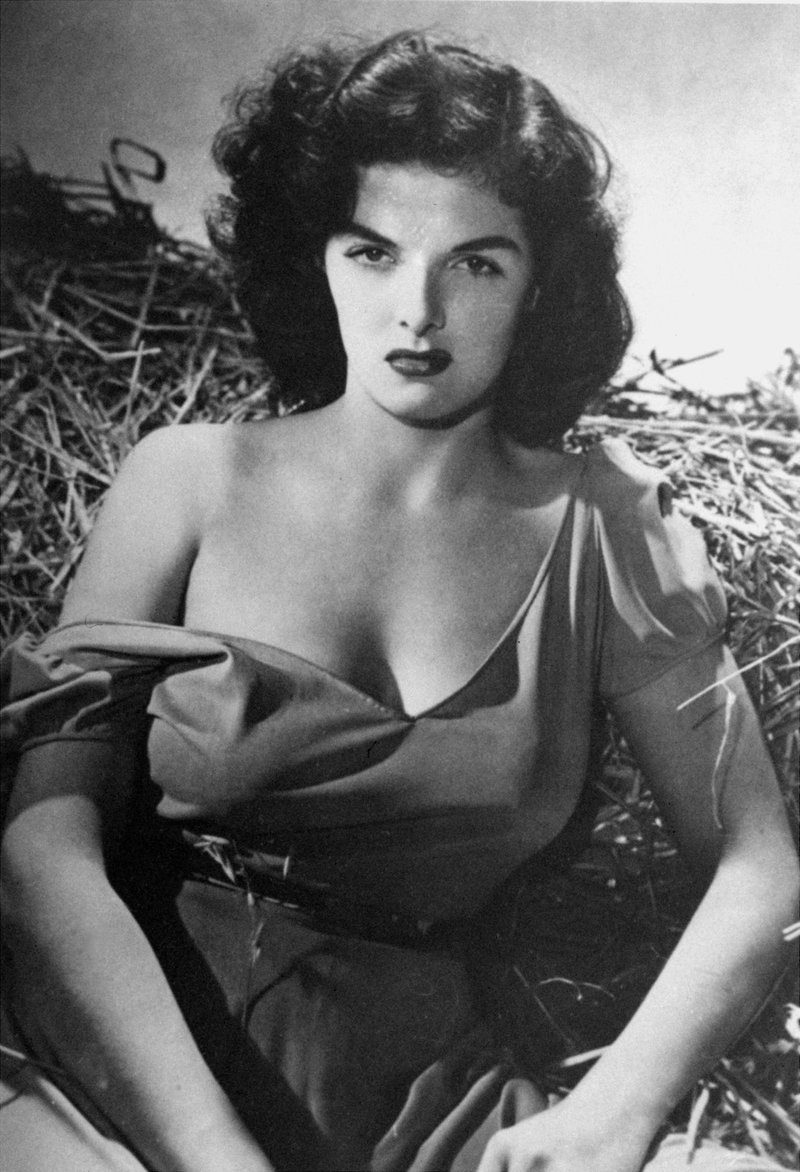
Jane Russell Singer, Actress Passes


Jane Russell, the dark-haired siren whose sensational debut in the 1943 film “The Outlaw" inspired producer Howard Hughes to challenge the power and strict morality of Hollywood's production code, died Monday at her home in Santa Maria, Calif. She was 89.

Russell, who would later turn her sexy image to comic effect in films with Bob Hope, Marilyn Monroe and other major stars, had respiratory problems and died after a short illness, her family said.

Russell's provocative performance in “The Outlaw"—and the studio publicity shots posing her in a low-cut blouse while reclined on a stack of hay bales—marked a turning point in moviedom sexuality. She became a bona fide star and a favorite pinup girl of soldiers during World War II. Troops in Korea named two embattled hills in her honor.

She went on to appear in 18 more films in the 1940s and '50s and, though only a few were memorable, she remains a favorite from the era for her wry portrayals of sex goddesses who seem amused by their own effect.

“Such droll eroticism is rare in Hollywood, and we are lucky that she was allowed to decorate so many adventure movies," film historian and critic David Thomson wrote of Russell, whom he called “physically glorious."

Among Russell's better films are “The Paleface," in which she plays the spirited Calamity Jane opposite Hope's feckless dentist in a spoof of “The Virginian"; and “Gentlemen Prefer Blondes," a musical in which she is brunet gal pal Dorothy to Marilyn Monroe's gold-digging Lorelei Lee. In the latter, the two stars perform a razzle-dazzle production number of the Jule Styne-Leo Robin hit song “Diamonds Are a Girl's Best Friend."

Russell appeared in a few films in the 1960s and ended her movie career in 1970 playing Alabama Tigress in “Darker Than Amber," a film version of John D. McDonald's mystery novel. She replaced Elaine Stritch in “Company" on Broadway for several months in 1971, but her career after that was mostly limited to nightclub, stage or other live appearances.

To later generations, Russell—who once famously had a brassiere designed for her by Hughes—was known as the “bra lady" for her role as a spokeswoman for Playtex bras for “full-figured women."

Ernestine Jane Geraldine Russell was born June 21, 1921, in Bemidji, Minn., and moved to Southern California with her family as an infant. After graduating from Van Nuys High School, she was working as a part-time model and receptionist when her photo was noticed by a casting agent working for Hughes. The mogul was conducting a nationwide search for a beauty with ample breasts for the part of Rio McDonald, who falls for Billy the Kid in “The Outlaw."


Roth and Oates to Receive National Humanities Medals


Philip Roth and Joyce Carol Oates are among the 2010 winners of the National Humanities Medal, and Harper Lee, Meryl Streep, James Taylor andQuincy Jones are among the winners of the National Medal of Arts, the White House announced on Tuesday.

President Obama will present the awards at the White House on Wednesday. The other winners of the arts medal are the sculptor Mark di Suvero, the poet Donald Hall, the theater critic Robert Brustein, the saxophonist Sonny Rollins, the pianist Van Cliburn and the Jacob’s Pillow Dance Festival. The other winners of the Humanities medal include the historians Bernard Bailyn and Gordon S. Wood. The White House press release noted that Ms. Streep and Ms. Lee were not expected to attend.

Margaret Whiting: A Musical Appreciation


A dozen years ago, I remember being surprised that the passing of Mel Tormé caused barely a ripple. His departure was newsworthy for a day or two, and there were the requisite obits in the New York Times, Wall Street Journal, Washington Postand other noble outlets that still appreciated such seminal, if faded, figures; yet the outpouring seemed pitifully inadequate for one of the greatest jazz vocalists of all time.

But the attention paid to the death of Margaret Whiting, three weeks ago at age 86, made the Tormé trickle seem like a torrent. Granted, Whiting was never as pivotal or prolific a performer as Tormé. Even among the coterie of white songbirds who emerged from the ashes of the big band era as solo stars — Doris Day, Jo Stafford, Peggy Lee, Kay Starr and Dinah Shore — Whiting was the least popular and the least distinctive.

Still, Whiting had a significant impact on the popularization of the Great American Songbook and a decent, even occasionally stellar, career that survived seven decades. The Times, Post and others did, again, rise to the occasion, with solid, if hardly effusive, obits that centered around the same key facts: she was the daughter of popular songwriter Richard Whiting and, after her father’s death, was mentored by Richard’s longtime friend and frequent collaborator Johnny Mercer.

When Mercer founded Capitol Records in 1942, Whiting, then age 16, was among the first artists signed to the label, scoring a significant hit with “That Old Black Magic” when teamed, for her debut recording, with Freddie Slack’s orchestra. A long list of chart hits followed, notably “Moonlight In Vermont” (with an uncredited Les Brown), “Far Away Places,” “It Might As Well Be Spring” and, with Mercer, “Baby, It’s Cold Outside.” She also proved popular among country music fans, scoring a string of hit duets with warbler Jimmy Wakely.

Though never as strong a chart performer as Day, Stafford, Lee or Starr, Whiting remained a decent seller of singles straight through the mid-fifties, when she finally parted ways with Capitol. Like her contemporaries, she recorded her fair share of dreck. But there was plenty of cream among the sour milk, including covers of “Guilty,” “Old Devil Moon,” “A Wonderful Guy,” “My Foolish Heart” and “I’ll Walk Alone” that, if not definitive, are unquestionably fine.

Unlike Lee, and to a lesser extent Stafford and Day, Whiting never quite succeeded as an album artist; a significant contributing factor to her comparative obscurity. Between 1950 and 1990 she released a scant 16 albums (not counting Greatest Hits compilations). None were major sellers. Yet there are precious gems among them. Most have, over the years, surfaced on CD, though by the time of Whiting’s departure, few remained in print. (She has fared better on iTunes, where more than half of her album-length output, plus several excellent compilations, is available).


Suze Rotolo, Bob Dylan's girlfriend in the Village

She dated the folk singer for 4 transformative years and wrote an acclaimed book about Greenwich Village in the '60s. The cover of 'The Freewheelin' Bob Dylan' shows the couple walking arm-in-arm.

Suze Rotolo, Bob Dylan's former girlfriend in Greenwich Village in the early 1960s, who appeared walking arm-in-arm with him on the iconic cover of his album “The Freewheelin' Bob Dylan," has died. She was 67. Rotolo, who played a role in the young Dylan's evolution as a singer-songwriter and later had a career as an artist, died of cancer Friday at home in Greenwich Village, said her son, Luca Bartoccioli.

She was a 17-year-old art- and poetry-loving civil rights activist from Queens when she met the 20-year-old folk singer from Minnesota at an all-day folk concert at Riverside Church in Manhattan in the summer of 1961. “Right from the start, I couldn't take my eyes off her," Dylan wrote in “Chronicles: Volume One," his 2004 memoir. “She was the most erotic thing I'd ever seen."

Rotolo later wrote that Dylan “made me think of Harpo Marx, impish and approachable, but there was something about him that broadcast an intensity that was not to be taken lightly."

So began a four-year relationship that was immortalized on a wintery day in 1963 when photographer Don Hunstein captured the young couple walking down a snowy Greenwich Village street, Dylan's hands thrust in his pockets and Rotolo's hands wrapped snuggly around his arm.

“It was freezing out," she recalled in a 2008 interview with the New York Times. “He wore a very thin jacket, because image was all. Our apartment was always cold, so I had a sweater on, plus I borrowed one of his big, bulky sweaters. On top of that I put a coat. So I felt like an Italian sausage."

The photo became the cover of Dylan's breakthrough second album, which includes the songs “Blowin' in the Wind," “A Hard Rain's A-Gonna Fall," “Don't Think Twice, It's All Right" and “Masters of War." “The Freewheelin' Bob Dylan" also inspired the title for Rotolo's 2008 memoir, “A Freewheelin' Time: A Memoir of Greenwich Village in the Sixties," which reviewers praised for capturing the era's Bohemian atmosphere.

“She was happy she came out with it because it kind of helped satisfy people's curiosity about what went on" with her relationship with Dylan, Rotolo's son said Monday. But, he added, the book is “about her life—about who she was—and not being just this guy's girlfriend."

Rotolo was born in Queens, N.Y., on Nov. 20, 1943, a so-called red-diaper baby whose parents were members of the American Communist Party. Her father died when she was a teenager, and she traded Queens for Greenwich Village after graduating from high school. She was working in the office of the Congress of Racial Equality—and had seen Dylan perform at a small club in the Village—when she met him at the folk festival.


The Somers Point Jazz Society has been in existence since 2004

The Somers Point Jazz Society has been in existence since 2004. The Society is governed by a board of directors consisting of 20 members.  The Society is a membership organization that currently has over 250 paid members.  Events are open to members and non-members alike with discounts offered to members on some events.  There are also some events that members can attend free. The Society has helped the local school district by providing them with funds to supplement their music and creative arts educational programs.
The Somers Point Jazz Society is a registered Public Charity recognized by both the US Internal Revenue Service and the NJ State Department of Treasury.

Somers Point Jazz Society Events

March 5, 2011  8:30–11 PM
The Negra Modelo Winter Jazz Series  featuring Franny Smith and the Atlantic City Jazz Band
Gregory’s Restaurant 900 Shore Rd., Somers Point, NJ Somers Point Jazz Society members, high school & college students with valid ID are admitted free. All others will be charged $5 at the door. 

March 7, 2011  7 – 10 PM 
Big Band Monday at Sandi Pointe featuring The Ed Vezinho/Jim Ward Big bandSandi Pointe Coastal Bistro 908 Shore Rd., Somers Point, NJ
$5 admission

March 10 -13, 2011
Cape Bank Jazz @ the Point 2011
Our annual jazz festival features ten great groups performing at various venues in Somers Point, NJ. Featured artists include The Ignacio Berroa Quartet, The Joanna Pascale Quintet with The Ed Vezinho/Jim Ward Big Band, Sandy Warren book signing. The Michael Pedicin Quartet/The Brubeck Project, Richie Goods and Nuclear Fusion, and The Eric Alexander Quartet. For the complete lineup 
click here.

March 13, 2011
Sandy Warren,
 will sign copies of her new book, Art Blakey Cookin' and Jammin': Recipes and Remembrances from a Jazz Life(MargaretMedia,$16.95) as part of the Cape Bank Jazz @ the Point Festival.  Sandy will be at Sandi Pointe Coastal Bistro, 908 Shore Road, Somers Point from 3:00 p.m. till 4:00 p.m. on March 13., she will also be available following the first set of the Joanna Pascale Quintet with Ed Vezinho/Jim Ward Big Band.

April 10, 2011 1 – 4 PM
The Negra Modelo Winter Jazz Series  and the 4th Annual Jazz Master Award Reception
1 - 2 PM - Reception to honor 2011 Jazz Master Award Recipient Joe Mancini, 2-4 PM - Winter Jazz Series performance. – Artist to be announced.
Sandi Pointe Coastal Bistro  908 Shore Rd., Somers Point, NJ
Free admission
These programs are made possible in part through the New Jersey State Council of the Arts/Department of State, a Partner Agency of the National Endowment for the Arts through the Local Arts Grant administered by Atlantic County Office of Cultural & Heritage Affairs.